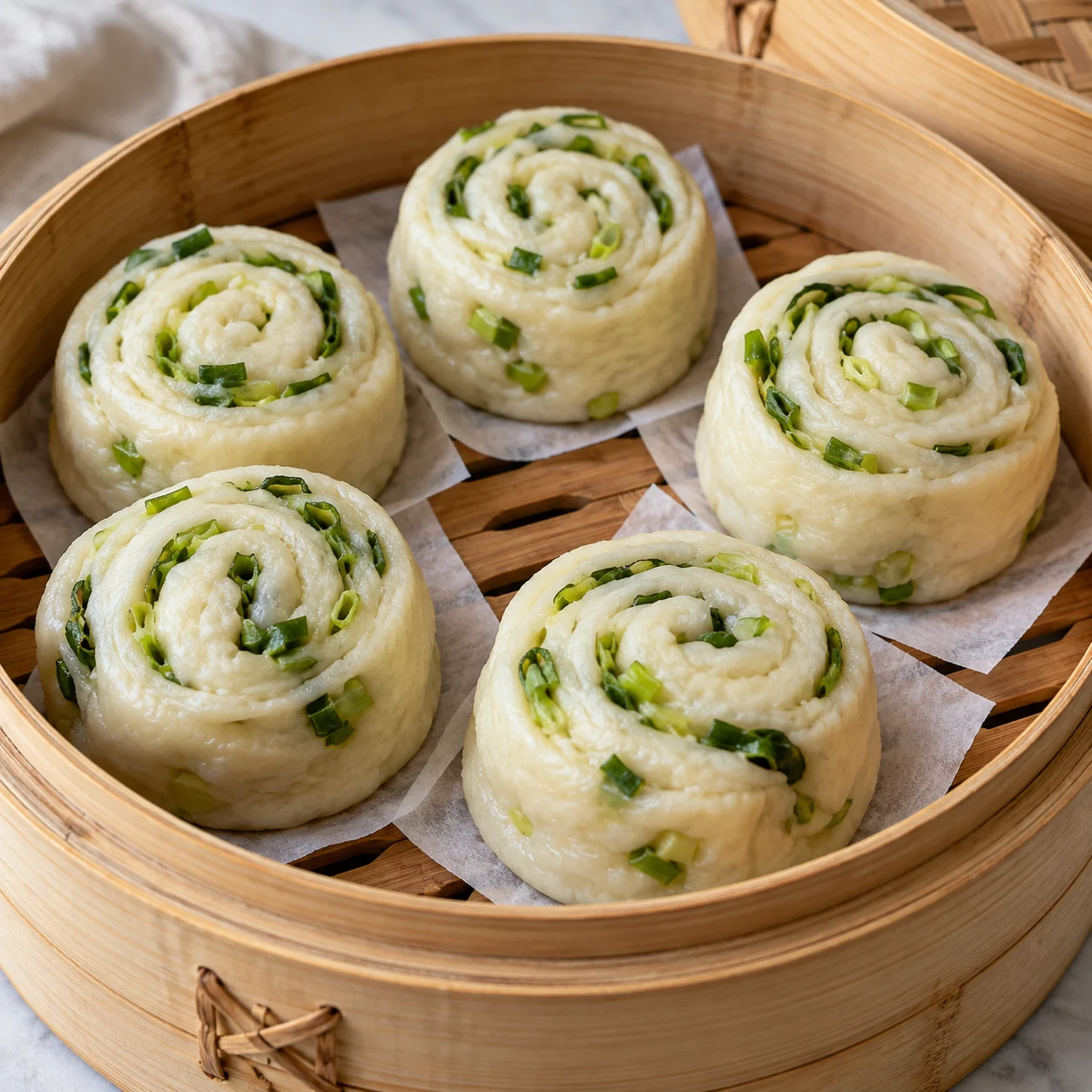
These buns use a rolled dough log to place scallions between soft spiral layers. They are steamed in two batches rather than browned in an oven. The full card makes twelve buns, with one bun counted as a serving. Allow roughly three and a half hours: hands-on mixing and shaping are only part of the schedule, which also includes rising, proofing, steaming and cooling.
Scallion spiral steamed buns makes 12 servings, with 3 hr 30 min estimated total time. View the standalone recipe page.
Build a smooth dough before the first rise
Weigh flour and water rather than adjusting the ratio through loosely packed cups. Dissolve the active dry yeast and sugar in lukewarm water and look for foam before incorporating the flour and salt. Knead for eight to ten minutes, until the dough becomes smoother and more cohesive. If it initially resists working, a brief covered pause helps before kneading resumes. Avoid repeatedly adding dusting flour, which would stiffen this measured dough. Cover the bowl and let the dough roughly double; sixty to ninety minutes is a planning range, with a cool room requiring more time.
Make the scallion layer thin and even
Rinse the scallions, trim them, slice finely and pat dry. Large wet pieces can interrupt the dough layers and make the roll awkward to cut. Roll the risen dough between parchment or on a silicone mat to the specified rectangle. Spread the twenty grams of oil across the surface, then distribute scallions evenly rather than concentrating them along one edge. Roll from a long edge so the finished log remains about sixteen inches long. Keep the roll snug without stretching it thinner at the ends. Mark twelve equal lengths before cutting with a sharp knife.
Proof the cut spirals without crowding
Stand each piece spiral side up on its own small parchment square. The paper should support the bun without blanketing the entire steamer floor, because steam needs a route upward. Cover loosely for twenty to thirty minutes, looking for visibly puffier dough. The second rise should not become an indefinite wait: very inflated, fragile spirals are harder to move. Once the first six enter the steamer, hold the remaining six covered in the refrigerator. That slows their rise while the first batch finishes and reduces the chance of the last buns becoming overproofed.
Maintain steam and wait before lifting the lid
Set the buns at least an inch apart and keep the simmering water below them. The Woks of Life's steamer guide emphasizes clearance around food and preventing the pan from running dry. Use steady heat, not a violent boil splashing into the basket. Steam each batch for fifteen minutes, then switch off the heat and leave the lid closed for five more. Their steamed-bun guidance also uses this pause before uncovering. Open the lid away from your face. A finished bun should have set bread texture inside, with no gummy strip of raw dough; continue steaming if needed.
Plan the second batch and the leftovers
Check the water level before restarting and restore a steady simmer for the second batch. Allow ten minutes of cooling before eating; trapped steam inside the spiral can be very hot. The buns stay pale because they are steamed, so browning is not a useful doneness cue. Never taste raw dough, since flour is a raw food. Refrigerate leftovers within two hours and use within three to four days, reheating to 165°F / 74°C throughout. The recipe contains wheat, and the vegan designation assumes suitable sugar, yeast and other packaged ingredients.
Common questions
Why did the spiral edges stick together?
Some contact is normal as the dough expands. Spread the measured oil evenly and avoid pressing the cut faces flat. Keep enough space between buns so their outer sides do not grow into their neighbors.
Can all twelve cook at once?
Only if your steamer accommodates them with clearance and reliable circulation. The written timing assumes two batches of six. Crowding twelve into the same small basket changes the cooking conditions and can leave unevenly cooked centers.
Technique & food-safety references
These primary references support the technique, safety and storage guidance. The recipe and cooking explanations are original Recipe Pinboard content.


