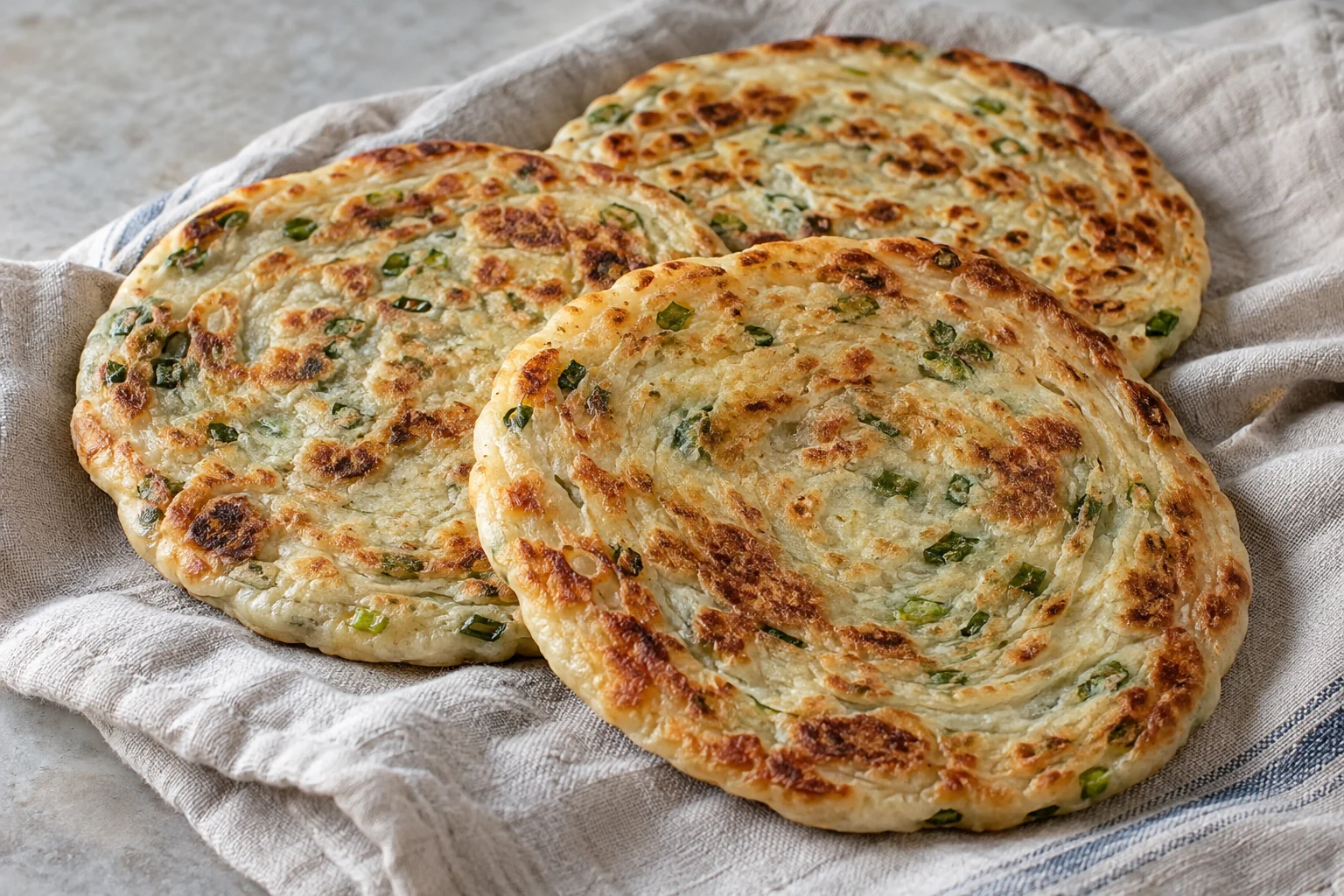
These are small skillet breads with a soft yogurt dough and browned patches, not a yeasted loaf. The twenty-minute rest is useful even though there is no yeast to proof: it gives the flour time to take up moisture and makes rolling less stubborn. Thin rounds and moderate pan heat matter more than trying to achieve dramatic black spots on the surface.
Scallion yogurt skillet flatbreads makes 8 servings, with 1 hr estimated total time. View the standalone recipe page.
Keep the weighed dough ratio intact
Weigh the flour, yogurt and water as listed, using plain whole-milk Greek yogurt. A scale avoids the variation caused by packing flour into a cup. The yogurt contributes both water and solids, so replacing it with the same weight of plain water does not preserve this dough. Mix the baking powder and salt through the flour before adding the wet ingredients. Scatter the finely sliced scallions through the dough; large long pieces can tear the surface when you roll it thin.
Rest before deciding the dough is too sticky
After the short knead, the dough should be cohesive but a little tacky. Cover it for the full rest rather than immediately adding handfuls of flour. Flour continues to absorb available moisture while it sits, and a covered surface stays more flexible than an exposed one. This rest is not a rise to double in size. If the room is warm, keep the bowl away from the stove. The dough contains yogurt and should not be held casually at room temperature for an extended afternoon.
Roll equal pieces between parchment
Divide into eight similar portions before rolling. A thicker, heavier piece needs longer cooking and makes one serving larger than the others. Rolling between parchment avoids extra bench flour, keeping both the dough ratio and published nutrient calculation intact. Work from the center outward, lifting and rotating the packet if the round stretches unevenly. The target is about six inches across and one eighth inch thick. Peel off both sheets before the bread enters the skillet; parchment is a rolling aid here, not a frying liner.
Read the skillet and the center together
A heavy skillet over medium heat gives the interior time to set while the outside develops patches. If dark spots appear almost immediately, reduce the heat before cooking the remaining rounds. Allocate the small finishing quantity of oil across the whole batch rather than using it all on the first two. Turn once the lower surface has browned, then inspect a thick edge for sticky raw dough. Pan appearance and cooking time are guides; a gummy center means the bread needs more gentle cooking.
Stack briefly for a flexible finish
Place the cooked flatbreads under a clean towel for the short final rest. Trapped warmth softens the outer crust, making them easier to fold without cracking. An uncovered stack cools and dries more quickly, while a sealed container filled with very hot breads can collect condensation. Let stored breads cool promptly, then refrigerate or freeze as directed in the card. Separate frozen rounds with parchment so you can take out one serving without thawing the whole batch. A dry skillet refreshes the surface during reheating.
Common questions
Do these need yeast?
No. The recipe uses baking powder and a short hydration rest. Adding yeast would require a different fermentation schedule and a new recipe review.
Why are my flatbreads tough?
Extra flour, very thick rounds or prolonged cooking can make them firm. Weigh ingredients, keep the dough covered and roll evenly before adjusting the next batch.
Technique & food-safety references
These primary references support the technique, safety and storage guidance. The recipe and cooking explanations are original Recipe Pinboard content.