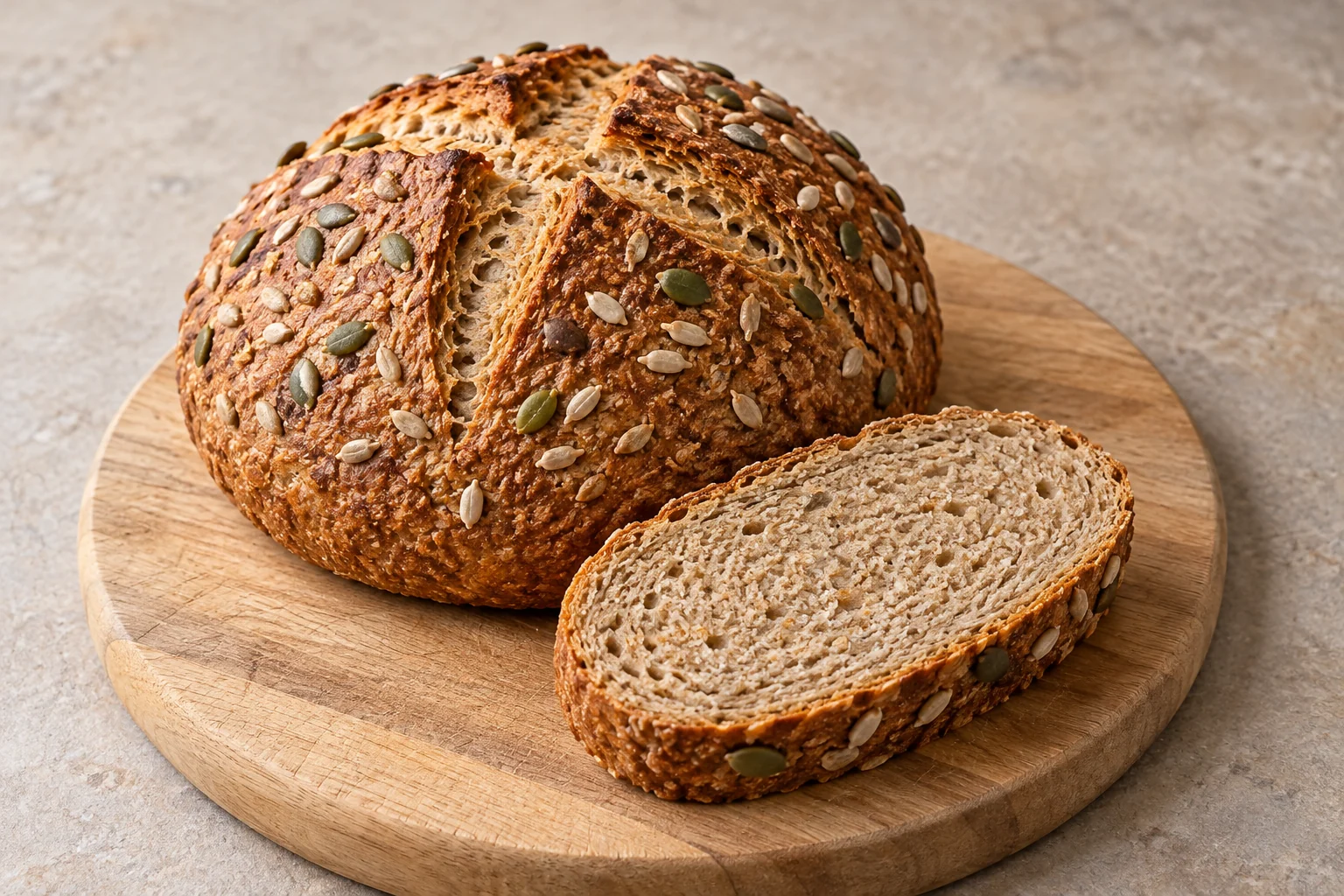
A seeded quick bread solves a different problem from a long-fermented loaf: it gets bread onto the table without maintaining a starter or waiting for yeast. The expected result here is a tender, close crumb with sunflower and pumpkin seeds, rather than the large holes of sourdough. Allow the full 95-minute window, including cooling, and prepare the oven and tray before the wet and dry ingredients meet.
Seeded whole-wheat quick bread makes 10 servings, with 1 hr 35 min estimated total time. View the standalone recipe page.
Keep the flour blend and both leaveners
The flour blend combines 300 g whole-wheat flour with 150 g all-purpose flour. The extra 10 g flour is a separate shaping allowance. Putting it into the mixing bowl and then dusting freely would change the formula.
This version uses 2 g baking soda together with 8 g baking powder. Lemon juice supplies acid for the soda, while baking powder brings its own acid component. They are not interchangeable gram for gram. Measure the small amounts carefully and distribute them thoroughly through the dry ingredients so a concentrated pocket does not remain in the loaf.
Set aside the seeds before mixing
Each seed has two jobs: 25 g goes into the dough and 10 g goes on top. Separate those portions before starting. Use the specified plain, unsalted seeds; a flavored snack mixture can add salt and ingredients that this bread does not include.
The liquid mixture should already be measured when you finish stirring the dry bowl. Once combined, use a spoon or scraper to gather the dough just until the flour is incorporated. Stop checking it by repeated kneading. A slightly rough surface is compatible with this bread, and prolonged working is unnecessary for a dough that will go straight into the oven.
Shape a low round so the middle can cook
Use the shaping flour sparingly across the work surface and gather the dough into the specified round, about 18 cm wide and 4 cm high. Height matters as much as diameter. A tall compact ball can brown outside while its center remains underdone. Avoid using extra flour simply to make the dough feel completely dry under your hands.
Cut the cross almost halfway through the round, then gently press on the reserved seeds. The cut is more substantial than a decorative scratch and gives the loaf room to open. Move promptly to the prepared tray and oven. There is no proofing stage, so leaving the mixed dough on the counter to rise will not improve the written method.
Check the center without over-darkening the topping
The 40–45-minute bake at 400°F assumes the loaf was shaped to the stated dimensions. Check for a browned surface and the recipe's approximate center temperature of 200–205°F. A thermometer probe should reach the interior rather than sit just beneath the crust. Color alone is less useful when the surface is covered with seeds that can darken ahead of the dough.
If the topping colors too quickly, use the loose foil tent described in the card while the center finishes. A tight wrapping would trap steam against the surface. If a cooled loaf is unusually heavy or gummy, possible contributors include excessive height, incomplete baking or extra flour during shaping. Change one identifiable factor next time rather than automatically increasing the soda.
Cool, portion and save the slices
Give the loaf at least 30 minutes on a rack before slicing. This pause is included in the recipe's total time; cutting straight from the oven can compress the tender interior. Use a serrated knife and a gentle sawing motion, especially where the cross divides the crust. Divide the finished loaf into ten portions rather than treating every differently sized slice as an equal serving.
Once completely cool, keep the bread airtight for up to two days at room temperature or freeze it sliced. Separating slices before freezing makes it easier to take out a single portion. Soup, spreads or other accompaniments are separate from this recipe. During preparation, keep raw flour away from ready-to-eat food and do not taste the unbaked dough.
Common questions
Can I leave out the baking powder and use more soda?
Keep the specified 2 g soda and 8 g powder. Extra soda changes the acid balance as well as the rise and can leave an unpleasant flavor. A soda-only loaf needs a separately developed formula.
Should I knead until the dough is smooth?
No. Mix briefly and shape gently. A close crumb is expected, but a perfectly smooth kneaded surface is not the goal. The oven should be ready before mixing so the loaf can bake promptly.
Technique & food-safety references
These primary references support the technique, safety and storage guidance. The recipe and cooking explanations are original Recipe Pinboard content.