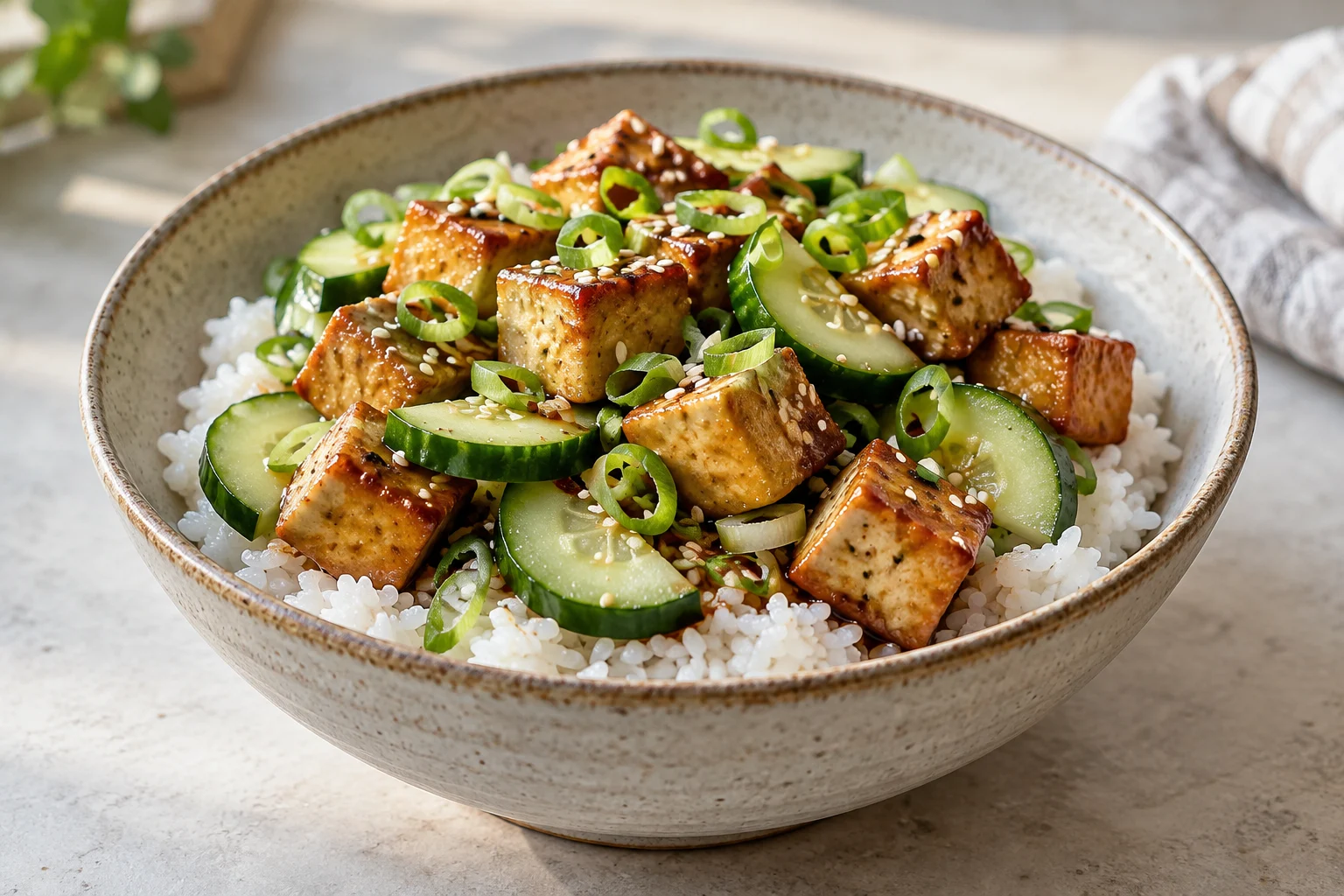
These four bowls combine warm long-grain rice, pan-browned tofu and cold cucumber. A single dressing is split between a brief skillet coating and a fresh finish. The rice cooks and rests while the other components are prepared, keeping the planned total around 45 minutes when the tofu fits the skillet in one loose layer.
Sesame tofu & cucumber rice bowls makes 4 servings, with 45 min estimated total time. View the standalone recipe page.
Start the rice, then leave the covered pot alone
Use 240 g dry long-grain white rice and 480 g water. Bring them to a boil, cover, and reduce to low for the written fifteen to eighteen minutes. Follow a longer cooking requirement on the rice package if necessary. Removing the lid repeatedly releases steam and makes a simple absorption method less predictable.
After the water has been absorbed and the grains are tender, move the pot off the heat for the ten-minute covered rest. That time is useful for finishing the tofu, not dead time to skip. Fluff just before serving so the rice loosens without being repeatedly stirred while still fragile and wet.
Dry the tofu surface before it reaches the pan
The 600 g tofu is its drained weight, without packaging liquid. Choose extra-firm tofu prepared with nigari, the type specified by this recipe’s ingredient estimate. Drain thoroughly, pat dry and cut into 2 cm cubes. The written timing does not depend on a long weighted pressing step.
Moisture on the outside of the cubes has to evaporate before they brown. Blotting those surfaces is more useful than immediately pouring in extra oil. Soft or silken tofu does not hold the same cube structure, and a much denser high-protein tofu can have a different nutrient profile even when its package also says extra firm.
Leave each side in contact with the skillet
Heat the measured olive oil in a large nonstick skillet over medium-high heat. Arrange the cubes with space rather than piling them together. Turn every few minutes, allowing several surfaces to become golden over fourteen to eighteen minutes. Constant stirring interrupts the contact that creates those browned patches.
If the pan is too small for one loose layer, use two batches and allow additional time. A heavily crowded pan releases more steam and is likely to give pale tofu instead of the intended browned exterior. This recipe has no starch coating, so the target is a lightly browned surface rather than a thick, crunchy shell.
Split the dressing before the skillet finish
Whisk sesame oil, reduced-sodium soy sauce, lime juice, maple syrup, finely grated ginger and garlic. Stir well enough to distribute the syrup and aromatics before dividing. Half coats the hot tofu for just one minute over low heat; the other half goes directly onto the assembled bowls.
The short skillet finish warms the dressing without boiling away the lime or scorching the syrup. Keep cucumber and scallions out of the pan so they remain crisp. Use all the listed sesame seeds across the four bowls, rather than treating them as an unmeasured garnish. Soy sauce already contributes seasoning, so this recipe does not add a separate quantity of salt.
Handle rice leftovers deliberately
Assemble only what will be eaten promptly. For leftovers, keep the rice and tofu apart from the cucumber and scallions so reheating does not soften the raw vegetables. The sauce can be divided with the portions; it is already included in the four-bowl yield.
Cool rice in shallow portions and refrigerate as quickly as possible, ideally within one hour, at 40°F (4°C) or colder. Use the bowl leftovers within twenty-four hours. Reheat rice and tofu only once, to 165°F (74°C), before adding the cold vegetables. This conservative rice-specific plan follows Food Standards Agency guidance; leaving rice warm for hours cannot be corrected simply by reheating it later.
Common questions
Why did the tofu stick or crumble?
It may have been too wet, moved before a surface formed, or handled too vigorously. Use a suitable nonstick pan, pat the tofu dry and turn cubes carefully instead of stirring continuously.
Can I use leftover cooked rice?
The recipe’s quantity is dry rice and its method starts fresh. If using previously cooked rice, you need an appropriate cooked quantity and a verified cooling and storage history; do not substitute the same gram weight of cooked rice.
Technique & food-safety references
These primary references support the technique, safety and storage guidance. The recipe and cooking explanations are original Recipe Pinboard content.