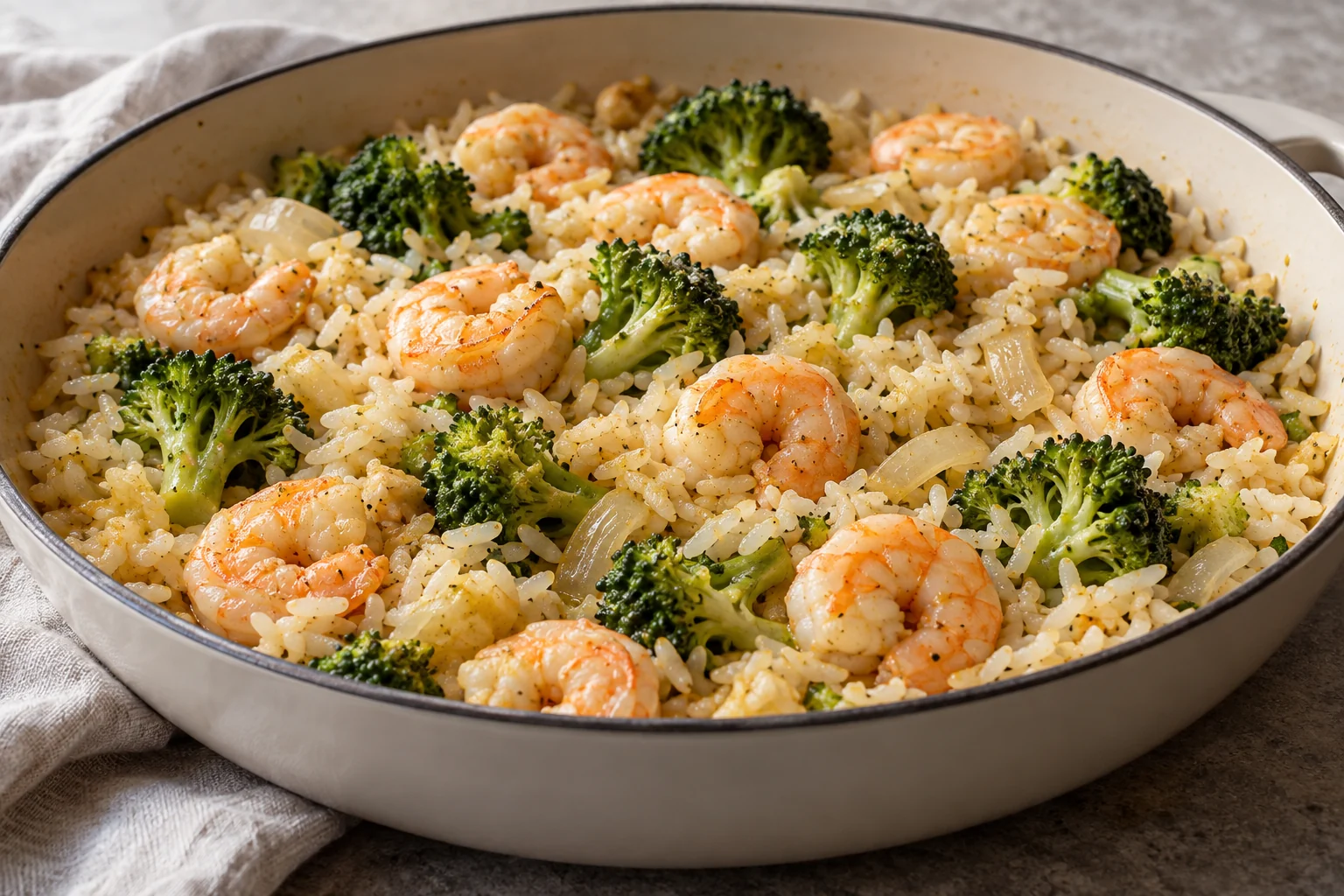
Rice, broccoli and shrimp do not need the same cooking time. This casserole therefore starts with covered rice, adds broccoli later and gives shrimp the shortest oven interval. The lid is central to the method because it traps steam. A shallow uncovered tray would lose water too quickly and would not behave like the specified covered ovenproof casserole.
Shrimp & broccoli rice bake makes 4 servings, with 1 hr 15 min estimated total time. View the standalone recipe page.
Start with dry long-grain rice
Weigh the rice dry, before any cooking, and use the stated white long-grain type. Brown rice and parboiled rice have different cooking times; they cannot simply replace it in the same schedule. Briefly stirring the grains in the softened onion and oil distributes flavor. The boiling water starts the covered cooking stage promptly. Adding cold water would spend part of the oven time merely heating the pot and makes the first rice check less predictable.
Keep the first cooking stage covered
Once the liquid simmers, fit the lid closely and move the pot to the oven. Avoid repeated peeking during the first twenty-five minutes, because each opening releases steam. At the planned check, taste a grain carefully: it should be approaching tenderness, with enough moisture remaining for the vegetables and seafood. If it has a hard center and the pot is dry, add the stated small amount of hot water and continue covered before proceeding. More dry rice is never the solution.
Cut broccoli for a short steaming stage
Small bite-size florets cook more evenly than one large crown. Spread them across the rice instead of stirring aggressively, then replace the lid for their separate interval. The steam softens the florets without requiring them to endure the full rice cooking time. Thick stalk pieces need their own preparation and are not assumed in the weighed floret amount. Broccoli can deepen in color and become very soft with prolonged cooking, so complete any rice rescue before adding it.
Add chilled raw shrimp at the end
Keep the peeled, deveined shrimp refrigerated until their stage begins. Their edible weight excludes shells. Arrange them in a reasonably even layer so one crowded mound does not remain cool while exposed pieces overcook. Return the lid promptly. Check that shrimp flesh is opaque throughout and verify the casserole center reaches the specified temperature. Large shrimp may need the longer end of the interval. Neither a pink exterior alone nor the oven timer proves the center is ready.
Rest and fold gently
After cooking, a short covered rest lets moisture distribute through the rice. Fold in the lemon juice gently to avoid crushing the grains and broccoli. Share the complete rice mixture and shrimp across four equal portions; a photograph showing several shrimp does not define a separate serving size. Cool leftovers promptly in shallow containers rather than leaving the heavy warm pot on the counter. Refrigerate within the stated period and reheat thoroughly, recognizing that shrimp can become firmer during a second heating.
Common questions
Why is the rice crunchy while the shrimp is done?
Steam may have escaped or the rice needed more liquid before seafood was added. Check and correct rice tenderness at the first stage. Adding shrimp early makes it difficult to finish the grains without overcooking the seafood.
Can I use already cooked shrimp?
That changes the seafood timing and food-state calculation. The published card uses raw edible shrimp and a staged cooking method. Treat cooked shrimp as a separately reviewed variation rather than following the same oven interval.
Technique & food-safety references
These primary references support the technique, safety and storage guidance. The recipe and cooking explanations are original Recipe Pinboard content.


