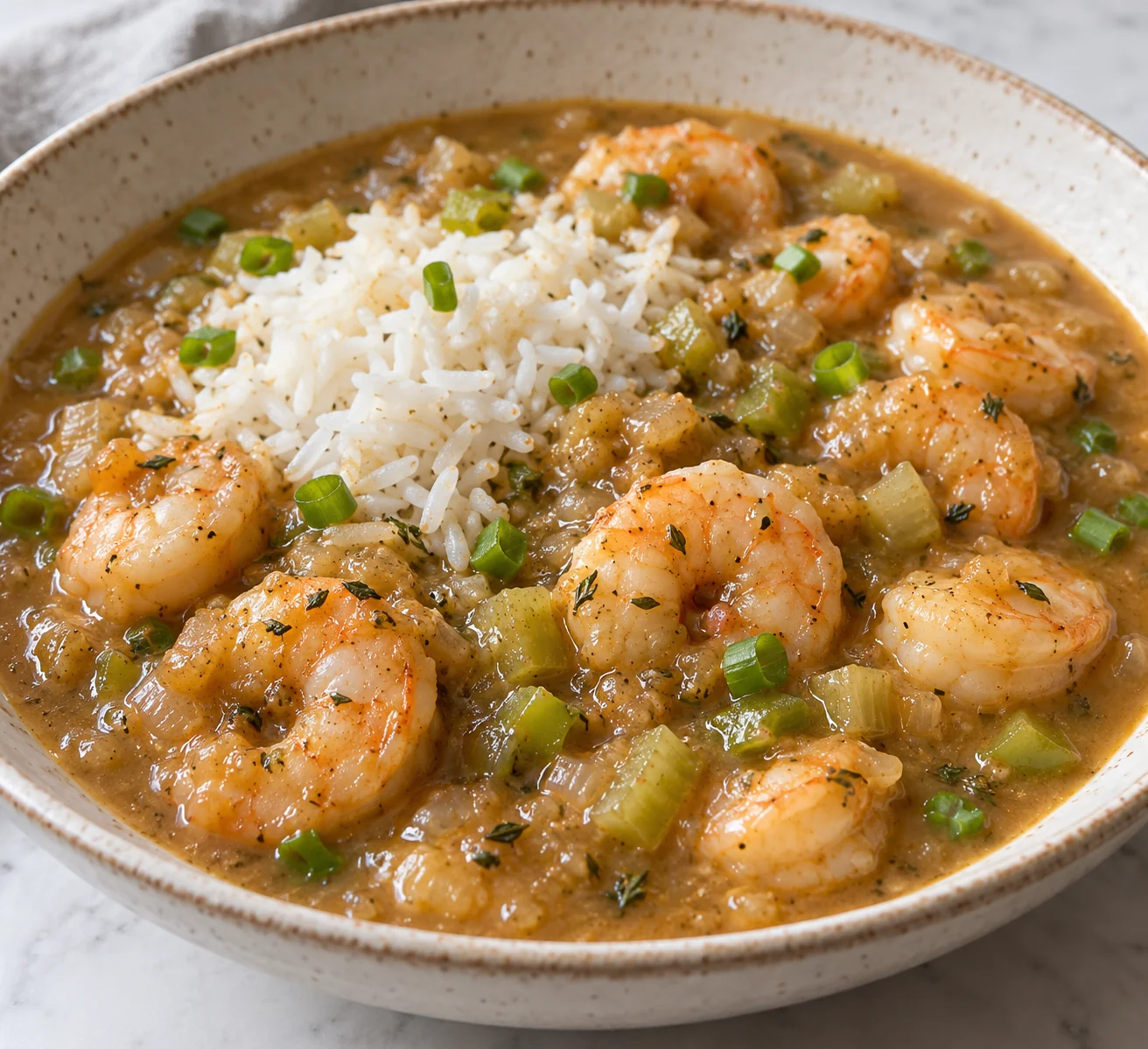
This stew builds its body from a flour-and-oil roux, then softens onion, pepper and celery before the shrimp enter the pan. It is an original roux-based preparation, not a claim to one traditional Louisiana formula. The rice cooks separately by absorption and is included in the four servings. Prepare everything before starting the roux: once the flour is browning, leaving the stove to chop vegetables is an easy way to scorch it. The final shrimp stage is brief compared with the sauce-building stage.
Shrimp roux stew with rice makes 4 servings, with 1 hr 20 min estimated total time. View the standalone recipe page.
Prepare the whole cooking sequence before heating oil
Dice onion, green pepper and celery into small, reasonably even pieces. Measure the flour, oil, spices and water, and have a spoon ready that reaches the bottom corners of the saucepan. Keep prepared raw shrimp refrigerated while the sauce cooks. Set up the rice saucepan separately so it can simmer during the vegetable stage. This organization prevents hurried decisions around hot fat and gives you time to observe color changes. The measured water replaces stock here, so no unlisted broth ingredients or salt are hidden in the recipe.
Watch the roux color and smell rather than the clock alone
Stir flour and oil over controlled heat until the mixture becomes evenly golden-brown. Sweep the bottom continuously so flour at the edges does not darken faster than the center. The goal is a peanut-butter shade with a toasted smell, not black flecks or smoke. Lower the heat whenever the change accelerates. If the roux burns, stop: vegetables and water will not remove that bitter flavor. Starting again means making a replacement batch, not adding more oil and flour to the already burned mixture.
Add vegetables carefully and build a smooth sauce
The chopped vegetables contain moisture and can sputter when they meet the hot roux. Add them carefully, then keep stirring while they soften. Garlic and dry spices need only a brief period before the water goes in. Add the water gradually and stir thoroughly to disperse the flour into a smooth sauce. During the simmer, scrape along the bottom occasionally because a thickened stew can catch even at modest heat. Let the vegetables become tender before deciding the sauce is ready for seafood. The shrimp should not spend twenty minutes waiting in it.
Cook the measured rice without draining
The rice quantity is dry enriched long-grain rice, not an equal weight of already cooked rice. Cook the complete batch with its separate portion of water and salt. Keep the lid on during the low simmer and the off-heat rest so the grains finish evenly. This formulation does not rinse or drain the rice, and all of it is served. If the pan dries before the grains soften, add a little plain water. Water changes the finished weight but does not add nutrients or change the four-serving division.
Use a short final shrimp stage and portion both components
Add peeled, deveined, tail-free shrimp only when the sauce is ready. Stir gently so the pieces cook evenly without breaking. Check the thickest shrimp are pearly and opaque and reach the card's temperature endpoint. Fold in all the scallion, then divide both rice and stew equally among four bowls. Do not count a bowl of gravy without its share of shrimp as an equivalent serving. Refrigerate leftovers promptly in shallow containers, use within three days and reheat to 165°F. No bread or additional garnish is included.
Common questions
Can I make the roux darker?
A darker roux changes flavor and thickening behavior. This formula aims for a golden-brown stage, so keep that endpoint for the intended sauce consistency. Extending the browning is not simply extra flavor with otherwise identical results.
Why are my shrimp tough?
They may have cooked too long or waited in a simmering sauce after reaching the endpoint. Finish the vegetables and rice before adding seafood, then serve promptly. Use similar-size shrimp and check several thick pieces rather than relying only on a timer.
Technique & food-safety references
These primary references support the technique, safety and storage guidance. The recipe and cooking explanations are original Recipe Pinboard content.


