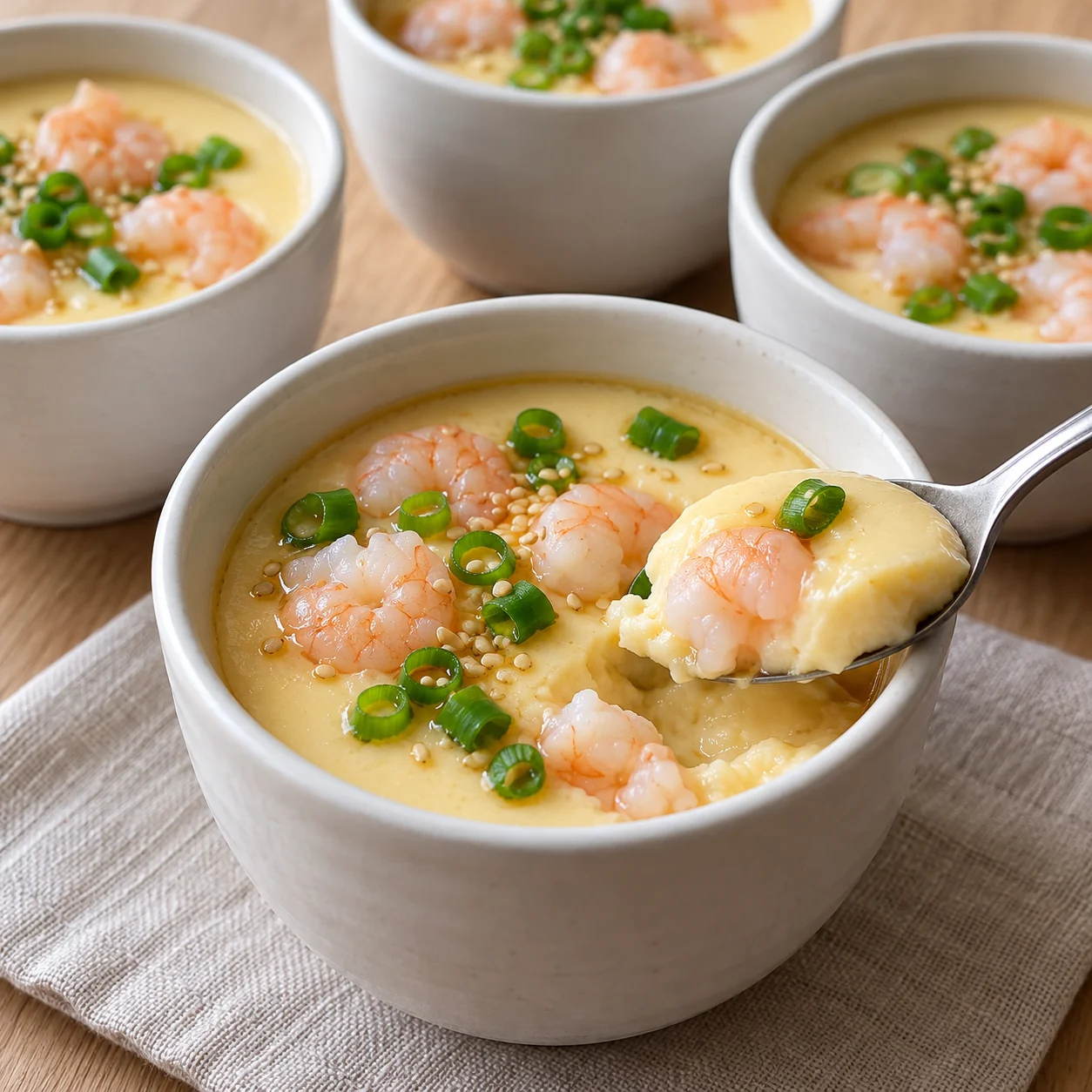
A savory egg custard should yield softly to a spoon while holding the shrimp in a delicate set mixture. That texture depends on measured liquid, gentle mixing and a water bath rather than a fierce dry bake. The full recipe card gives four individual portions. Prepare the cups and roasting pan first, then follow the separate shrimp and custard stages so the seafood is evenly distributed and the eggs do not scramble on contact with a hot pan.
Shrimp & scallion baked egg custards makes 4 servings, with 1 hr 15 min estimated total time. View the standalone recipe page.
Set out cups with enough room above the filling
Use four ovenproof cups of the specified capacity, arranged with space between them in a roasting pan. Cups with a very narrow base and deep sides will heat differently from broad, shallow dishes, even when their capacity is identical. Leave headroom for handling and cover each loosely with foil. Before adding food, check that you can reach every cup with suitable heat protection. The bath belongs outside the cups; it supplies gentle heat and is not part of the measured custard liquid.
Cook the shrimp before dividing it
Choose small peeled, deveined shrimp without tails so each spoonful is easy to eat. Weigh them in their raw edible state and thaw frozen shrimp in the refrigerator first. Warm the sesame oil, briefly stir in ginger and cook until the shrimp become opaque, turning for even contact with the pan. Retain the cooking juices rather than draining them, then allow the short cooling period. This keeps the measured oil and flavor in the recipe while avoiding a splash of very hot liquid into raw egg.
Mix the eggs gently instead of whipping them
Whisk the eggs just enough to combine whites and yolks, then incorporate room-temperature water and soy sauce. A vigorous whipping motion traps bubbles that can leave a pocked surface. Let any large bubbles settle briefly and skim them with a spoon if needed. Distribute the cooked shrimp and their juices among the cups before adding the egg mixture. Work around all four cups in small pours so they end up with similar filling depths, rather than making one noticeably fuller than the others.
Add the bath water on the oven rack
Place the roasting pan on the rack before carefully pouring hot water around the cups. This avoids carrying a heavy pan of sloshing hot water across the kitchen. Fill only to about halfway up the cup sides, keeping the water outside the foil covers. Begin checking near the early end of the baking range. The custards should be softly set, without liquid egg running when the cup is gently nudged, and each center must reach the temperature stated in the card.
Remove from the bath before the short rest
The water and ceramic continue supplying heat after the oven is switched off. Lift the cups out carefully when done rather than leaving them sitting in the bath, and open foil away from your face. Add the scallion rings and sesame after the short rest so the garnish remains distinct. Serve one cup per portion. Refrigerate leftovers promptly and reheat gently but thoroughly to 165°F (74°C). Reheating may firm the custard; a delicate texture does not replace the need for a safe reheating temperature.
Common questions
Why is my custard grainy with liquid around the edge?
Excess heat or an overly long bake can tighten the egg proteins and push out water. Check that the oven is moderate, the bath is present and the cups are removed when their centers reach the specified endpoint.
Is this a dairy-free and gluten-free custard?
It contains no intentional dairy, but the listed soy sauce contains wheat. The dish is therefore not tagged gluten-free. Shrimp, eggs, soy and sesame are also present; dietary tags are not allergen guarantees, and packaged ingredients still need label checks.
Technique & food-safety references
These primary references support the technique, safety and storage guidance. The recipe and cooking explanations are original Recipe Pinboard content.


