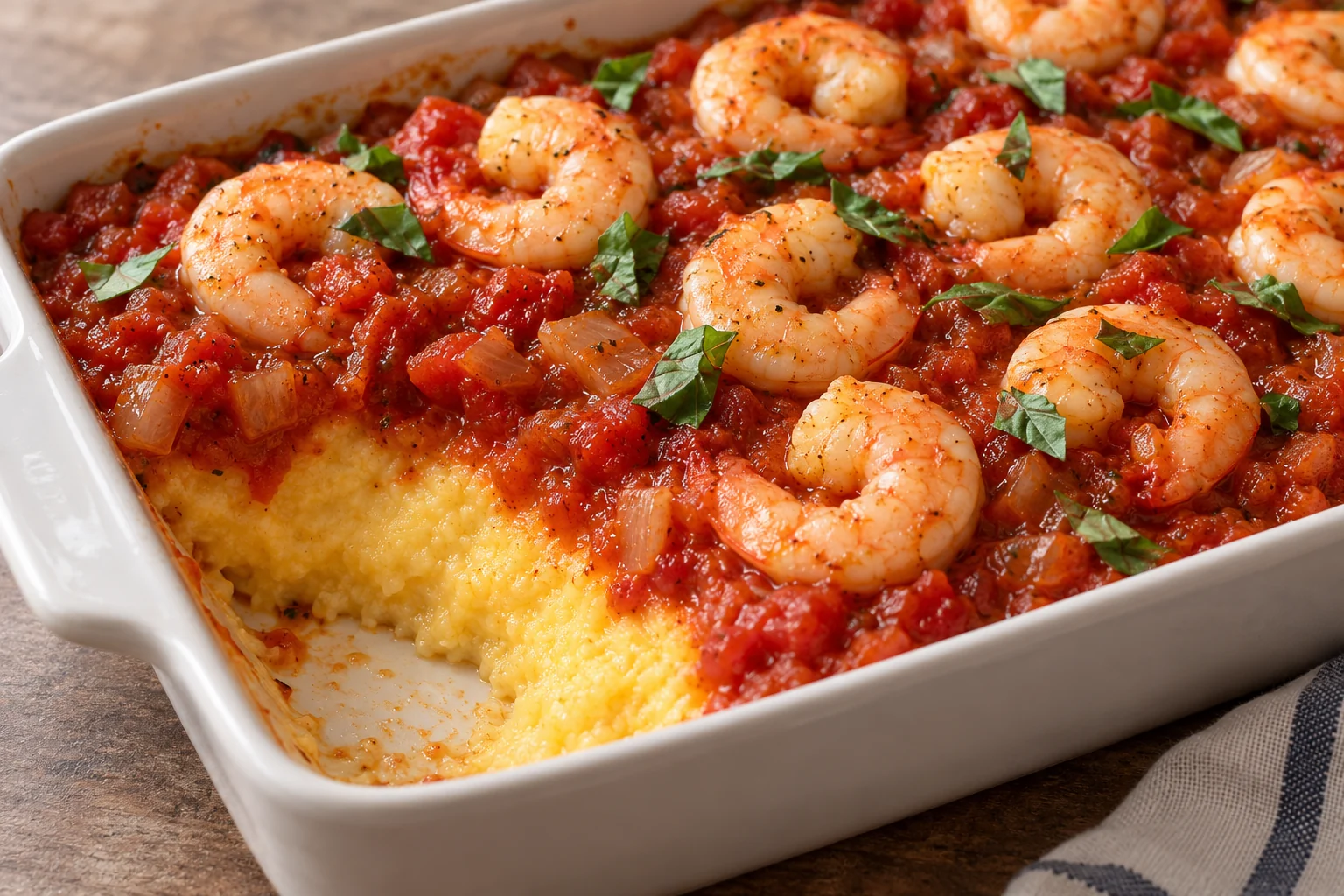
This bake depends on completing the slow part first. Cornmeal needs time to absorb liquid and soften, while shrimp need only a short final spell in the oven. The tomato layer connects the two without turning the dish into soup. Assemble everything hot, then use a thermometer rather than a fixed minute alone to decide when the seafood is ready. The five-minute rest settles the layers enough for generous spooned portions; this is soft polenta, not a firm slab to cut into squares.
Shrimp & tomato polenta bake makes 4 servings, with 1 hr 30 min estimated total time. View the standalone recipe page.
Hydrate the cornmeal patiently
Sprinkle the measured cornmeal into the simmering water and milk while whisking. Dumping it in all at once traps dry grains inside wet lumps. Once the mixture thickens, lower the heat and switch to a spoon that reaches the bottom and corners. Medium-ground cornmeal can differ between mills, so the card gives a cooking window rather than promising one exact minute. Taste a small cooled sample before assembly. It should feel tender rather than sandy. If it becomes stiff before the grains soften, stir in small additions of plain hot water.
Understand where the liquid goes
The polenta retains its added cooking water and milk; it is not boiled and drained like pasta. Water increases the finished mass without adding calories, while all the milk remains part of the nutrition estimate. Evaporation changes thickness, so scrape the full cooked batch into the dish and divide the finished bake equally. The cornmeal profile is degermed enriched yellow cornmeal. Whole-grain cornmeal or instant polenta behaves differently and changes the nutrition assumptions. Do not substitute either and expect the same cooking schedule or calculated panel.
Reduce tomatoes before layering
Cook the onion until softened, then briefly cook the garlic before adding all the chopped tomato and its juices. The sauce should become thick enough to leave a short-lived path when you draw a spoon through the pan. A watery sauce will seep into the polenta and dilute its surface. Reduction solves that problem without adding flour or another uncounted thickener. Keep the polenta warm while the sauce finishes. Stir in the measured Parmesan, spread the base evenly, and distribute the tomato mixture across it rather than concentrating everything in the middle.
Give the shrimp a single layer
Use raw peeled, deveined shrimp with the tails removed, weighed after preparation. Press them lightly into the warm tomato layer without burying them beneath a second overlapping layer of seafood. Similar-size shrimp finish more evenly. Keep raw-seafood utensils away from the basil and serving spoon, and wash contacted surfaces. Check several thick shrimp with a thin thermometer probe: they must reach 145°F and appear pearly and opaque. Also check the center of the assembled bake for the card's 165°F endpoint. If your ingredients cooled during assembly, the oven time may increase.
Rest briefly and store promptly
Allow five minutes before serving, then distribute the basil and divide the full dish into four equal portions, including shrimp, tomato and polenta. The measured oil cooks the sauce; the dish does not need an additional uncounted coating. Refrigerate leftovers in shallow containers within two hours, or one hour when the surrounding temperature exceeds 90°F. Reheat leftovers to 165°F. Polenta firms as it chills, so the reheated portion will be denser than the fresh bake. A little plain water can loosen it without changing the ingredient-based nutrient totals.
Common questions
Why is my polenta gritty after baking?
The short shrimp bake cannot reliably finish undercooked cornmeal. Cook and check the polenta before assembly, adding hot water if it thickens too soon. The oven stage primarily cooks the seafood and heats the layered dish.
Can I use frozen shrimp?
Yes, thaw safely in the refrigerator and drain before weighing the prepared shrimp. Remove shells and tails first. Frozen shrimp added directly would release extra water and make the cooking time much less predictable.
Technique & food-safety references
These primary references support the technique, safety and storage guidance. The recipe and cooking explanations are original Recipe Pinboard content.


