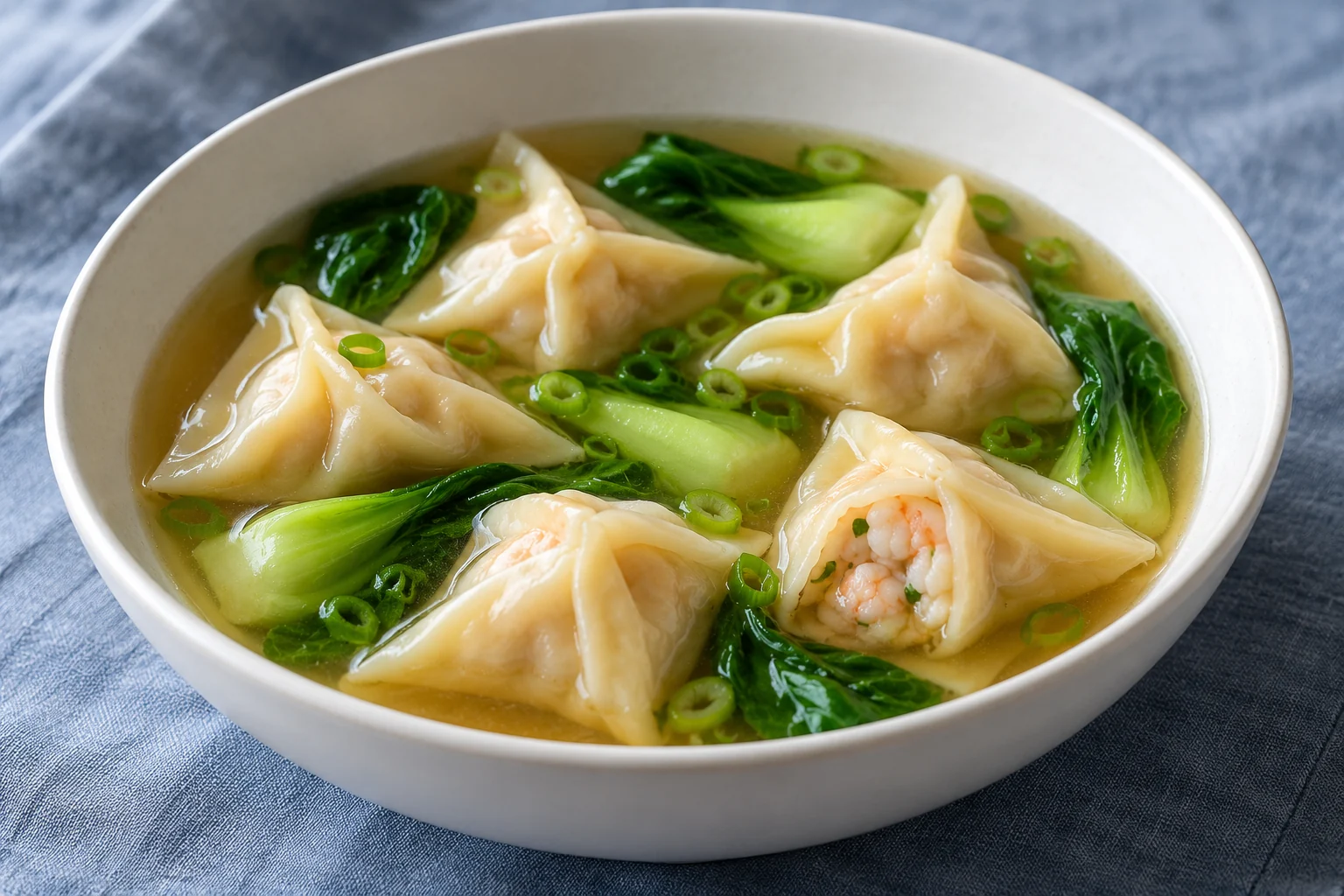
This soup puts the work into small handmade parcels: a firm wheat dough becomes thin wrappers, and finely chopped shrimp forms a compact filling. The broth stays simple so the wontons remain the focus. Allow the full 135 minutes in the card, especially if rolling and folding are new to you. Set out a rolling pin, a ruler, a tray, two saucepans and a fine-tip thermometer before starting. The quantities make 24 wontons, giving each of four bowls six parcels.
Shrimp wonton soup with homemade wrappers makes 4 servings, with 2 hr 15 min estimated total time. View the standalone recipe page.
Rest the wrapper dough
Start with the dough because its covered rest gives you time to prepare the filling. The initial mixture is fairly firm; gather loose crumbs into the mass before deciding it needs more water. Kneading should produce a cohesive surface, although it will not feel like a soft bread dough. During the rest, keep every exposed surface covered so a dry skin cannot form. Reserve the separate 20 g flour allowance for rolling. Adding flour freely from the bag would change both the dough balance and the ingredient-based nutrition estimate.
Keep the filling cold and evenly chopped
Chop peeled shrimp into small pieces rather than leaving whole curls inside the wrappers. Large pieces make bulky corners and can puncture a thin sheet when folded. Mix all the measured filling ingredients together, scraping the bowl thoroughly, then refrigerate while rolling. The filling weighs approximately 357 g, so about 15 g belongs in each wrapper. Portioning it before folding helps prevent the first dumplings from becoming overfilled. Use separate clean utensils for cooked food, and never taste this filling before it is thoroughly cooked.
Roll and seal without trapping air
Work with one quarter of the dough at a time. Aim for thin sheets around 1-2 mm, with particularly thin edges; thicker folds take longer to cook than the flat wrapper. Cut the squares, reroll the scraps and keep unused pieces covered. Center the filling, lightly moisten the edges and press the triangle closed from the filling outward. This pushes air toward the open edge instead of sealing a pocket around the shrimp. Pinch the lower corners together without stretching the middle. A damp edge should feel tacky, not flooded.
Use two pots for clearer soup
Cook the wontons separately from the broth so loose rolling flour does not thicken the serving liquid. A gentle boil gives parcels room to move without violently battering their seams. Add only half the batch at once and release any that settle on the bottom with one careful stir. Floating signals a change in buoyancy, not proof that the center is safe. Check a representative thick parcel reaches 165°F and that the shrimp is opaque. Continue cooking if the center lags, keeping the water gentle rather than turning up the heat.
Serve all the measured components
Warm the bok choy in the ginger broth while the wontons cook, then distribute both stems and leaves among the bowls. Add the cooked parcels and divide all the broth and remaining scallion. The nutrition estimate counts the full flour allowance and complete filling; residue on the board and losses into boiling water are not measured deductions. If keeping leftovers, separate dumplings from broth where practical because their wrappers continue absorbing liquid. Chill promptly in shallow containers and follow the card's three-day storage limit and reheating endpoint.
Common questions
Why did my wontons split?
Common causes are overfilling, dry wrapper edges or a vigorous boil. Keep the dough covered, use the planned filling portions and press seams before joining the corners. A badly torn raw wrapper should be rerolled and refilled rather than left open in the pot.
Can I use purchased wrappers?
They can change size, thickness, allergens and nutrition. This card calculates homemade wrappers from weighed flour, so a packaged substitution needs its own quantities and label information; do not assume 24 purchased wrappers represent the same ingredient input.
Technique & food-safety references
These primary references support the technique, safety and storage guidance. The recipe and cooking explanations are original Recipe Pinboard content.


