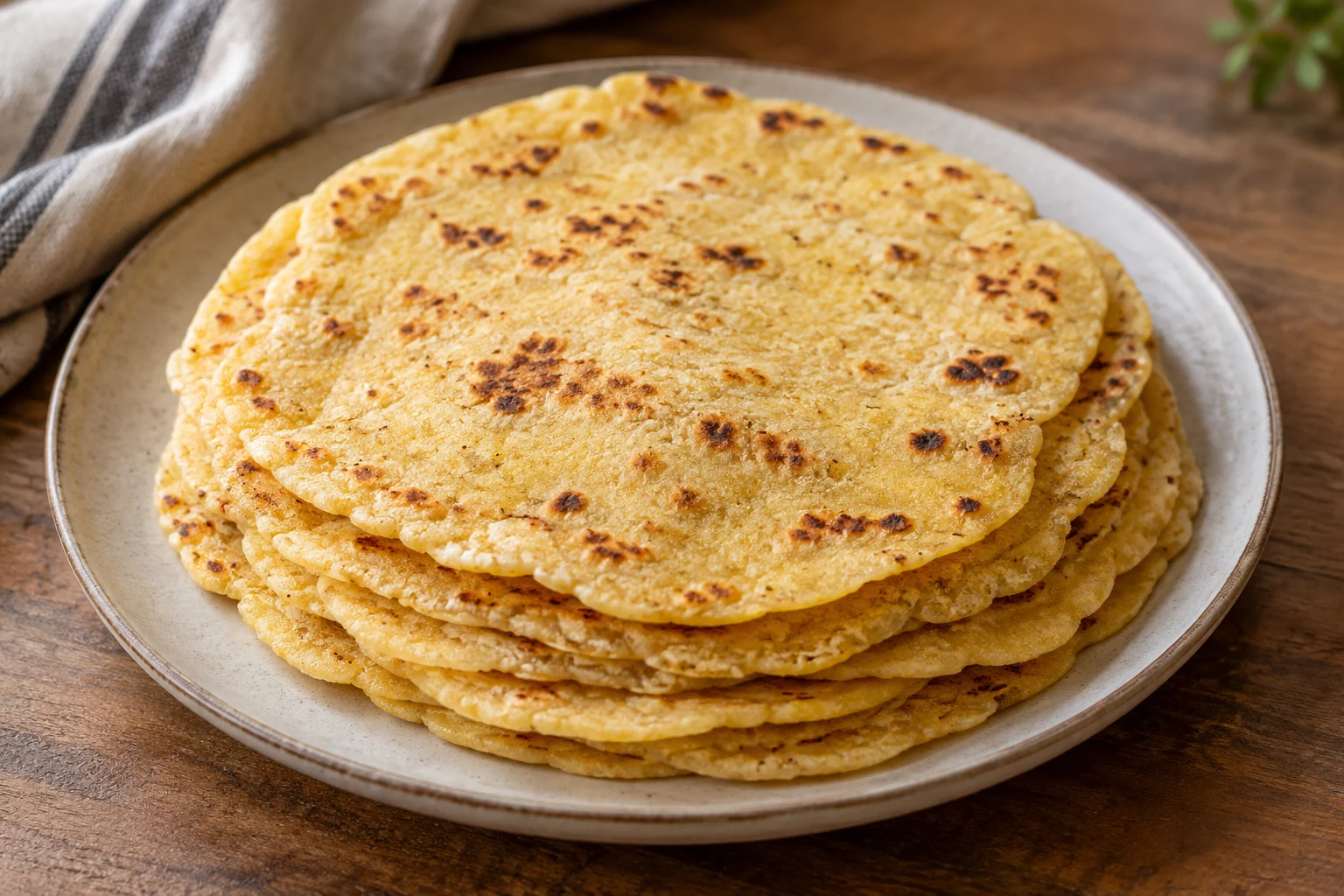
These flatbreads combine fine yellow cornmeal with all-purpose wheat flour. They are unleavened and intentionally thin, with little brown skillet spots rather than a tall, airy crumb. The 75-minute planning window includes hydrating the cornmeal, resting the dough and cooking eight rounds one at a time. Hands-on work is about 45 minutes, so this is a small batch to make when you can stay near the stove.
Skillet corn flatbreads makes 8 servings, with 1 hr 15 min estimated total time. View the standalone recipe page.
Choose cornmeal with the right identity and grind
The recipe calls for 120 g fine degermed yellow cornmeal and 180 g all-purpose flour. Cornstarch, masa harina and very coarse grits behave differently in this dough. The wheat flour supplies a cohesive structure that cornmeal alone would not produce with this method. These breads therefore contain gluten.
Measure the flour by weight rather than scooping a tightly packed cup. With only five ingredients, an unnoticed extra handful of flour can make the dough markedly harder to roll. The oil is mixed into the dough; no additional frying oil or dusting flour is included in the recipe.
Hydrate the cornmeal before adding the wheat flour
Pour 180 g boiling water over the cornmeal and salt in a heatproof bowl, taking care around the steam. Stir thoroughly so there are no dry pockets along the sides. Leave it for ten minutes to absorb water and become comfortable to handle. This initial hot-water step is for the cornmeal; do not put your hands straight into the steaming mixture.
Add the remaining 40 g water, flour and oil, then mix and knead briefly in the bowl. Expect a soft, cohesive dough with a little tackiness rather than a dry, crumbly ball. Cover it for the full twenty-minute rest before deciding it needs more flour. Hydration and resting are part of the structure of the recipe, not optional waiting time.
Make eight similar rounds without a floured counter
Divide the dough into eight equal pieces, keeping the unused pieces covered. Roll each between sheets of parchment to approximately 14–15 cm across and 3 mm thick. Peel the paper back carefully rather than pulling the dough upward. Remove both sheets before the round goes into the skillet.
Even thickness matters more than a perfect circle. A thick central mound can stay doughy while thin edges darken. If a round repeatedly springs back, let that covered piece relax briefly while shaping another. If an edge cracks, press it together before rolling more gently; do not bury the dough under unmeasured flour.
Use the first flatbread to judge the skillet
Heat a heavy well-seasoned or nonstick skillet over medium heat. The first round should develop scattered brown spots in about two minutes, followed by another 1½–2 minutes on the second side. Reduce the burner if dark patches appear almost immediately while the center still looks wet. A pale surface after several minutes suggests that the pan needs a little more heat.
Allow about thirty to thirty-five minutes for eight sequential rounds. Roll the next piece while the current one cooks, but keep watching the pan. The finished bread should have dry surfaces and no wet dough inside. It may form small bubbles; a fully inflated pocket is not the target and does not need to occur.
Let the stack soften briefly before serving
Wrap the cooked rounds in a clean towel and give the stack its five-minute rest. Trapped warmth helps the breads remain pliable. Serve one flatbread per portion with a separately prepared soup, spread or filling; these accompaniments are not included in the ingredient total.
For leftovers, cool and wrap airtight, refrigerating within two hours. Use within three days or freeze with parchment between rounds. Rewarm in a covered skillet just long enough to become flexible. Extended reheating drives out moisture and can turn a thin flatbread brittle.
Common questions
Are these gluten-free corn tortillas?
No. The recipe contains all-purpose wheat flour and ordinary cornmeal. It does not use the masa-harina dough or method associated with corn tortillas.
Why are the flatbreads stiff?
Overly thick rolling, excessive flour, cooking too long or leaving cooked rounds uncovered can all make them less pliable. Keep to the measured dough and use the covered rest and towel-wrapped stack.
Technique & food-safety references
These primary references support the technique, safety and storage guidance. The recipe and cooking explanations are original Recipe Pinboard content.