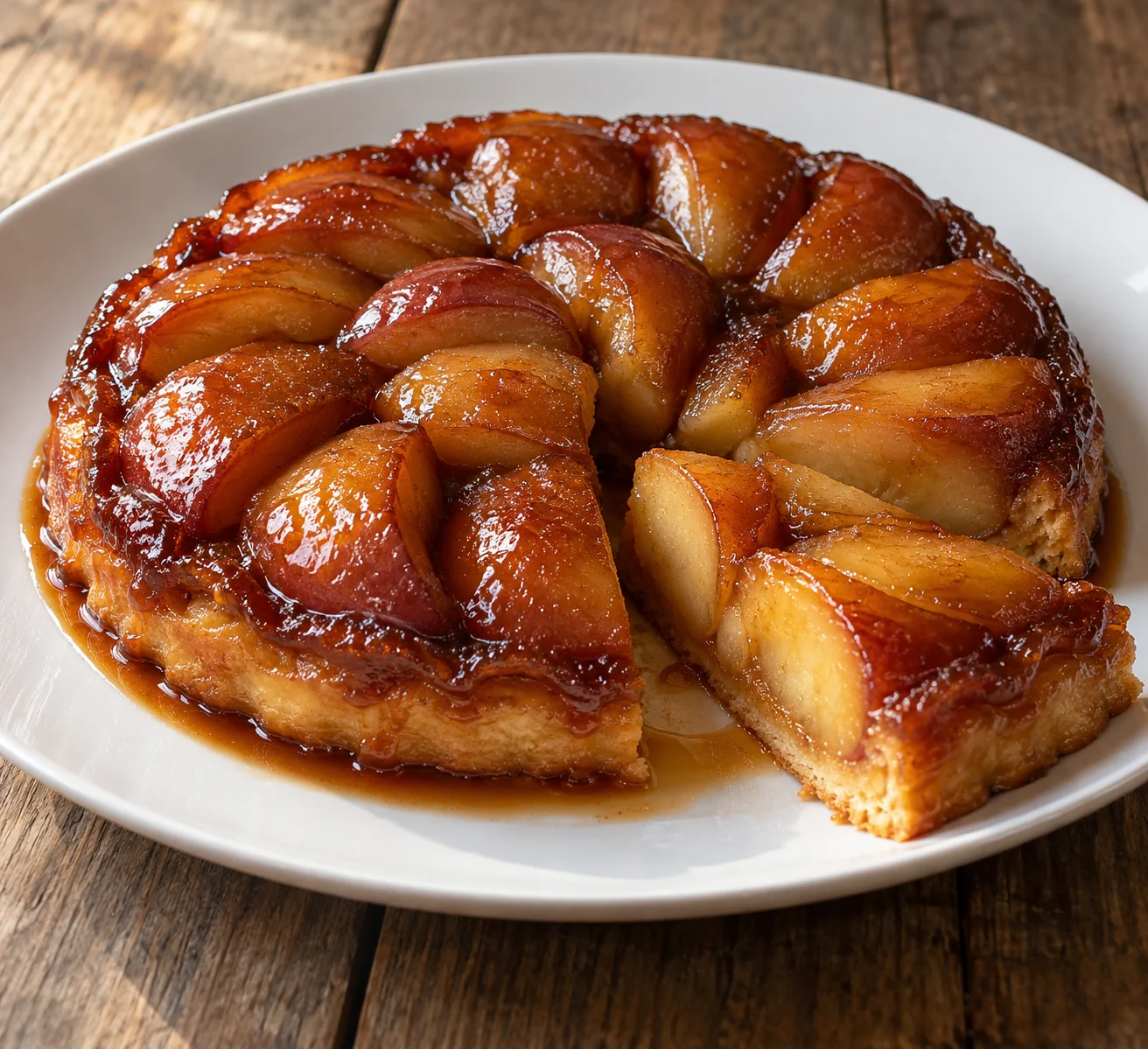
This tart is assembled with apples underneath and pastry above, then turned onto a plate after baking. The apples deliberately keep their skins, matching the measured edible fruit in the card and giving the finished surface a rustic appearance. Homemade shortcrust adds a separate chilling stage, so allow the full three hours rather than starting just before dessert. Set out the heatproof rimmed serving plate and dry oven mitts early. The final turn is easier when the receiving surface and equipment are already ready.
Skin-on apple tarte Tatin makes 8 servings, with 3 hr estimated total time. View the standalone recipe page.
Chill the pastry while preparing firm apples
Work the cold pastry butter into flour and salt, add the measured cold water and press the dough together without kneading. The refrigerator rest gives the dough time to firm before rolling. Meanwhile, scrub the apples, remove their cores and cut into quarters. Weigh the edible pieces after coring, with skins intact. Choose firm fruit rather than soft, bruised apples that may collapse early. Quarter sizes should be broadly similar so one small piece does not disintegrate while a much larger one stays hard.
Watch the sugar rather than relying only on minutes
Stir sugar and water together before heating, then let the bubbling syrup cook without stirring. Gentle swirling can even the color if necessary. Look for amber across the syrup and remove the skillet from heat promptly; a dark pan makes this harder to judge, so work under good light. Add the measured butter carefully with a long-handled utensil because the mixture bubbles strongly. Never put a finger into caramel or taste it while hot. Keep the work area free of children and distractions.
Place fruit with tools and reduce its juices
Use tongs to lower the quarters into the caramel, rounded skin sides down. Pack them closely, recognizing that they shrink as they soften. Return the pan to controlled heat for the stated interval. The fruit releases juice that initially loosens the caramel; continued cooking helps it thicken again. Avoid vigorous stirring, which can damage the quarters and splash hot syrup. The goal is partially softened fruit in thicker juices, not apples cooked into a puree before the pastry has even been added.
Cover with a chilled pastry round
Allow the skillet its short cooling pause before adding the crust. Roll the dough between parchment so no extra flour is needed. Lay the round over the fruit and use a spoon, rather than fingers near the hot rim, to tuck the edge inside. Small vents let steam escape. Bake until the pastry is well browned and cooked through, not merely pale and dry on top. Remember that this surface becomes the base after inversion and must support the fruit when sliced.
Rest briefly and make one controlled inversion
Leave the baked tart in its skillet for the stated fifteen minutes, then cover it with the larger heatproof rimmed plate. With dry mitts holding both pieces securely, turn them together away from your body over a clear counter. Expect steam and possible caramel movement. Lift the skillet carefully rather than shaking it over the plate. If a quarter stays behind, replace it with a spoon. Let the tart cool again before slicing so the fruit is less slippery and the caramel is less likely to run immediately.
Common questions
Does leaving the skin on change the texture?
Yes. Softened skin remains noticeable around the quarters and gives a more rustic bite than peeled fruit. This recipe intentionally keeps it and uses a matching skin-on nutrition profile. It should not be described as a peeled-apple tart.
Can I invert onto a flat board or a small plate?
Use the specified heatproof plate with a rim and enough width to cover the skillet. A flat board offers little containment for hot juices. Do not attempt the turn until you can hold both pieces securely and the counter is clear.
Technique & food-safety references
These primary references support the technique, safety and storage guidance. The recipe and cooking explanations are original Recipe Pinboard content.


