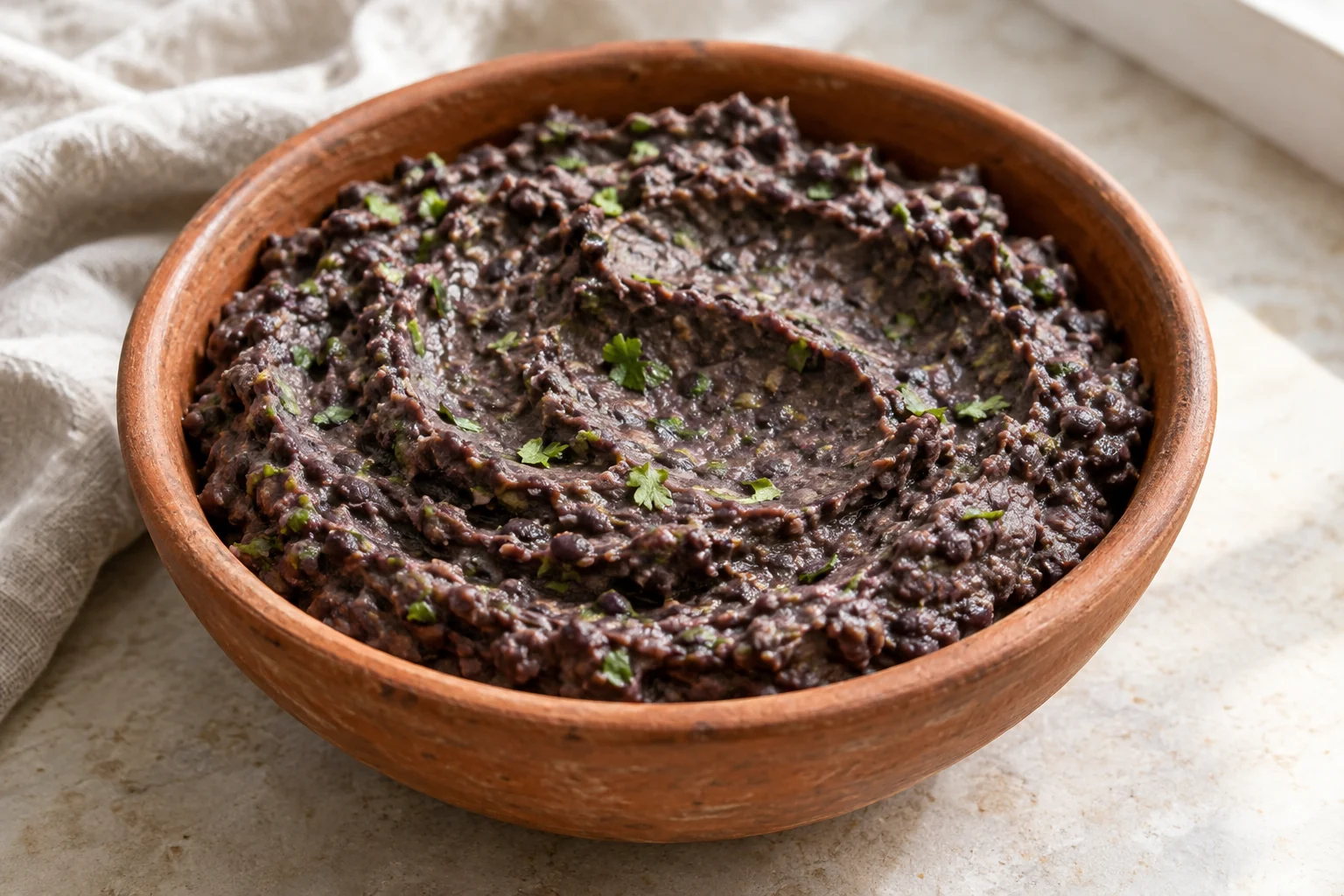
A black bean spread should taste of beans and spices, with enough lime to brighten the finish. This method starts with fully cooked beans, briefly warms them with bloomed spices, then uses measured water to help the blades work. It produces a substantial, slightly textured spread. Cooking dry beans from scratch is a separate preparation and is not hidden inside the twenty-minute card.
Smoky black bean & lime spread makes 8 servings, with 20 min estimated total time. View the standalone recipe page.
Start with truly tender cooked beans
Press one drained bean between your fingers or against a spoon. It should crush readily, with no firm chalky center. A food processor can chop an undercooked bean into smaller pieces, but it cannot cook away that gritty core. Weigh the 480 grams after cooking and draining, since dry bean weight represents a completely different amount of food. If using canned beans, choose a product whose ingredients meet your dietary needs, drain it well and remember that the brand may differ from the representative cooked-bean nutrition profile.
Bloom the spices gently
The oil first carries the garlic, then the paprika and cumin. These are short stages over moderate heat, not an attempt to deeply brown the garlic. Have the beans and water ready before the spices go in: a small quantity of ground spice can darken quickly in an empty hot pan. If it becomes black and acrid, start that oil-and-spice step again rather than masking bitterness with extra lime. Smoked paprika gives the spread its smoky note without requiring charring or a smoky cooking environment.
Use warmth to help the blending
Warm beans are easier to work into a cohesive spread than beans taken straight from a cold refrigerator. The measured water loosens the mixture without making it a soup. After heating, allow the strongest steam to escape before transferring to the processor. Follow the appliance instructions for warm food, leaving appropriate room in the bowl. Never trap a steaming mixture in a sealed personal blender. Scrape the sides between pulses so the outer beans meet the blade instead of staying as a dry ring.
Add lime and cilantro at the blending stage
The lime juice and cilantro are added after the brief cooking stage. This keeps their fresh character distinct from the warm spices. Pulse, scrape and assess rather than running the machine continuously until the spread looks completely uniform. A few fine bean fragments are intentional, but intact hard beans are not. Because the mixture thickens as it cools, stop at a texture that spreads easily while warm. Unmeasured additions of oil can make it greasy without correcting poorly cooked beans.
Serve and store a small portion at a time
The batch makes eight equal portions of spread. A pictured bowl is a serving suggestion, not a weighing device. Transfer leftovers to a shallow container so a warm center does not linger under a cool surface. Chill within the time stated in the recipe and use clean utensils. If reheating a portion, stir it during heating and check that it reaches the stated safe temperature. The lime does not make this shelf-stable, and bread, chips or vegetables served with it are separate from its nutrition estimate.
Common questions
Why did the spread become stiff in the fridge?
Chilled beans and their starch create a firmer texture. Let only the portion being served lose some refrigerator chill, then stir; do not leave the full batch out for hours.
Can I skip the processor?
A sturdy masher makes a chunkier result. Crush the beans while warm and work the liquid in gradually, keeping the same measured ingredients and yield.
Technique & food-safety references
These primary references support the technique, safety and storage guidance. The recipe and cooking explanations are original Recipe Pinboard content.