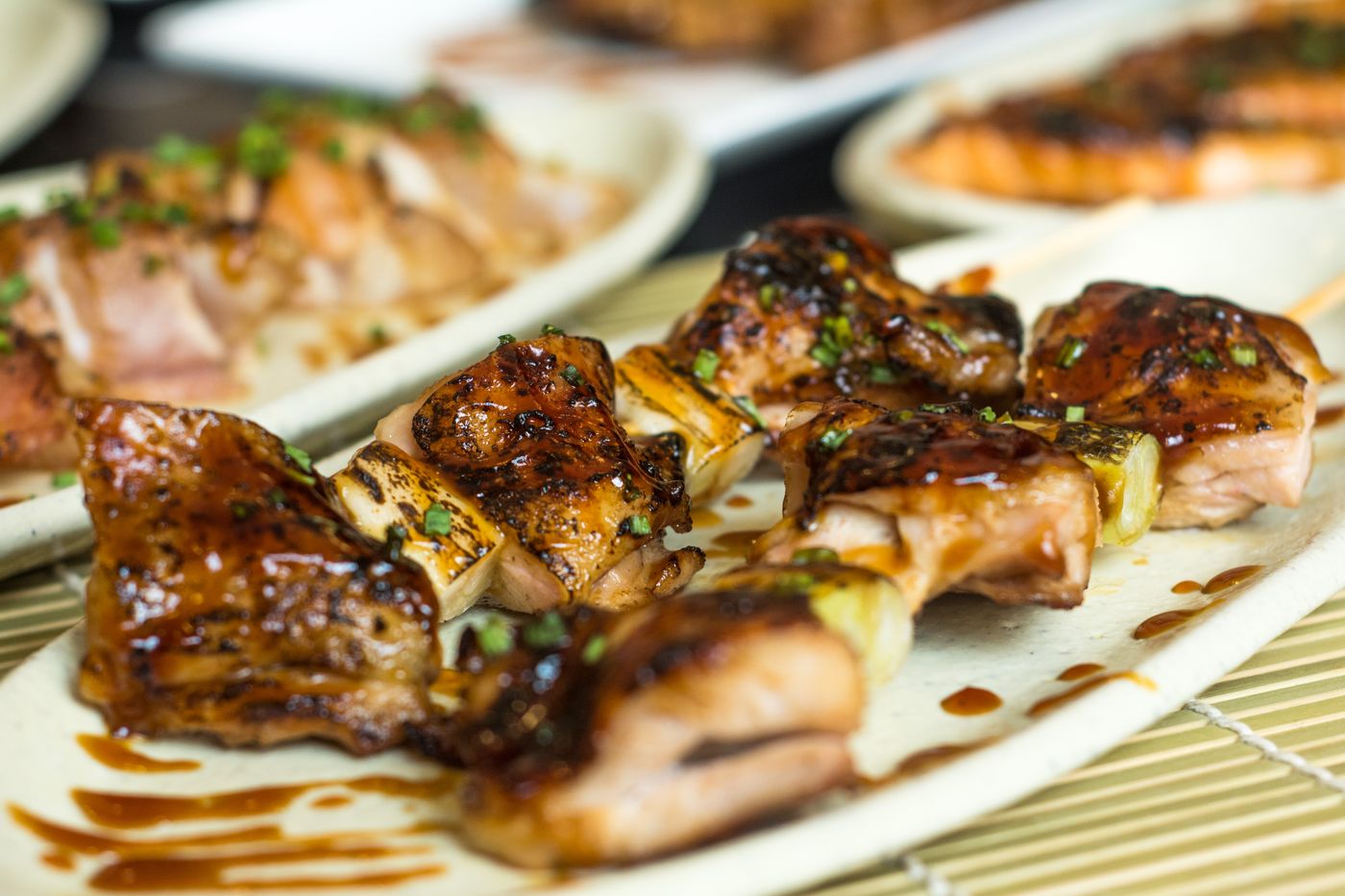
A sweet soy glaze can go from glossy to scorched before thick chicken finishes cooking. These four-serving chicken and scallion skewers solve that problem through even cutting and late basting. The 35-minute recipe uses 600 g boneless thigh meat and eight metal skewers. Make the sauce first, divide it before any raw-chicken contact, and keep the final few minutes of grilling under close observation.
Soy-Glazed Chicken and Scallion Skewers makes 4 servings, with 35 min estimated total time. View the standalone recipe page.
Reduce the glaze only until slightly syrupy
Combine the soy sauce, mirin, brown sugar, water and finely grated ginger in a small saucepan. Simmer for 5–7 minutes, stirring so sugar dissolves and the bottom does not catch. A thin coating on a spoon is more useful than a thick, sticky reduction: the sauce still needs to spread across uneven pieces of chicken.
Pour half into a clean serving bowl immediately and place it away from the grill tools. The other half stays in the saucepan for basting. This physical separation prevents a brush used on undercooked chicken from reaching the sauce that will be drizzled onto finished food. Keep a clean spoon with the serving portion.
Match the chicken and scallion dimensions
Cut the chicken into roughly 3 cm pieces and the white and light-green scallion sections into 3 cm lengths. Slice the dark greens separately for the finish. Inspect larger thigh pieces for folds: a doubled-over lump cooks less evenly than a piece spread around the skewer at a consistent thickness.
Thread chicken and scallion alternately onto eight metal skewers, leaving small gaps. Pressing everything into a dense cylinder makes turning simple but shields surfaces from the heat. Distribute the meat reasonably evenly across the skewers so one is not overloaded while another holds mostly scallion. Brush with the measured 10 g neutral oil.
Cook the chicken before building the glaze
Use a medium-high grill or ridged grill pan. Lay the skewers across the cooking surface so their food-bearing sections receive similar heat. The recipe allows 10–14 minutes, turning every 3 minutes. Have tongs and a clean platter ready; gripping hot metal handles with bare hands is not a safe shortcut.
For most of that time, the skewers cook without glaze. This lets the chicken gain color while the scallions soften. If one section colors much faster, move it to a less intense part of the grill. Keep checking the thickest chicken pieces rather than assuming the small amount of meat nearest each skewer tip represents the whole batch.
Apply the sweet sauce during the final four minutes
Brush with the basting portion only during the last 4 minutes, turning often. Thin applications are easier to control than pouring sauce over the grill. Sugar can darken quickly on the hottest ridges; lower the heat or move the skewers if the coating is racing ahead of the meat. Slightly darkened edges and an acrid black layer are different outcomes.
Check several large chicken pieces reach 165°F / 74°C, placing the thermometer in meat without contacting the metal. A glossy surface is not proof of doneness. Discard the remaining basting sauce that contacted undercooked chicken and set that brush aside for washing. Do not combine it with the reserved serving sauce.
Finish with the clean sauce and fresh greens
Transfer the cooked skewers to the clean platter. Drizzle with the untouched half of the glaze and scatter on the sliced scallion greens. The sauce can run between the pieces; you do not need to keep returning the skewers to the grill until every drop has become a rigid coating.
Serve two skewers per person. Rice or vegetables could accompany them, but those are additional sides rather than ingredients accounted for here. If preparing ahead, refrigerate raw assembled skewers covered and separate from the reserved sauce, and keep the grilling step close to serving. The recipe does not require an overnight marinade or a different skewer material.
Common questions
Why does the glaze burn before the chicken is cooked?
It may have been applied too early, too heavily or over excessive heat. Cook mostly unglazed, then use thin coats during the final four minutes and turn frequently.
Can leftover basting sauce become the serving drizzle?
Discard any basting glaze exposed to undercooked chicken. The clean half reserved before grilling is the serving sauce; keep its bowl, spoon and storage separate.
Technique & food-safety references
These primary references support the technique, safety and storage guidance. The recipe and cooking explanations are original Recipe Pinboard content.