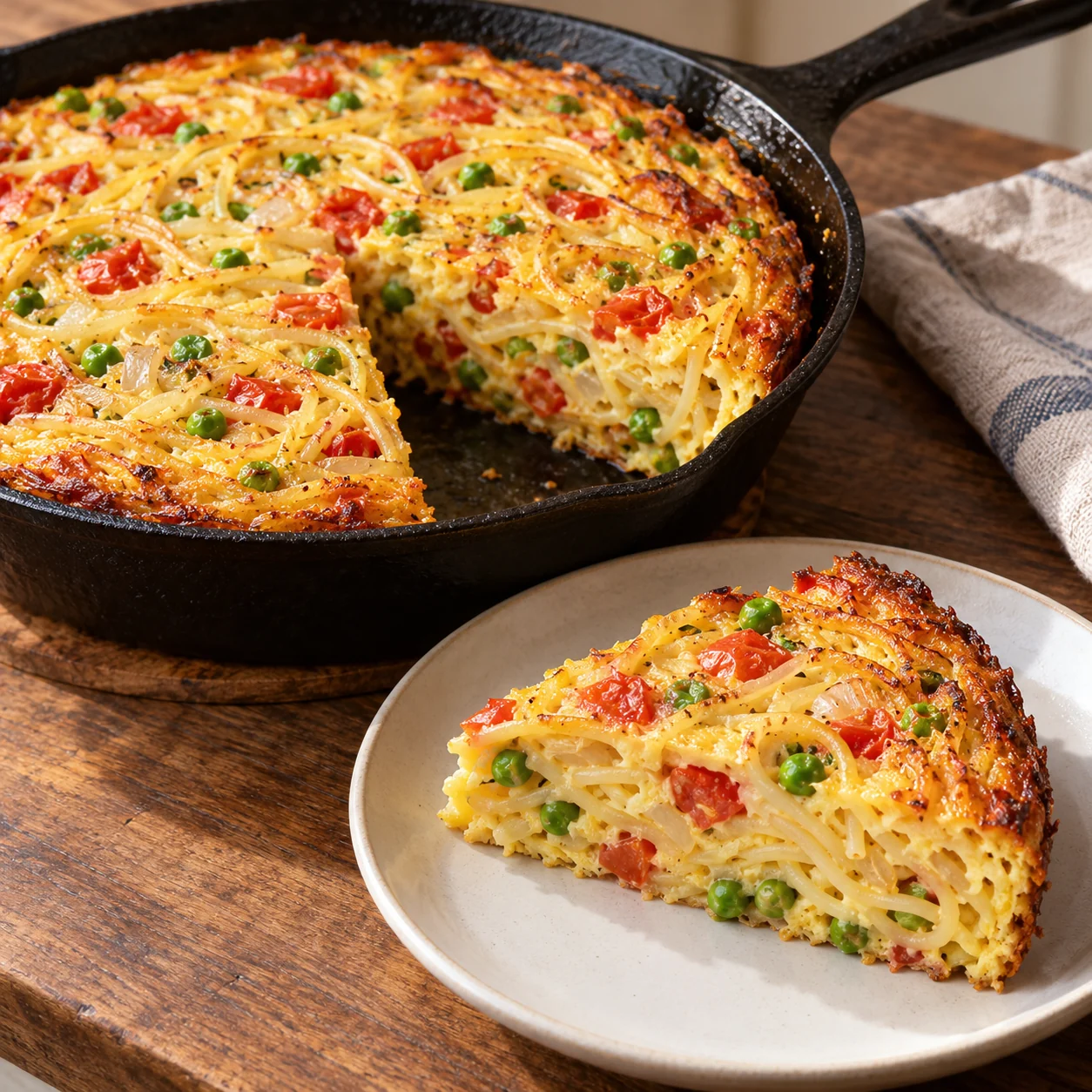
A spaghetti frittata turns cooked strands into a sliceable skillet dish by surrounding them with seasoned egg. Tomatoes and peas give the cut surface color, while cheese helps the mixture taste complete without a separate sauce. The key is to keep excess water out and let the pasta cool before it meets the eggs. The full recipe uses a ten-inch ovenproof skillet and produces six wedges. A much smaller vessel makes a deeper center that will take longer to heat.
Tomato & pea spaghetti frittata makes 6 servings, with 1 hr 10 min estimated total time. View the standalone recipe page.
Measure the pasta before boiling
The ingredient quantity refers to dry spaghetti. Cook it in unsalted water according to its package, adding the frozen peas only during the final two minutes. Drain thoroughly, then spread the mixture on a broad plate for the specified cooling period. Toss once so the strands do not form one hot knot. Avoid rinsing it into a cold, waterlogged mass. The nutrition calculation counts the measured dry pasta and frozen peas, while acknowledging that unmeasured substances may leave in the drained water.
Reduce the tomatoes before adding egg
Soften the onion in the measured olive oil, giving the pieces time to become tender before the tomatoes enter. Keep the tomato juice in the skillet and cook until it thickens around the vegetables instead of collecting as a watery pool. This is evaporation, not draining away a measured ingredient. A broad skillet helps moisture escape. Remove it from the heat for the short cooling interval. Adding egg immediately to a sizzling pan of vegetables would create separate scrambled patches before you can distribute the pasta.
Distribute long strands through the mixture
Whisk the eggs, cheese and seasonings in a roomy bowl, then fold in the cooled spaghetti and peas. Use two utensils if needed to lift and loosen the strands. Return everything to the tomato skillet and spread the ingredients all the way to its edges. Look for dense bundles of pasta with little egg around them, and separate those gently before heating. The goal is an even layer with vegetables throughout, not a nest of spaghetti sitting on top of a thin omelet.
Begin on the stove and finish in the oven
The brief medium-low stovetop stage starts setting the underside without demanding that the whole depth cook from below. Transfer the skillet to the preheated oven using proper mitts. Begin checking near the lower end of the baking range, but let the center temperature decide when it is done. A browned rim can surround an undercooked middle. Insert the thermometer into the center without touching the metal base. If the top is set but the required endpoint has not been reached, continue baking and check again.
Rest before slicing and protect the handle
Leave the finished frittata undisturbed for ten minutes so the portions hold together more readily. Put a heatproof cover on the handle as a reminder that it remains hot; this is especially useful when the skillet returns to the stovetop. Cut six equal wedges and support each with a broad spatula. Refrigerate leftovers promptly rather than leaving the pan out throughout a long meal. The cheese must use vegetarian rennet for the listed dietary tag. This is a wheat, egg and dairy dish, even though vegetables are prominent in the photograph.
Common questions
Why is there liquid beneath my slice?
Tomatoes that were not reduced enough, poorly drained pasta or an under-set egg center can leave moisture behind. Follow both the vegetable reduction and center-temperature checkpoints, then allow the full rest before cutting.
Can I use leftover cooked spaghetti?
Its starting dry weight and added oil or salt may be unknown. For the stated nutrition and seasoning, cook the measured dry quantity in the card. A leftovers variation needs its own ingredient accounting rather than assuming equal cooked and dry weights.
Technique & food-safety references
These primary references support the technique, safety and storage guidance. The recipe and cooking explanations are original Recipe Pinboard content.


