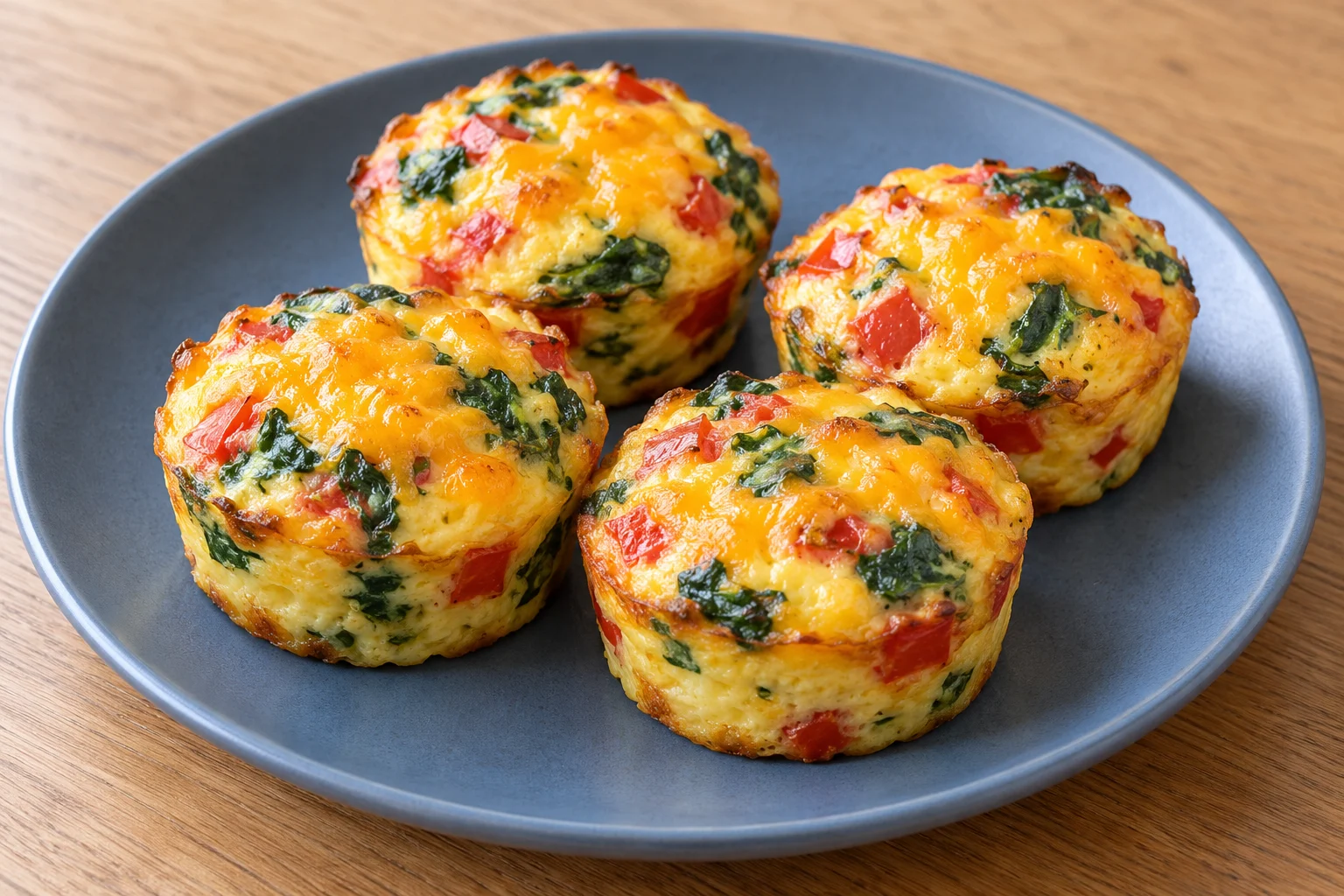
These small egg bakes depend on well-prepared vegetables and evenly filled muffin wells. Pepper and spinach cook before meeting the eggs, and a short pause in the pan helps the finished muffins release. The batch yields twelve muffins, served as six portions of two. Allow 55 minutes overall, including both five-minute cooling stages, with about 25 active minutes.
Spinach, pepper & cheddar egg muffins makes 6 servings, with 55 min estimated total time. View the standalone recipe page.
Oil the wells and prepare fine vegetable pieces
Heat the oven to 375°F (190°C). Brush twelve standard muffin wells, each holding at least 100 ml, with 5 g oil, coating the bottoms and sides thoroughly. Eggs can cling to an uncoated band high on the wall, so spreading oil only across the base is not enough for a clean release.
Wash, dry and chop the 150 g spinach, then finely dice the 150 g trimmed red pepper. Small pepper pieces distribute more readily among twelve wells and soften during the short skillet stage. Large chunks take up space unevenly, while long spinach strands can connect several spoonfuls and make equal portioning unnecessarily awkward.
Drive off excess moisture before adding eggs
Heat the remaining 10 g oil in a skillet over medium heat. Cook the pepper for five minutes, then add spinach for another two to three minutes until wilted and excess water has evaporated. Look across the skillet bottom before stopping. A visible pool is different from vegetables that simply look moist and glossy.
Spread the vegetables on a plate and cool for five minutes. A thin layer loses heat more readily than a compact mound. This pause happens before mixing with eggs and is separate from the five-minute rest after baking. Prepare the egg mixture during this stage rather than shortening the cooling because the pan is ready.
Whisk, distribute and leave room for puffing
Whisk eight large eggs, about 400 g without shells, with 120 g whole milk, the salt and pepper until combined. Break up streaks of egg white without trying to whip a large volume of foam. Stir in the cooled vegetables and 60 g grated cheddar, keeping the remaining 30 g cheese for the tops.
Divide the mixture evenly among the twelve wells, filling no more than three-quarters full. Stir the bowl gently between scoops so vegetables and cheese do not all settle into the last few muffins. Use the specified standard-size wells; a miniature tray does not preserve this yield or timing. Scatter the reserved cheddar evenly over the portions.
Check a set center rather than relying on height
Bake for 18–22 minutes until puffed, with set centers and a thermometer reading of 160°F (71°C) inside an egg muffin. Place the probe in the center without resting it against the metal pan. If your oven heats unevenly, check representative muffins from different areas rather than assuming the most golden top represents every well.
Puffing is a useful visual sign, but the muffins need the center check too. Some settling after removal is expected and does not mean they need to be baked until dry. Stop once the recipe's doneness conditions are met. A browned cheese cap can hide a softer center, so avoid treating color as the sole endpoint.
Rest briefly and loosen without tearing the sides
Leave the muffins in the pan for five minutes. Run a silicone spatula around the edges and lift gently, supporting the bases rather than pulling only on the cheese tops. If one resists, loosen the remaining attached section before lifting again. Serve two muffins per person for the stated six portions.
For saved muffins, refrigerate promptly in shallow containers at 40°F (4°C) or colder within two hours, or one hour above 90°F (32°C). Use within three to four days and reheat to 165°F (74°C). That reheating target is higher than the initial egg-dish endpoint; do not substitute the original 160°F (71°C) check when warming leftovers.
Common questions
Why are the muffins wet around the vegetables?
Spinach can carry washing water and release more during cooking. Dry it before chopping and finish the skillet stage with excess water evaporated. Keep the milk amount at 120 g rather than adding extra liquid to make the raw mixture pour more easily.
Why do my muffins stick despite a little oil?
The sides need oil as well as the bottoms. Let the baked muffins rest five minutes, then loosen all the way around with a silicone spatula. Pulling immediately from the oven can tear a set but still delicate edge.
Technique & food-safety references
These primary references support the technique, safety and storage guidance. The recipe and cooking explanations are original Recipe Pinboard content.