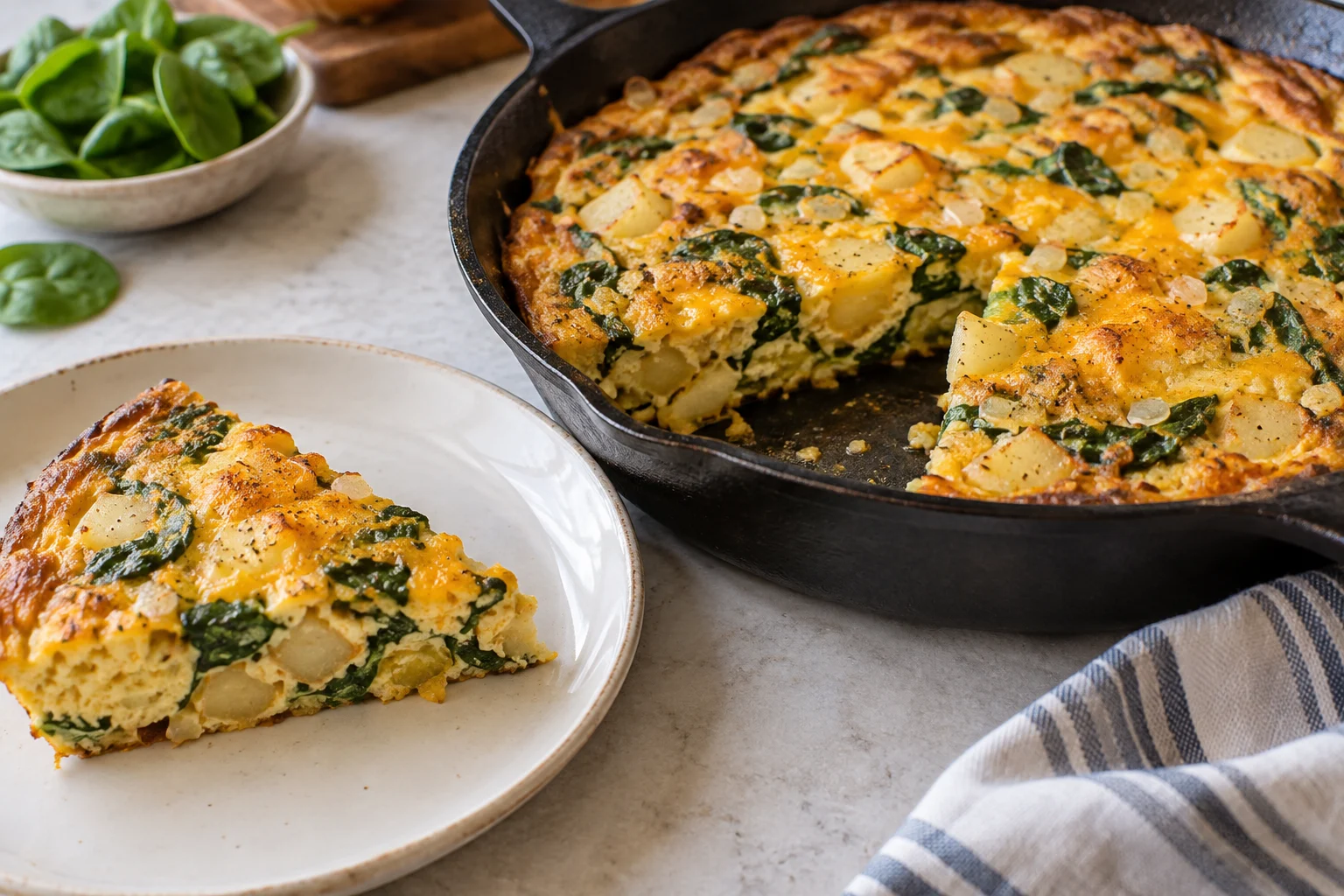
This frittata is a four-portion meal built around eight eggs, diced potatoes, spinach and a modest amount of cheddar. The potatoes cook first under a lid, the spinach releases its water next, and the eggs finish in the oven. Keeping those stages separate is what allows the center to set without asking the eggs to wait while raw potatoes soften.
Spinach & potato frittata makes 4 servings, with 50 min estimated total time. View the standalone recipe page.
Check the pan before starting the filling
Choose a 25 cm skillet that is oven-safe, including its handle, at 375°F (190°C). The pan needs enough room for the potatoes, onion and spinach while still producing a sliceable depth of egg. A much smaller pan makes a thicker frittata with a different baking time; a much larger one makes a thinner result.
Whisk the 400 g shell-free eggs with milk, pepper and 1 g salt until evenly combined, then stir in the cheddar. There is no need to beat in a large amount of foam. Use cheddar made with microbial or vegetarian rennet when a vegetarian cheese is required; a generic cheese label does not always establish its rennet source.
Make the potato dice consistently small
Scrub the potatoes and cut them into approximately 1 cm dice. Similar pieces are more important here than attractive shapes: a few large chunks can remain firm after their smaller neighbors are ready. The listed 400 g is prepared potato with the skin retained, not a peeled-potato amount.
After the onion has softened for three minutes, add the potatoes, water and remaining salt. Cover for the 10–12-minute cooking stage, stirring twice. Pierce a larger cube before moving on. If it resists, continue gently until tender; do not pour in the eggs just because the timer has sounded.
Remove excess water before the eggs enter
Uncover the tender potatoes and let any remaining cooking water evaporate. Add spinach in two batches, allowing the first to collapse before adding the second. Keep stirring for the stated 2–3 minutes until the leaves are wilted and the base no longer has a puddle of liquid.
Spinach that is dripping from washing brings in avoidable water, so dry it beforehand. Frozen spinach would require a separate thawing, squeezing and quantity adjustment and is not a direct swap for 200 g fresh leaves in this recipe. Spread the cooked vegetables evenly so each wedge contains potatoes rather than one side holding most of them.
Set the edges, then let the oven finish the center
Reduce the burner to low before adding the egg mixture. The two-minute stovetop period should only begin to set the edge; it should not create a deeply browned bottom while the center remains liquid. Move the whole skillet to the preheated oven with an oven mitt.
Begin checking within the 12–16-minute baking window. The center must be set and reach 160°F (71°C), the safe minimum for an egg dish without meat or poultry. Insert a thermometer into the center without touching the hot pan. The surface color and a firm edge are useful observations, but neither replaces that center check.
Rest, slice and keep the hot handle obvious
Rest the frittata for five minutes before cutting four wedges. The pause helps the slices hold together. Leave a dry oven mitt over the skillet handle as a visible warning, since the handle still looks like it did on the stovetop even though it is now very hot.
Refrigerate leftover wedges in shallow containers within two hours, or one hour above 90°F (32°C), at 40°F (4°C) or colder. Use within three to four days and reheat to 165°F (74°C). Reheating gently and covered helps the eggs stay tender; do not keep heating a finished wedge merely to recreate the original browned edge.
Common questions
Why are the potatoes firm after the eggs are set?
The potato stage was incomplete or the dice were too large. Check tenderness before adding spinach and eggs; the short oven finish is not a dependable way to cook raw potato chunks.
Why is water collecting in the cut frittata?
Excess potato cooking water or insufficiently wilted spinach can contribute liquid. Evaporate both before adding the eggs, then avoid overbaking beyond a safely set center.
Technique & food-safety references
These primary references support the technique, safety and storage guidance. The recipe and cooking explanations are original Recipe Pinboard content.