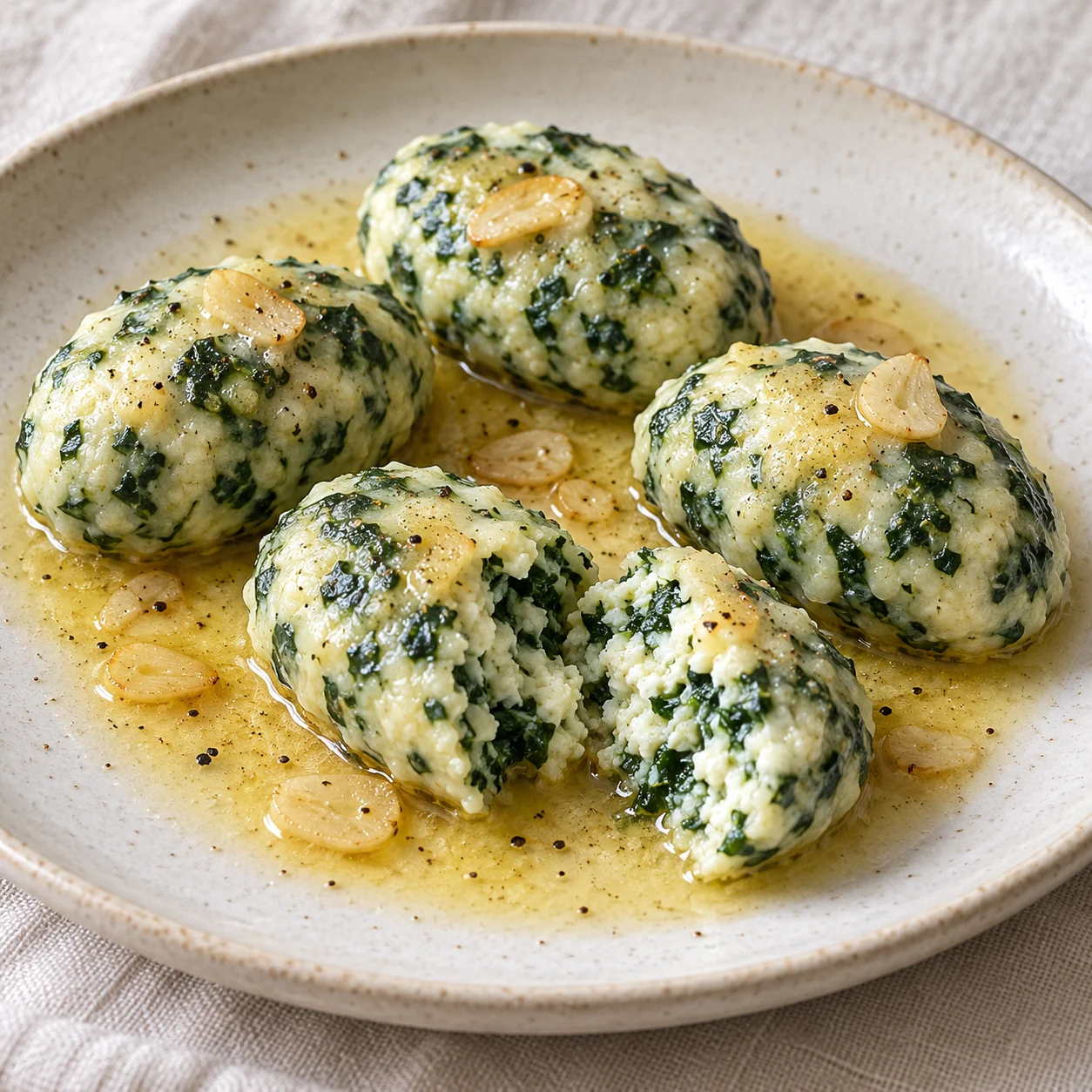
Gnudi are soft cheese dumplings without a surrounding pasta sheet. Their texture depends on controlling moisture before shaping, then moving them gently through the cooking water and butter sauce. This formula makes sixteen oval dumplings, four per portion. Read the full card before starting: the ricotta drain and the later tray chill are separate pauses. Use those intervals to wilt the spinach, prepare the garlic and organize a wide pot, slotted spoon and finishing skillet.
Spinach & ricotta gnudi makes 4 servings, with 1 hr 50 min estimated total time. View the standalone recipe page.
Start with firm ricotta and weigh after draining
Choose firm whole-milk ricotta rather than a loose product sitting in abundant whey. Drain it in a lined sieve in the refrigerator for thirty minutes, then weigh the amount required. That order matters: weighing first and discarding liquid afterward would reduce the cheese actually entering the dough. If the product remains very loose, it is not the firm ricotta specified for this formula. A longer refrigerated drain may be necessary and adds time beyond the card. Do not compensate by pouring an unmeasured quantity of flour into the mixture.
Remove spinach water before chopping
The spinach weight refers to raw washed leaves, not the small bundle left after cooking. Wilt the leaves with the moisture already clinging to them, then allow the cooling period before squeezing. Hot greens can burn your hands. Press out excess liquid in manageable handfuls and chop finely so long stems do not pull through the dumplings during shaping. The nutrition estimate counts the original spinach mass; it does not pretend to know exactly which nutrients leave with the squeezed liquid. This limitation belongs to the estimate, not an instruction to retain watery greens.
Mix once and shape equal ovals
Combine the prepared spinach and ricotta with the measured flour, egg, cheese and seasonings just until distributed. All the flour goes into the mixture; this version does not rely on an additional flour coating. Lightly damp hands make portioning easier without changing the dry ingredient amount. Divide into sixteen pieces before refining their oval shapes. Similar size helps their centers cook at comparable rates. Set them apart on parchment and refrigerate for thirty minutes. A crowded pile is harder to lift intact when the poaching water is ready.
Keep the water gentle and check the center
Use a wide pot and cook eight dumplings at a time. The water should move quietly around them instead of tossing them against one another. Slide each dumpling off the spoon close to the surface to avoid splashing. Floating is a useful observation but does not establish that the egg and flour mixture is cooked throughout. Check a center against the card temperature, supporting the dumpling on a slotted spoon. Lift carefully and let water drain away before moving each batch into the finishing stage.
Finish with a thin coating of garlic butter
Warm the butter gently and let the sliced garlic become pale golden without burning. Add the measured water to make the sauce easier to distribute around the tender dumplings. Turn them carefully with a broad spoon rather than shaking the skillet sharply. Divide all sauce among four plates. The vegetarian tag requires suitable rennet in both cheeses, so inspect the labels instead of assuming that every Parmesan-style product qualifies. Wheat, milk and egg remain present, and reheated dumplings will usually be firmer than freshly poached ones.
Common questions
Why did the dumplings break apart?
Loose ricotta, insufficiently squeezed spinach or violently boiling water can undermine their shape. Check those conditions before changing the formula. Handle chilled pieces individually and leave room around each batch.
Can I skip the tray chill?
The card includes it for easier handling and predictable scheduling. Shape the full batch, chill it and use that interval for the cooking setup rather than trying to lower newly mixed, very soft dough directly into water.
Technique & food-safety references
These primary references support the technique, safety and storage guidance. The recipe and cooking explanations are original Recipe Pinboard content.


