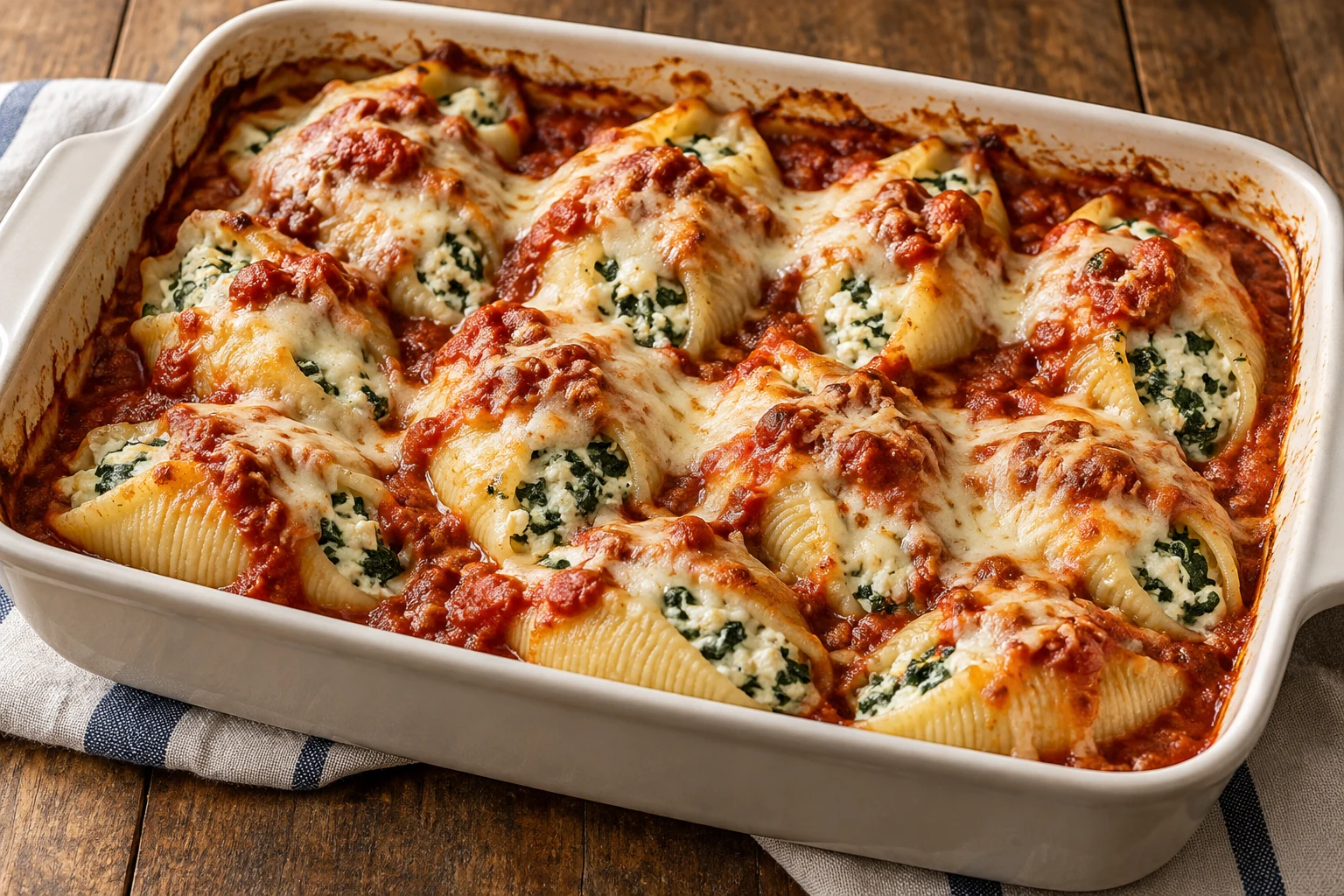
The shells need two different environments: boiling water to become flexible and a covered tomato-sauce bake to finish around the filling. Browning the mozzarella is only the final stage. Plan around the updated ninety-minute total, including preparation and rest; the thirty active minutes are not the entire time from dry pasta to table.
Spinach & ricotta baked shells makes 6 servings, with 1 hr 30 min estimated total time. View the standalone recipe page.
Cook shells until flexible rather than fully finished
Use twenty jumbo shells and stop their boiling stage two minutes before the package’s full cooking time. Drain carefully and let them cool only until easy to handle. This leaves room for further cooking in the oven while making the shells flexible enough to fill without forcing their edges apart.
Separate them gently so they do not remain nested in a tight stack. A soft overcooked shell can tear under a spoonful of filling, while one that is barely hydrated may resist opening. The package-relative timing is more useful than assigning every brand of jumbo shells the same boiling interval.
Distribute fresh spinach through the ricotta
Chop the baby spinach before mixing it with ricotta, egg, Parmesan, oregano and pepper. The source uses fresh baby spinach directly in the filling; it does not specify thawed frozen spinach or a separate sauté. If washing the leaves yourself, dry them so wash water does not enter the cheese mixture.
Mix until the egg and spinach are evenly distributed, checking the bottom of the bowl for uncombined ricotta. Do not taste the uncooked filling because it contains raw egg. Divide it with the twenty shells in mind: overfilling the early shells leaves uneven portions and larger cold centers to heat later.
Use the sauce both below and above
Spread two cups of marinara across the base of the nine-by-thirteen-inch baking dish. Fill the shells and arrange them in that sauce without stacking them into multiple layers. A single layer exposes the filled shells to the intended heat and moisture more consistently.
Spoon the remaining cup of marinara over the shells, paying attention to exposed pasta edges, then distribute the mozzarella. The upper sauce protects pasta surfaces during baking; a bare edge can become firm before the filling is ready. Keep the shells recognizable rather than burying all the cheese in one central mound.
Cover first, uncover last and measure the filling
Bake covered with foil at 375°F (190°C) for twenty-five minutes. Remove the foil carefully so escaping steam moves away from your hands and face. The covered stage helps the center heat while limiting drying; it should not be skipped just because browned cheese looks appealing.
Bake uncovered for another ten to fifteen minutes, checking the center of the filling for 165°F (74°C). Probe a shell near the middle of the dish and another substantial portion without touching the pan. Bubbling sauce at the edges and golden mozzarella cannot substitute for a temperature reading in the filling.
Rest briefly, then portion for serving or storage
Allow the five-minute rest before serving. This gives the filled shells a chance to settle so lifting one is less likely to release its entire filling into the sauce. Use a broad serving spoon and include marinara with each portion rather than scraping shells out dry.
Refrigerate leftovers promptly in shallow portions and use within three to four days. Reheat to 165°F in the filling, keeping some sauce around the pasta. A cold prepared casserole would need additional heating time compared with a just-assembled one; do not assume the original timer proves that a chilled center is ready.
Common questions
Why are the shell edges hard?
They may have been exposed with too little sauce or baked uncovered too early. The base sauce, upper sauce and first covered stage all help the pasta finish without drying.
Is bubbling sauce enough to show the filling is cooked?
No. The sauce at the dish’s perimeter heats sooner than the center of a stuffed shell. Use a thermometer in the middle filling and reach 165°F before resting.
Technique & food-safety references
These primary references support the technique, safety and storage guidance. The recipe and cooking explanations are original Recipe Pinboard content.