Strawberry crepes are made one at a time, so an organized work area matters as much as a smooth batter. This forty-five-minute recipe yields about eight crepes for four servings. A fifteen-minute batter rest gives you time to prepare strawberries and mint, and a 20 cm nonstick skillet keeps the portion size consistent. The first crepe is a useful check on pan heat and swirling speed, not a reason to rewrite the ingredient ratio.
Strawberry crepes makes 4 servings, with 45 min estimated total time. View the standalone recipe page.
Mix a smooth batter and separate the butter
Whisk 125 g all-purpose flour with the two eggs, 300 ml milk, 20 g melted unsalted butter, 1 tbsp granulated sugar and ¼ tsp salt until smooth. Break up flour pockets with the whisk, including any around the bottom edge of the bowl. Let melted butter cool enough that it does not heat the eggs abruptly when mixed in.
Reserve the additional 10 g butter for the pan rather than adding it to the batter. The two amounts have separate jobs. Rest the batter for fifteen minutes. It should be much more fluid than an American-style pancake batter, because each portion needs to travel across the skillet before the heat sets it.
Prepare the fruit during the rest
Wash and dry the strawberries, then hull and slice them to provide the listed 300 g. Keep them separate from the batter and the raw-egg utensils. Rinse and dry the mint, remove tough stems and measure 2 g edible leaves for the whole recipe. The garnish is divided across four plates rather than treated as four large sprigs.
Have a plate ready for the cooked crepes and a flexible spatula that fits beneath them. Measure a portioning tool that can hold about 60 ml batter. A predictable amount makes it easier to compare one crepe with the next; repeatedly guessing larger pours creates thick centers and may reduce the number of crepes the batch produces.
Butter lightly and swirl as soon as you pour
Heat the 20 cm nonstick skillet over medium heat and brush it with a little of the reserved pan butter. You want a thin coating, not a pool. Pour in about 60 ml batter and immediately tilt the pan so it runs around the base in a thin layer. Set the skillet back over the burner once the surface is covered.
If the batter sets in a small thick patch before it can spread, lower the heat slightly for the next crepe. If it stays pale and wet for a long time, let the pan regain moderate heat. King Arthur’s crepe guidance similarly treats fast setting as a pan-temperature issue. Avoid automatically adding milk when the real problem is an overheated skillet.
Wait for the edge to lift before turning
Cook the first side for one to two minutes, watching for an edge that begins to release. Slide the spatula beneath it gently and turn, then cook the second side for thirty to sixty seconds until fully set. A delicate crepe can tear if turned while the center is still wet and unable to support itself.
Repeat with the remaining batter and the rest of the 10 g pan butter, aiming for about eight crepes. Adjust the burner as the skillet stores heat over successive rounds. Keep the cooked crepes together on the waiting plate for prompt service. Do not taste raw batter to check seasoning; it contains uncooked flour and eggs.
Fold, finish and keep leftovers separate
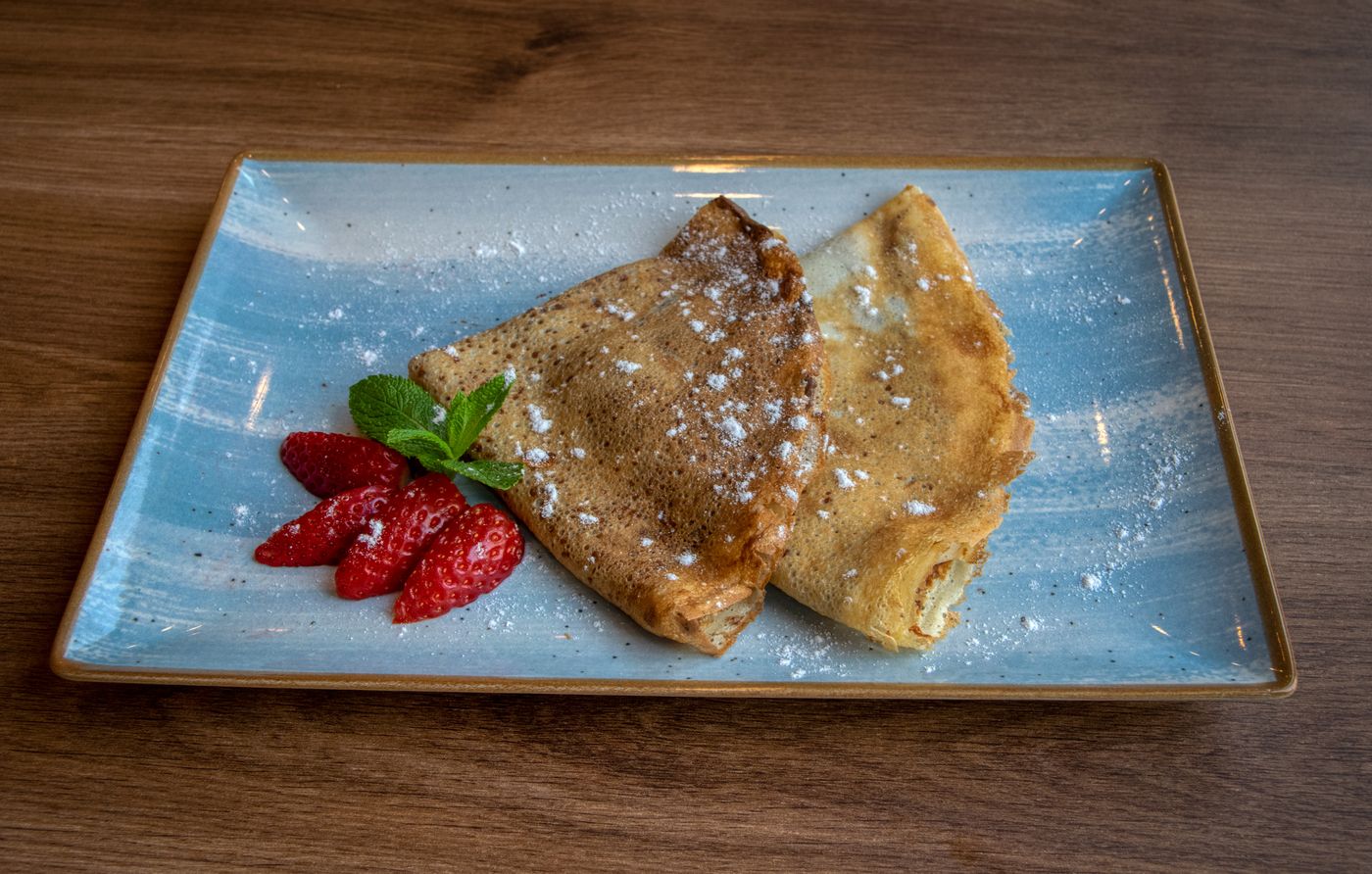
Fold each crepe into quarters and divide them across four plates, roughly two per serving when the batch yields eight. Add the strawberries, dust with the 1 tbsp powdered sugar and distribute the mint leaves. Dust shortly before eating because the sugar absorbs moisture from the fruit and disappears into a wet coating over time.
For advance preparation, store cooked crepes separately from the fruit and sugar. Refrigerate promptly at 40°F (4°C) or below and use within three to four days, following any shorter limit for the berries. Reheat crepes thoroughly to 165°F (74°C) if serving leftovers hot. Add fresh toppings afterward so the strawberries do not become warm and watery during reheating.
Common questions
Why do my crepes tear when I flip them?
They may be turned before the surface is set, or the spatula may support too little of the crepe. Wait for the edge to lift, loosen gently and slide the tool well underneath. Check that the skillet has a thin butter coating rather than dry patches.
Can I use a larger pan?
A larger pan changes the thickness produced by a 60 ml portion. Either you get a smaller circle within that pan or a much thinner crepe. Use the specified 20 cm skillet to follow the intended size and approximate eight-crepe yield without changing the batter quantities.
Technique & food-safety references
These primary references support the technique, safety and storage guidance. The recipe and cooking explanations are original Recipe Pinboard content.