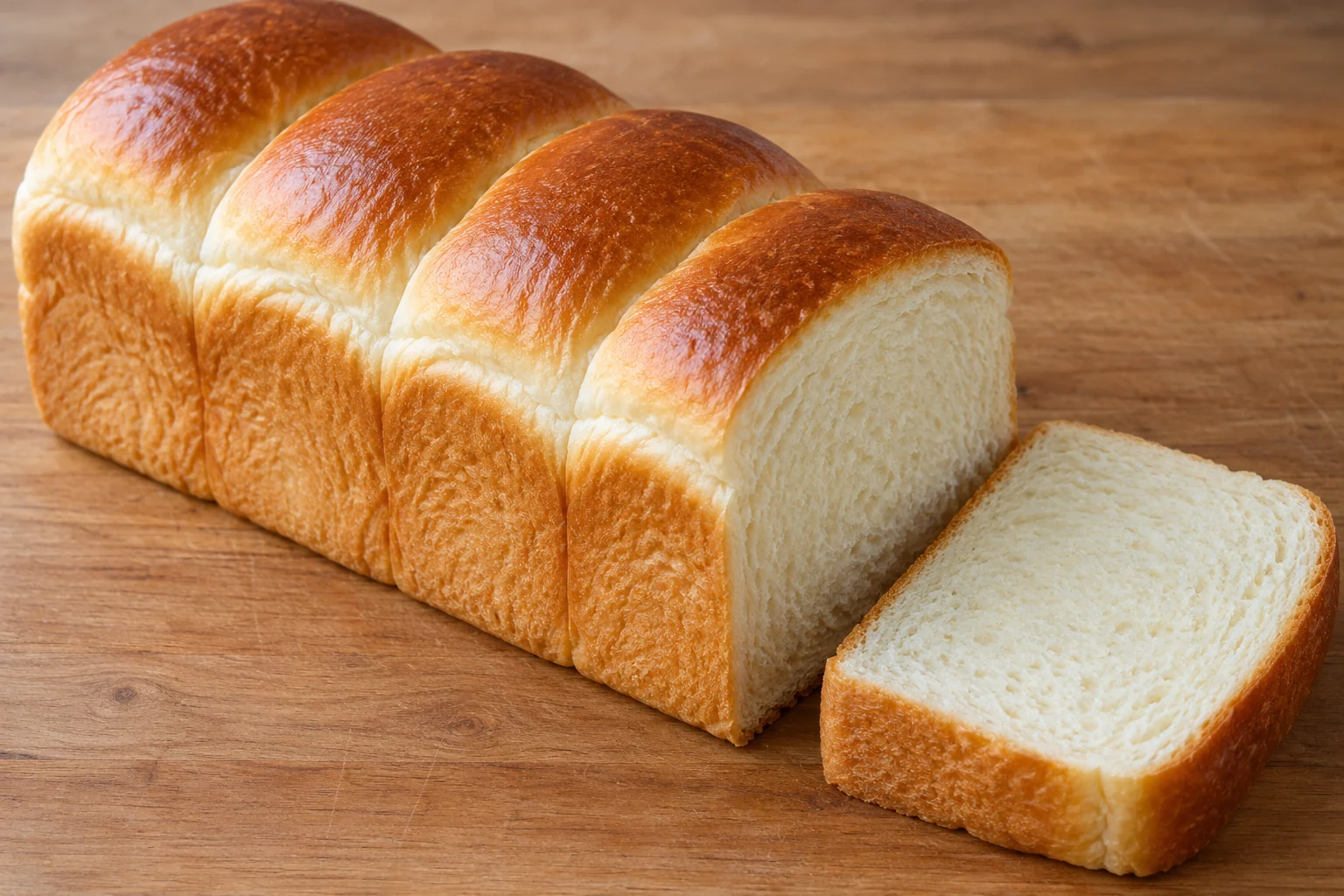
Tangzhong is a cooked paste made from part of a bread recipe's flour and liquid. It is not a sourdough starter and needs no feeding or overnight fermentation. Here, the paste is incorporated into an enriched dough that becomes a soft four-lobed sandwich loaf. The ingredient list deliberately divides the milk and flour by job so the paste, dough and glaze are all included once in the same measured recipe.
Tangzhong milk bread loaf makes 12 servings, with 7 hr 30 min estimated total time. View the standalone recipe page.
Make and cool the small paste
Whisk the paste ingredients together while cold to remove flour lumps before heating. Stir across the saucepan base as the mixture thickens; it should become a smooth soft paste rather than a browned roux. Scrape it into the mixing bowl so little is left behind. Cooling matters because yeast and egg are added later. Check that the paste is no warmer than the recipe's stated limit instead of assuming that a fixed number of minutes makes every bowl equally cool.
Develop dough before judging stickiness
The butter is added after an initial kneading period. At first, the dough may smear and feel softer as the fat works in; continue patiently until it becomes cohesive and stretchy. A scraper helps gather it without covering the worktop in extra flour. The measured handling oil has a specific allocation to bowl, hands and pan. Extra flour may make kneading feel easier but can change the balance that gives this loaf its soft crumb. Keep the dough covered during any brief interruption.
Let the first rise show itself
Room temperature, yeast condition and dough temperature all influence the rise. Look for a noticeably expanded, puffy mass rather than treating the upper timing range as an absolute deadline. If the yeast mixture showed no activity at the beginning, investigate that before committing the rest of the ingredients. This dough contains sugar and butter, so it should not be compared minute-for-minute with a lean bread dough. The generous total time includes cooling and proofing as real preparation stages. Allow up to seven and a half hours on the advertised schedule; a cool room may extend it.
Shape four even lobes
Divide the dough into equal portions so the loaf expands evenly across the pan. Flatten gently, fold the sides inward and roll each portion into a compact log without tearing its surface. Put the seams underneath, with the four logs side by side along the pan. A clean unfloured surface provides enough grip for shaping. If a piece springs back strongly, cover it briefly before continuing. Do not force a tight rectangle by repeated hard rolling, which makes handling unnecessarily difficult.
Bake, release and cool before slicing
The measured milk glaze gives the top a gentle sheen; there is no uncounted egg wash. Check the center temperature as well as the crust color, since enriched dough can brown before the middle is ready. A loose foil tent protects a top that is coloring early. After the short pan rest, move the loaf to a rack so trapped steam can escape. Cutting while the middle is still hot can compress the soft crumb. Freeze cooled slices if they will not be used soon.
Common questions
Why is the loaf dense even though the crust is brown?
Possible causes include weak yeast, insufficient kneading or cutting the final proof short. Brown color does not prove the center is baked. Check the stated center temperature and let the loaf cool fully before assessing its crumb.
Can I add the paste ingredients on top of the listed totals?
No. The 25 g paste flour belongs to the 350 g flour total, and the 125 g paste milk belongs to the 250 g milk total. Doubling those allocations changes hydration and invalidates the original ingredient calculation.
Technique & food-safety references
These primary references support the technique, safety and storage guidance. The recipe and cooking explanations are original Recipe Pinboard content.


