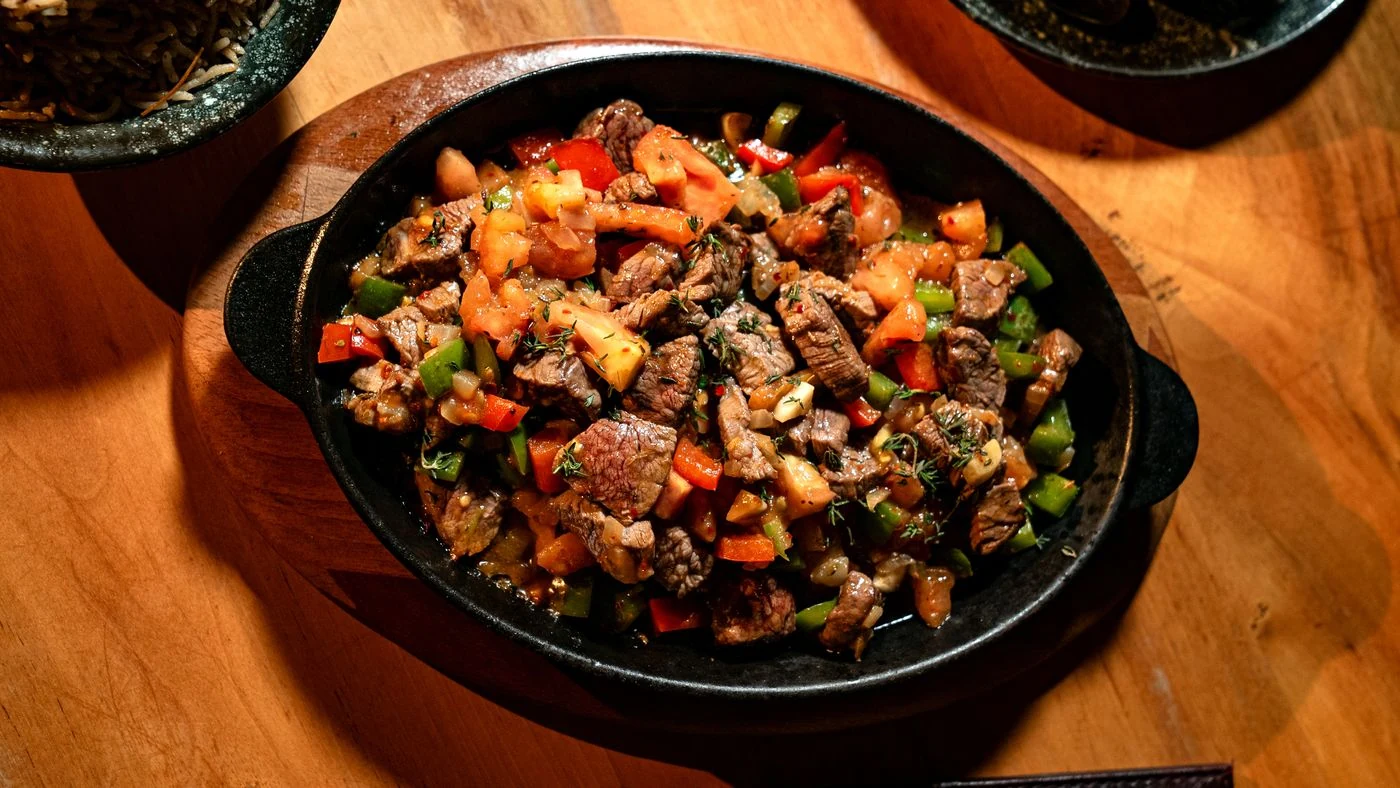
For this skillet, the vegetables and steak take turns in the pan rather than competing for space. That sequence lets the peppers soften before the beef cooks, and gives the steak its required rest while tomatoes loosen the browned pan residue. The forty-five-minute recipe uses 600 g top-sirloin cap steak cut into pieces and serves four without an additional side included.
Thyme steak & pepper skillet makes 4 servings, with 45 min estimated total time. View the standalone recipe page.
Cut and organize before the skillet heats
Trim visible external fat and cut the steak into roughly 2.5 cm pieces. Similar dimensions matter because a very small piece can finish while a thick one still needs more cooking. Pat the surfaces dry and season with half the salt and pepper. Keep raw-meat utensils separate from the bowl that will later hold cooked vegetables.
Prepare peppers, onion, tomatoes, garlic and thyme before starting. Set out the 30 ml water and divide the olive oil into the first 14 g and remaining 13 g. Have a clean plate ready for cooked beef and a thin-probe thermometer within reach. Searching for those tools after the first batch is ready interrupts a fast-moving skillet sequence.
Give the peppers and onion their own stage
Heat the first oil portion over medium-high heat, then cook peppers and onion for seven to nine minutes. Spread them over the pan surface after stirring so edges can brown. Small diced pieces should soften while still retaining recognizable shape. If the pan seems crowded, allow moisture to escape rather than increasing heat until the onion burns.
Add garlic only for the last thirty seconds, then transfer the vegetables to a bowl. That late addition protects the small garlic pieces during the longer vegetable cook. Clearing the skillet is important: leaving a thick vegetable layer underneath the beef would reduce direct contact and add moisture just when the steak is supposed to develop a browned surface.
Cook two uncrowded batches to the measured endpoint
Add the remaining oil and cook the steak in two batches, turning over five to seven minutes per batch or as needed. Let a face sit briefly against the pan between turns. Browning several sides is useful, but appearance alone cannot confirm the center temperature. Smaller pieces need attention so they do not stay in the skillet longer than necessary.
Insert a thin probe from the side into the center of several of the largest pieces, keeping it clear of the hot pan. Each checked piece should reach at least 145°F/63°C before removal. Move cooked beef to the clean plate and rest for at least three minutes. The first batch's rest does not eliminate the second batch's own rest requirement.
Loosen the pan while the final batch rests
Add tomatoes, thyme, measured water and remaining seasoning to the skillet. Cook for two to three minutes, scraping up browned residue that releases into the juices. The tomatoes should begin to soften while retaining some shape. This stage creates a light coating for the meat and vegetables rather than a long-simmered tomato sauce.
Use the timer for the steak rest as well as the sauce. If the tomatoes are ready at two minutes, let the beef finish its full three-minute rest before combining everything. Avoid boiling the tomatoes down aggressively merely to occupy that interval. The small amount of water is intended to help release flavor from the pan, not turn the meal into a stew.
Recombine briefly and portion the skillet evenly
Return the vegetables, rested steak and collected juices, then toss just until hot. The beef is already cooked, so a long second simmer would unnecessarily extend its cooking. Fold from the bottom to coat the pieces while keeping the tomatoes intact. Check that thyme leaves are distributed instead of remaining in one concentrated cluster.
Divide both meat and vegetables among four plates, returning to each plate in turn for an even share. The stated serving is one quarter of this skillet. If adding bread, rice or another side at the table, treat it as a separate addition rather than assuming it is included in the recipe's quantities or preparation time.
Common questions
Why does the steak release water instead of browning?
Wet surfaces and crowded batches limit direct hot-pan contact. Pat the pieces dry, remove the cooked vegetables and keep the two steak batches uncrowded before adjusting the heat.
Can I skip resting because the steak is cut small?
No. The written method requires the steak to reach at least 145°F/63°C and rest at least three minutes. Give the final batch its full rest even if the tomatoes soften sooner.
Technique & food-safety references
These primary references support the technique, safety and storage guidance. The recipe and cooking explanations are original Recipe Pinboard content.