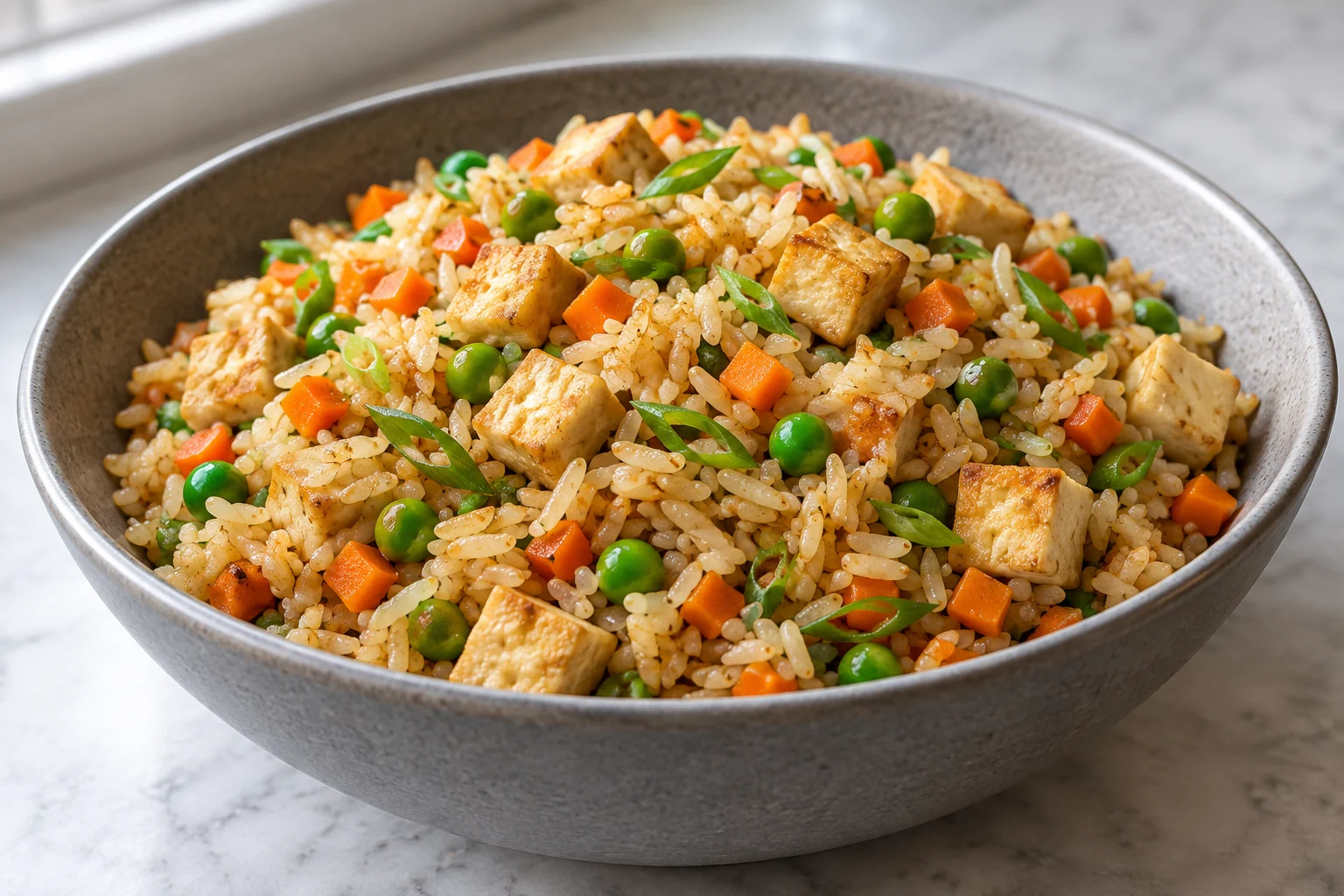
Fried rice does not require leaving cooked rice on the counter overnight. This recipe cooks a measured batch, spreads it briefly to release steam and uses it immediately. Tofu and vegetables are cooked in stages so they do not crowd the pan all at once. The complete card above gives the quantities; this guide explains the texture and handling decisions behind the sequence.
Carrot, pea & tofu fried rice makes 4 servings, with 1 hr 10 min estimated total time. View the standalone recipe page.
Cook rice with the stated liquid
Use dry long-grain white rice and the specified water amount as the starting formula. Brown rice and precooked rice need different handling. Keep the lid on during the gentle cook and let the rice rest off heat afterward. Check for a tender center rather than relying only on the clock. Rice brands and pans can differ; if your package gives a substantially different absorption method, follow a separately recalculated recipe instead of assuming every rice product behaves identically.
Spread briefly, then keep moving
Spread the cooked rice on a clean shallow tray for ten minutes. A thin layer releases steam more effectively than a deep bowl, reducing wet clumps before stir-frying. This is a short preparation step, not an instruction to air-dry rice for hours. Begin the tofu and vegetable stages while the rice cooks so the tray can go straight back into a hot pan. If the workflow is delayed, refrigerate cooked rice promptly in shallow containers.
Dry the tofu surface
Drain and pat the extra-firm nigari tofu before cutting small even cubes. The recipe uses the drained edible weight. Water clinging to the surface encourages steaming and makes browning harder. Heat the first measured portion of oil, add tofu in an uncrowded layer and turn gently once surfaces begin to color. Transfer browned cubes to a clean bowl. Keeping them separate during the next stage avoids breaking them up while the firm carrot pieces soften.
Give carrot a head start
Finely diced carrot needs more time than scallions, garlic or ginger. Cook it in the remaining measured oil before adding the frozen peas. Follow the pea package cooking instruction and make sure they are hot and tender. Add the aromatics only for the brief final interval, because small minced pieces can burn quickly in a hot pan. Browned garlic is not the goal here; its flavor should distribute through the rice without dark bitter fragments.
Finish in a pan with enough room
Add rice, tofu and soy sauce, then fold and turn to separate clumps. If the skillet is crowded, work in two batches and recombine them before portioning. Crowding traps steam and prevents direct contact with the hot surface. Heat the complete mixture thoroughly to 165°F (74°C). Divide into four even portions with comparable tofu and vegetables. Refrigerate leftovers promptly in shallow containers, use within three to four days and reheat safely; reheating is not a remedy for rice left out too long.
Common questions
Why is the rice sticky?
Possible causes include excess cooking liquid, insufficient steam release or an overcrowded pan. A few soft clumps can be broken gently with a spatula, but vigorous smashing turns grains into paste. Use the specified rice type and staged method next time.
Is reduced-sodium soy sauce gluten-free?
Not necessarily. Many soy sauces contain wheat, and this recipe is not tagged gluten-free. A different sauce requires a label check and revised nutrition inputs rather than carrying over the current panel unchanged.
Technique & food-safety references
These primary references support the technique, safety and storage guidance. The recipe and cooking explanations are original Recipe Pinboard content.


