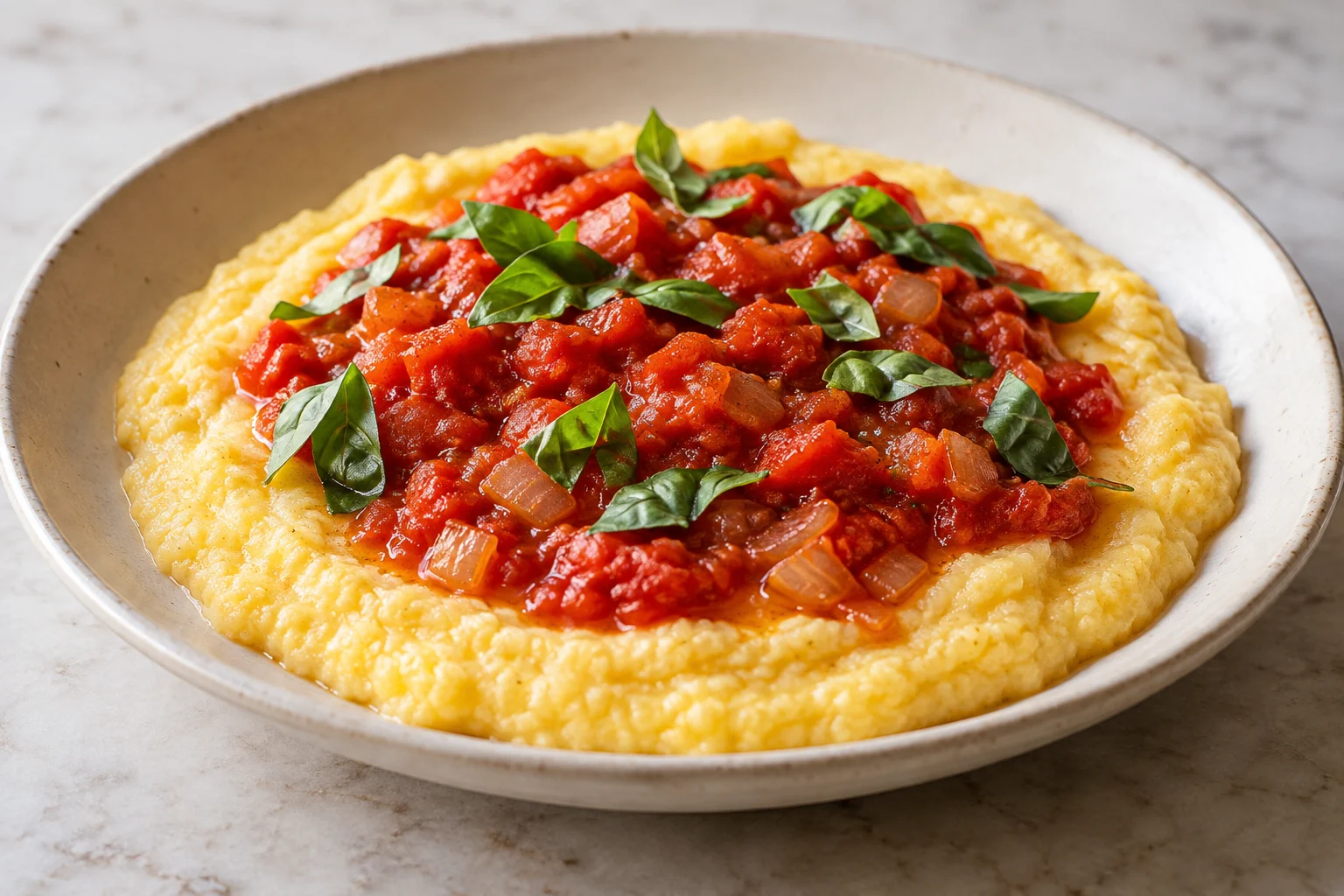
This is soft polenta served from a spoon, topped with chunky tomato sauce and torn basil. The two components cook alongside each other, making the 50-minute total practical without pretending the cornmeal becomes tender instantly. Four portions use a measured olive-oil finish rather than cheese or cream.
Tomato & basil polenta makes 4 servings, with 50 min estimated total time. View the standalone recipe page.
Match the cornmeal to the cooking schedule
Choose dry degermed yellow cornmeal with a medium grind, not an instant preparation or a ready-cooked polenta tube. Grind and processing affect cooking time and water absorption. The recipe plans on thirty to forty minutes so the grain has time to become tender, rather than stopping as soon as the mixture looks thick.
The initial 1000 g water gives 180 g cornmeal room to hydrate into a soft base. Another 200 g water is listed only as a reserve if evaporation requires it. Keep that reserve available and add it in 25 g increments when needed; an uncontrolled stream makes it harder to judge the finished consistency.
Add cornmeal slowly while whisking
Bring the initial water and 2 g salt to a boil in a heavy saucepan. Pour the cornmeal in a steady thin stream while whisking. Dumping the whole quantity into the water creates clumps whose outsides thicken before their centers are moistened.
Once the mixture is combined, reduce the heat to low. Stir frequently, reaching the corners and scraping across the base, and partially cover between stirs to control splashes. A thick porridge can spit surprisingly hot droplets. The burner should maintain gentle cooking, not a vigorous eruption every time the lid is lifted.
Begin the sauce while the polenta hydrates
In a separate wide skillet, soften the diced onion in 15 g olive oil, then add garlic for thirty seconds. Add the chopped ripe red tomatoes together with their juices, the other 2 g salt and the pepper. Using a wide pan gives excess tomato water a route to evaporate during the fifteen-to-twenty-minute simmer.
This is a chunky fresh-tomato sauce, so leave some recognizable pieces rather than trying to mash everything smooth. If the tomatoes are especially watery, continue reducing gently while checking the polenta. If they are unusually dry, lower the sauce heat rather than letting the garlic and onion catch beneath them.
Judge tenderness separately from thickness
Thick polenta is not necessarily cooked polenta. Taste a small cooled spoonful near the end of the cooking window; the grains should feel tender rather than hard or sharply gritty. If the base is getting stiff before that happens, add some reserved hot water and keep cooking gently.
When tender, stir the remaining 10 g olive oil into the polenta. Remove the tomato sauce from the heat before folding in torn basil so the herb stays a fresh finishing note. Divide the polenta among four shallow bowls and top immediately: the longer it waits in the pan, the more it sets.
Plan for a different texture after chilling
Soft polenta naturally firms when cold. Store it separately from the tomato sauce so you can loosen and heat each component appropriately. For a spoonable leftover portion, add a little water during reheating and stir until the polenta relaxes; expect more stirring than reheating a thin soup.
Refrigerate both components promptly in shallow covered containers at 40°F (4°C) or colder, within two hours or one hour above 90°F (32°C). Use within three to four days. Reheat both to 165°F (74°C), checking the dense polenta in more than one spot. Basil may darken after storage, but reheating safely matters more than keeping its original color.
Common questions
Why is my polenta lumpy?
Cornmeal added too quickly can form dry-centered clumps. Whisk continuously while pouring in a thin stream, then stir regularly as the mixture thickens.
Can I use instant polenta?
Instant products have a different hydration and cooking schedule. They are not a direct replacement for the medium-grind dry cornmeal and thirty-to-forty-minute method written here.
Technique & food-safety references
These primary references support the technique, safety and storage guidance. The recipe and cooking explanations are original Recipe Pinboard content.