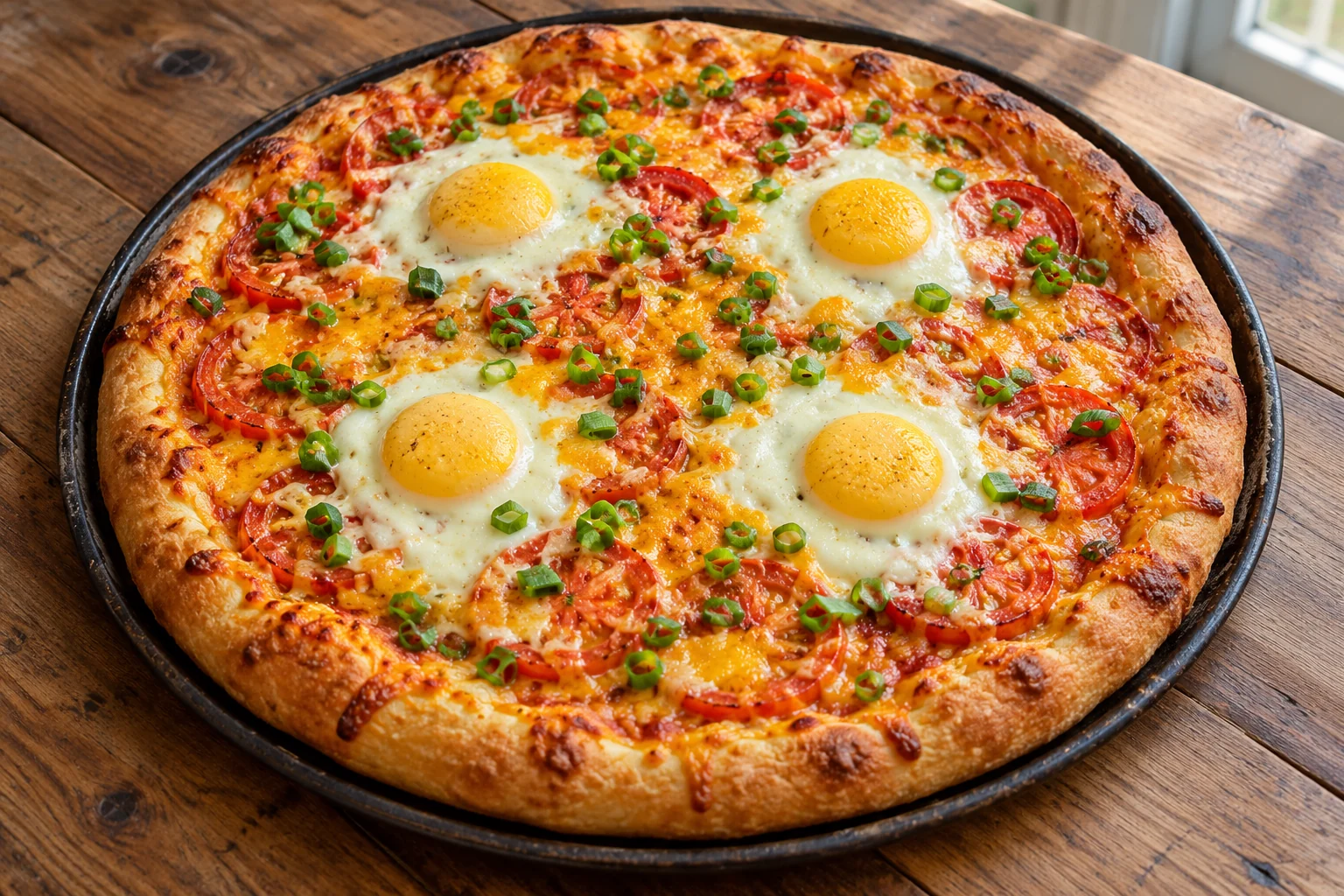
This breakfast pizza starts with a homemade yeast crust and finishes with four eggs, one for each quarter. The dough needs time to rise, and the eggs need a shorter bake than the base. A staged topping sequence brings those requirements together. Tomato, cheddar and scallions provide the flavor without a separate sauce or additional toppings that would complicate the measured recipe.
Tomato and egg breakfast pizza makes 4 servings, with 3 hr estimated total time. View the standalone recipe page.
Give active dry yeast enough time
Use warm water rather than hot water and dissolve the measured sugar and yeast in it. The mixture should show activity during its initial stand. If it remains completely inactive, check the yeast before committing the flour. Knead the dough until it feels smoother and more elastic, then cover it for the main rise. Ninety minutes is a planning estimate for a reasonably warm room. Look for a puffy dough that has roughly doubled; a cold kitchen may need longer than the advertised total.
Shape with the measured oil
The remaining oil greases the pan and your hands, helping the dough spread without extra bench flour. Press outward gradually and preserve a modest rim. If the dough keeps contracting, pause and let it relax before trying again. Pulling hard at one spot produces thin areas that can leak egg later. A twelve-inch metal pan gives the intended dough thickness and helps the base conduct heat. Moving the same dough to a smaller deep dish changes both thickness and baking behavior, so it is not an equivalent pan swap.
Build the base before adding eggs
Slice the tomatoes thinly and distribute them evenly with their collected juice. Retaining that juice keeps the ingredient accounting honest, but pooling all of it in one place can leave a soggy patch. Scatter the cheese and scallions while leaving four shallow nests. The first bake begins cooking the dough and tomatoes before the eggs arrive. Position the pan on a stable heatproof surface when removing it; trying to crack eggs onto a half-open oven rack is awkward and increases the chance of spilling hot food.
Keep the eggs separate and fully set
Crack one egg into each nest, taking care not to break the yolk or let the white run over the rim. The cheese and tomato arrangement helps contain it, but there is no need to build tall barriers. Return the pizza to the oven and check toward the end of the stated range. Whites and yolks should be firm, and the egg centers should reach 160°F. If the crust browns first, shield the rim loosely with foil while the centers finish. An attractive golden crust alone cannot confirm that the eggs are ready.
Rest briefly and portion by the eggs
Five minutes of rest makes slicing cleaner and lets very hot tomato juices settle. Cut between the eggs so each quarter has one, along with its share of crust and topping. Vegetarian eligibility depends on using the specified vegetarian-rennet cheddar; the word cheddar alone does not establish that detail. The estimate includes every measured topping and all dough ingredients. Refrigerate remaining slices within two hours, use within three to four days and reheat to 165°F. Keep the leftovers covered to limit the crust drying out.
Common questions
Can I use instant yeast instead?
Instant and active dry yeast do not follow identical activation schedules. The card specifies active dry yeast and includes its initial stand and rise. A substitution may work with adjusted handling, but it changes the stated process.
Why did my eggs slide toward the edge?
A strongly sloped center or shallow topping nests can let the whites travel. Press the dough into an even base and arrange four gentle depressions in the topping. Add eggs while the pan rests level.
Technique & food-safety references
These primary references support the technique, safety and storage guidance. The recipe and cooking explanations are original Recipe Pinboard content.


