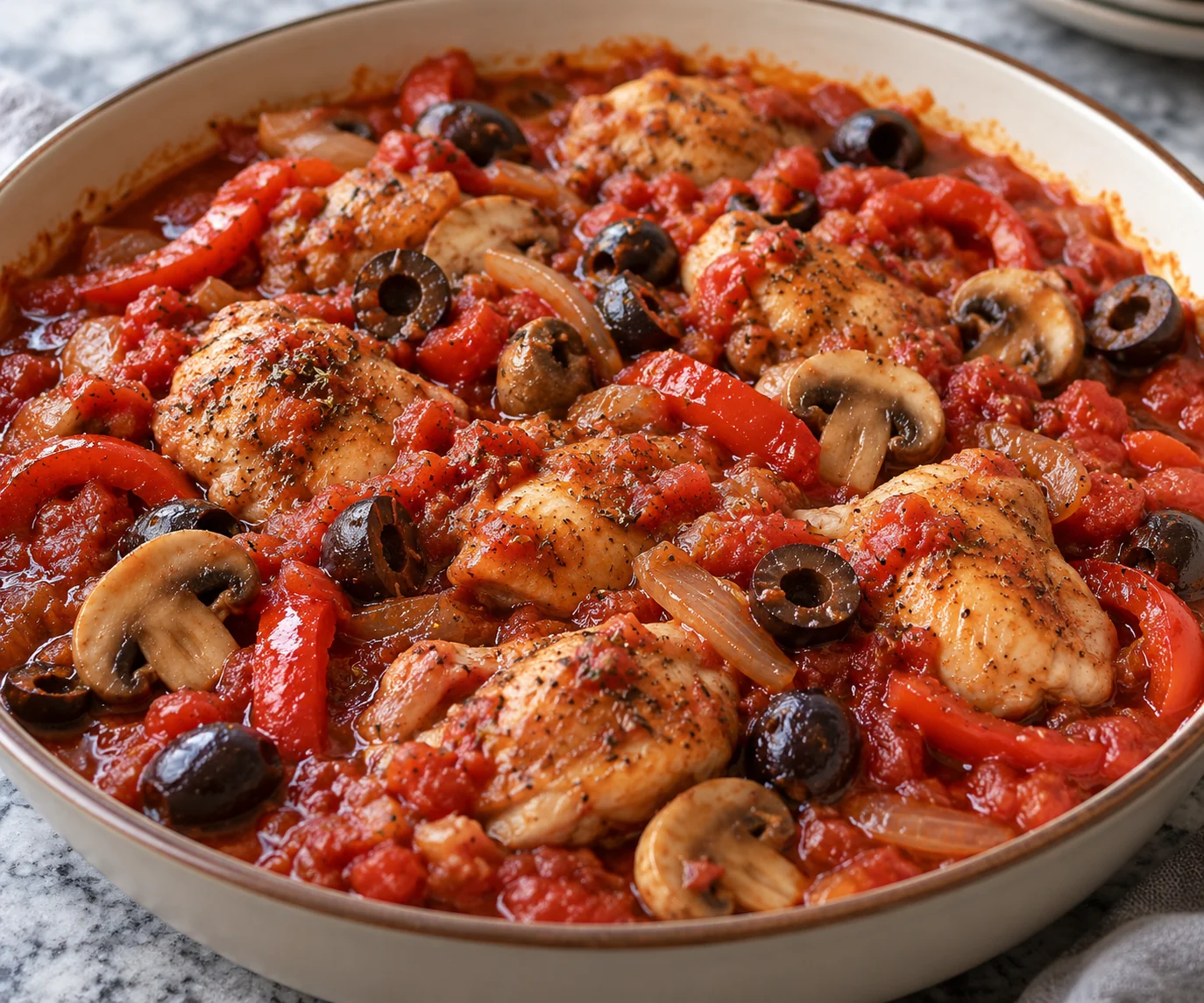
This cacciatore-style pan uses boneless skinless thighs, mushrooms, red pepper and black olives in a tomato sauce. It is an original practical version rather than a claim that every regional hunter's chicken follows one formula. Browning builds flavor first; gentle covered simmering finishes the meat, and a short uncovered stage adjusts the sauce. Four portions include every vegetable, olive and spoonful of cooking liquid.
Tomato & olive chicken cacciatore makes 4 servings, with 1 hr 15 min estimated total time. View the standalone recipe page.
Match the chicken weight to the recipe
Weigh raw boneless skinless thigh meat, with no bones or skin included in the six-hundred-and-eighty-gram quantity. Similar-sized pieces cook more predictably than a mixture of tiny scraps and large folded thighs. Pat the meat dry without rinsing it, and keep its tools separate from ready-to-eat food. Divide the seasoning as directed. The first browning stage is not a safety endpoint: chicken that looks golden outside can still be raw in its thickest part. Its plate and collected juices must return to the cooking pan.
Brown in batches without draining flavor
Heat the measured oil in a wide heavy pan and leave enough room around the chicken for moisture to escape. Crowding all the meat together encourages steaming before the surfaces color. Brown the two batches briefly, then transfer them while the vegetables cook. Keep the oil and browned bits in the pan; they belong to the sauce and are included in the estimate. If a patch becomes black rather than brown, lower the heat. A thick tomato sauce will not hide the bitterness of a badly scorched base.
Soften vegetables before adding tomatoes
Cook onion, pepper and mushrooms until they have softened and the mushrooms release some moisture. Stir across the base to loosen browned particles as that liquid appears. Add garlic and dried oregano for the short aromatic stage, then introduce the measured tomatoes and water. Acidic tomato liquid is part of the braise rather than a shortcut for softening raw vegetables instantly. Scrape the base thoroughly so nothing remains stuck underneath the chicken when it returns. No wine, stock cube or extra oil is needed in this measured version.
Separate chicken doneness from sauce thickness
Cover for the main simmer and keep the bubbling gentle. Turn the chicken once so its surfaces spend time in the sauce. Add drained halved olives during the uncovered finishing stage, then check the thickest part of every chicken portion with a clean thermometer. Each must reach 165°F / 74°C. If the sauce is already thick but the meat needs longer, replace the lid rather than reducing it into a dry paste. If the meat is safely cooked and sauce is thin, continue a short gentle uncovered simmer while watching closely.
Share the whole pan and cool leftovers
Let the finished pan rest for five minutes off the heat, then divide both chicken and sauce among four servings. Give each portion a comparable share of olives and vegetables rather than allocating only the meat evenly. The nutrition estimate includes all the sauce, including the oil and chicken juices; discarding it changes actual intake. Refrigerate leftovers within two hours in shallow containers, use within three to four days and reheat to 165°F / 74°C. Rice, bread or pasta can accompany the dish but are not included in its recipe card.
Common questions
Can I substitute bone-in thighs by weight?
Not directly: bones and skin change the edible amount and cooking time. This formula uses raw boneless skinless thigh meat. A bone-in version needs an adjusted quantity and a longer, separately checked cooking schedule.
Why is my tomato sauce watery?
Mushrooms, peppers and chicken all release liquid, and canned tomatoes vary. Use the uncovered finishing stage to evaporate some moisture. Stir and watch the bottom; do not increase the heat sharply and scorch the sauce while trying to reduce it faster.
Technique & food-safety references
These primary references support the technique, safety and storage guidance. The recipe and cooking explanations are original Recipe Pinboard content.


