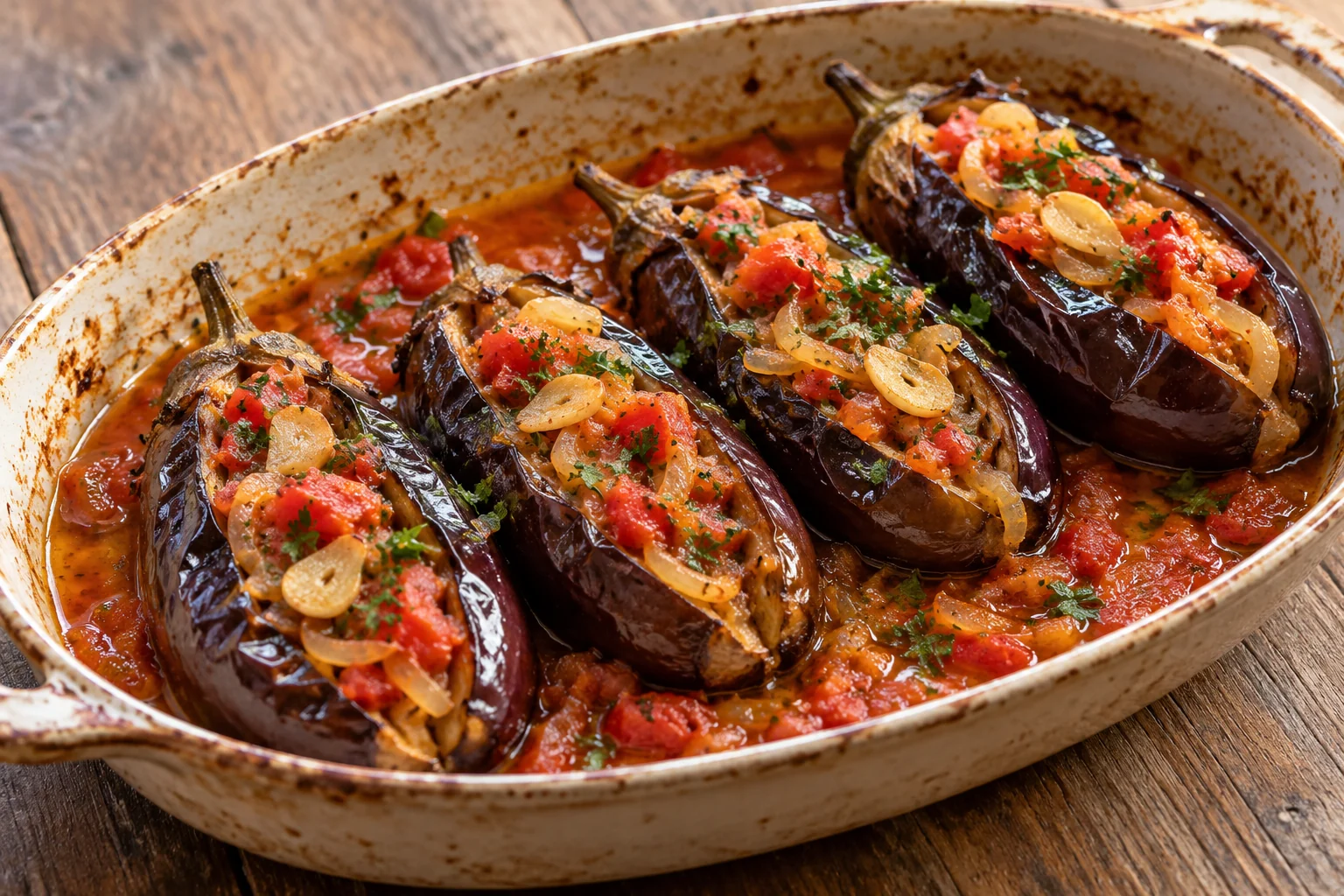
A whole split eggplant needs more than a browned exterior: its flesh should soften all the way through while still holding the filling. This method first roasts the vegetables, then finishes them covered with tomato, onion and a measured braising liquid. It takes inspiration from olive-oil vegetable cookery while using its own quantities and retaining all edible flesh and cooking juices.
Tomato and onion stuffed eggplant makes 4 servings, with 2 hr 10 min estimated total time. View the standalone recipe page.
Choose four similarly sized vegetables
The recipe uses four small eggplants totaling one kilogram of edible weight. Similar thickness matters because a broad, heavy specimen will soften more slowly than a slender one. Trim inedible stem material, wash the skins and cut a deep slit along each vegetable without cutting through the underside. Leave the ends intact to help form a pocket later. Unlike recipes that salt and drain eggplant, this version keeps the released juices. Its measured oil is brushed on rather than estimated from a pan of frying oil.
Soften the flesh before opening the pocket
During the first roast, the skin begins to wrinkle and the interior becomes easier to press aside. Use the specified snug baking dish so the vegetables stay upright but are not crushed together. The slit should open under gentle pressure from two spoons. If the center is still rigid, give it a little more time before forcing it apart. Press the cooked flesh toward the sides instead of scooping it out. Retaining that flesh preserves both the intended portion and the ingredient basis of the estimate.
Cook the onion filling without rushing
Slice the onions thinly so they can become soft before entering the eggplant. Medium-low heat helps them relax in the olive oil without developing scorched edges. Add garlic later because its thin slices color faster. Tomatoes and all their juices follow, creating a moist filling that can finish cooking inside the pockets. The mixture should be spoonable, not dry. Half the parsley cooks into it, while the rest is saved for serving. All those herbs are already included in the measured ingredients; no extra garnish is needed.
Braise under a tight cover
Pack the pockets gently and spread any remaining filling around the vegetables rather than throwing it away. Add the measured lemon-water mixture around the eggplants so it reaches the dish bottom. A tight cover traps moisture and protects the filling from drying before the centers become tender. Check with a small knife through a thick section of flesh. It should slide in easily, without a spongy or resistant core. If the dish looks dry, first check that its cover is sealing properly and that the oven is not running excessively hot.
Rest, divide and retain the sauce
The fifteen-minute rest makes the softened vegetables easier to lift and gives the liquid time to settle. Use a wide spatula underneath each eggplant rather than lifting by the skin. Serve one per portion and distribute all tomato-onion filling, pan juices and remaining parsley. Olive oil is the only added fat, and the main ingredients are vegetables, supporting the documented Mediterranean-style pattern. Refrigerate leftovers in shallow containers within two hours; use within three to four days and reheat to 165°F. Do not leave the whole baking dish cooling indefinitely.
Common questions
Why is my stuffed eggplant still spongy?
It needs more covered cooking through the center. Surface color is not enough. Check the thickest flesh with a knife, keep the cover tight and allow the center to become fully soft before serving.
Should I remove seeds or peel the eggplant?
This formulation retains the edible skin, seeds and flesh of the weighed vegetables. Choose fresh small eggplants and remove only inedible or damaged material before weighing. Scooping out the center changes the portion and nutrition basis.
Technique & food-safety references
These primary references support the technique, safety and storage guidance. The recipe and cooking explanations are original Recipe Pinboard content.


