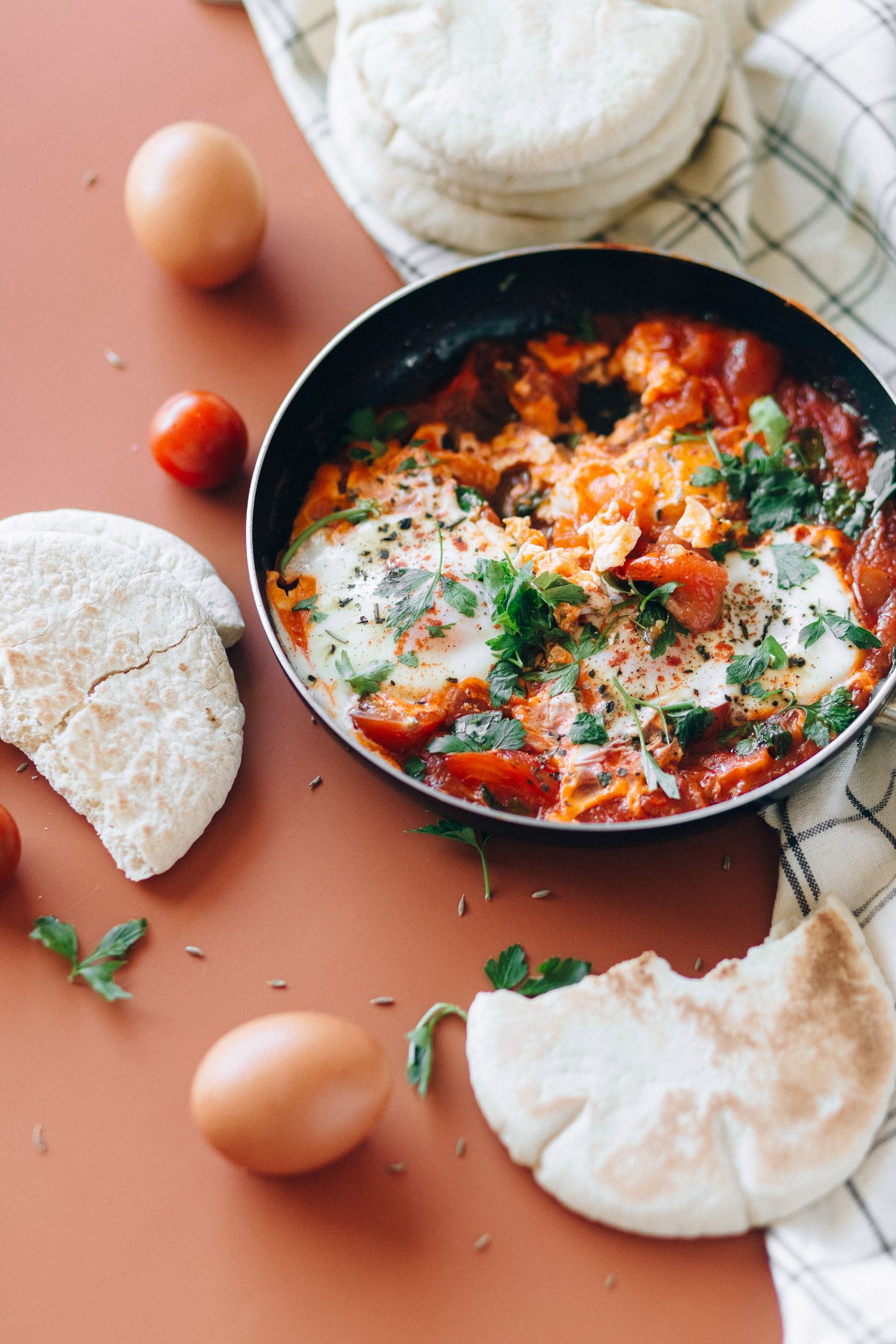
The timing of tomato and pepper shakshuka is easier to manage when the sauce is ready before the eggs enter the skillet. This recipe serves four with six eggs, an 800 g can of crushed tomatoes and bread for the sauce. Its 35-minute estimate includes softening the vegetables, reducing the tomatoes and covered egg cooking. A wide lidded skillet matters because the eggs need space and gentle, even heat.
Tomato & pepper shakshuka makes 4 servings, with 35 min estimated total time. View the standalone recipe page.
Cut the vegetables for an even sauce
Dice the 150 g onion and 180 g red pepper into similar small pieces, removing the pepper’s stem and seeds. Mince the two garlic cloves and measure the cumin and smoked paprika before turning on the heat. Large pepper pieces can remain firm after the onion has softened, so consistent cutting is more useful here than trying to brown everything aggressively.
Have the crushed tomatoes, ½ tsp kosher salt and 15 g chopped parsley ready. Set out the lid and a small cup for cracking eggs individually. Choose a skillet broad enough for six wells without forcing the eggs against one another. A narrow saucepan may hold the same volume of sauce but gives you too little usable surface area.
Soften first, then briefly warm the spices
Heat the 2 tbsp olive oil over medium heat and cook the onion and pepper for approximately eight minutes. Stir so pieces around the edge trade places with those over the hottest part of the burner. You want softened vegetables that will become part of the sauce, not a blackened coating on the pan.
Add the garlic, 1 tsp cumin and 1 tsp smoked paprika and stir for 30 seconds. This brief stage distributes their flavor in the oil. Have the tomatoes ready to pour before adding the spices: a delay can scorch finely ground paprika or small garlic pieces. Stir the tomatoes and salt through the softened vegetables, scraping the bottom gently.
Reduce uncovered until the wells can hold
Simmer the sauce uncovered for the listed twelve minutes. It should become slightly thicker but remain loose enough to spoon around the eggs. Draw a spoon through it and watch how quickly the channel closes. If a separate watery layer floods back immediately, continue simmering briefly before moving on; tomato brands and skillet widths change evaporation.
Make six shallow wells spaced across the sauce. The wells should help keep each egg together rather than expose large bare patches of skillet. Crack an egg into the cup, check for shell and slide it into a well. Repeat deliberately. Pouring eggs from high above the pan can break yolks and scatter whites through the tomatoes.
Cover and cook to fully set eggs
Lower the heat to medium-low, cover and cook for seven to ten minutes, adding time if needed until both whites and yolks are firm. Steam under the lid helps cook the upper surface while the sauce heats the underside. A fierce boil can tighten the bottoms before the tops set, so reduce the burner if the sauce is spitting hard.
The recipe deliberately follows the FDA’s firm-white, firm-yolk advice. Do not stop at a translucent white because a photograph or a different shakshuka recipe favors softer eggs. Check the central eggs as well as those near the pan edge. Once they are done, take the skillet off the heat rather than continuing to simmer while you organize plates.
Share the six eggs fairly and chill leftovers
Scatter the parsley over the cooked skillet and serve with the four slices of crusty bread, 200 g total, giving each person one 50 g slice. Six eggs for four people does not divide into equal whole eggs. For equal portions, divide the cooked eggs as well as the sauce, rather than quietly treating the recipe as six servings. Each plate should also receive its share of the pepper and onion.
Store leftovers promptly in shallow covered containers, refrigerate within two hours, and use within three to four days. Reheat to 165°F (74°C); the eggs will firm further. Keep the bread separate from leftover sauce so it does not become saturated. If planning ahead, preparing the sauce first and cooking the eggs shortly before eating gives better texture than reheating a finished skillet.
Common questions
Why are my eggs taking longer than ten minutes?
Egg size, refrigerator temperature, sauce depth and the fit of the lid all affect cooking. Maintain a gentle simmer and keep cooking until the whites and yolks are firm. The time range helps organize the meal but is not a substitute for checking the eggs.
Can I make shakshuka without the bread?
You can choose not to serve the bread, but the four-portion recipe includes it. Omitting it changes the complete meal and any nutrition totals based on that ingredient list. It does not require changing the sauce or adding more eggs.
Technique & food-safety references
These primary references support the technique, safety and storage guidance. The recipe and cooking explanations are original Recipe Pinboard content.