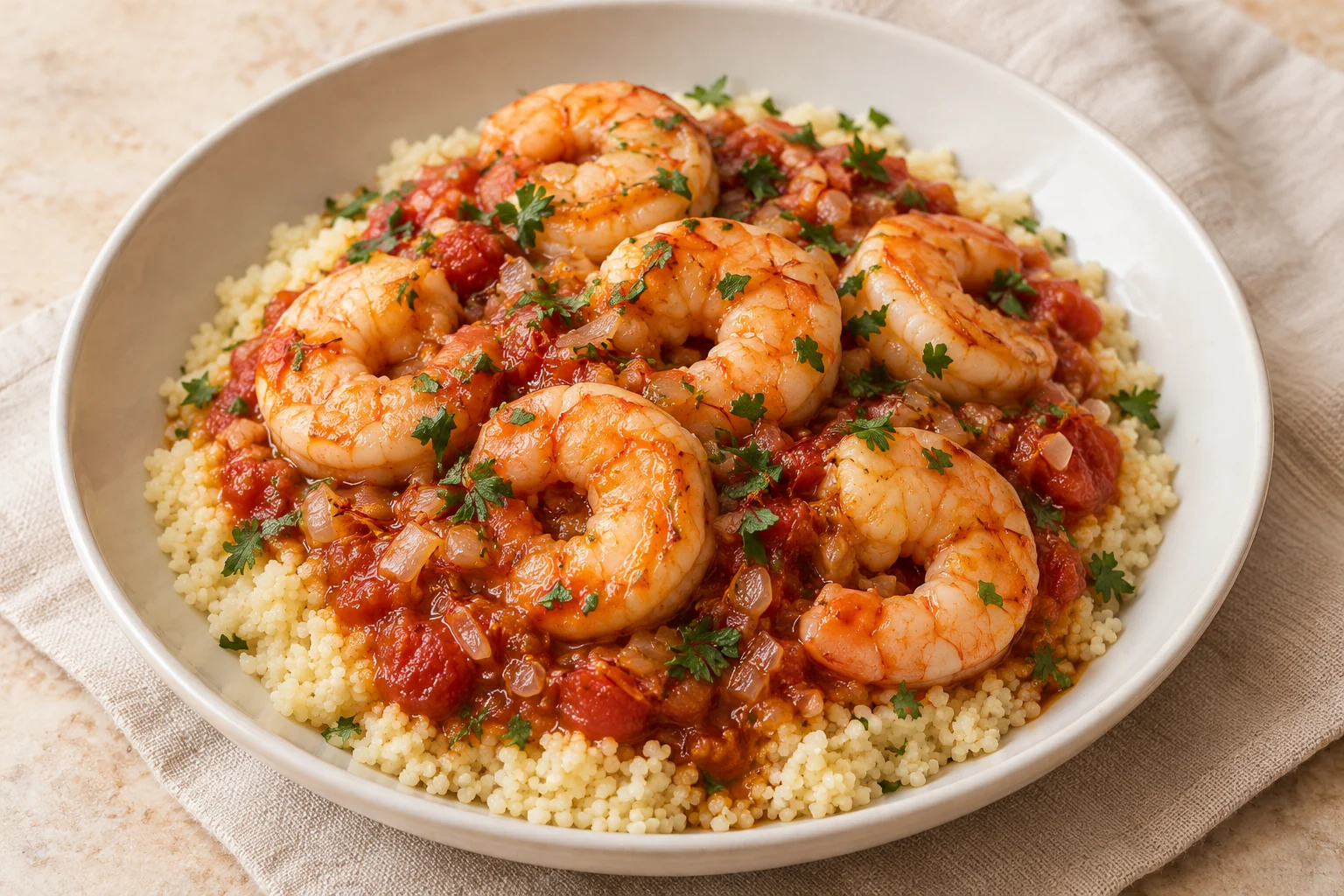
The shrimp in this bowl cook at the end of a sauce-making sequence. Reducing the tomatoes first gives the sauce time to develop without forcing the seafood through a long boil. Instant Moroccan couscous hydrates separately and supplies a fine-grained base that can catch the chunky tomato and saffron liquid.
Tomato-saffron shrimp over couscous makes 4 servings, with 35 min estimated total time. View the standalone recipe page.
Keep the saffron water separate from couscous water
Lightly crush the 0.15 g saffron threads between clean fingers and steep them in 100 g hot water for five minutes. This water belongs in the sauce. The separate 300 g water is for the couscous. Keeping those two amounts in different vessels prevents the grain from using liquid intended to carry saffron into the tomatoes.
Pat the peeled, deveined and tail-removed shrimp dry, then return them to the refrigerator while preparing the sauce. If using frozen shrimp, plan safe thawing before this cooking session. Wash hands, utensils and surfaces after raw-seafood contact, and keep the parsley and couscous preparation area separate from the shrimp plate.
Soften shallots before briefly adding garlic
Heat 15 g of the olive oil in a wide skillet over medium heat. Cook the finely chopped shallots for four to five minutes until softened. Their small pieces should disperse through the finished sauce rather than remain as large crunchy chunks. Stir around the edges of the pan as well as its hottest center.
Add garlic for thirty seconds, with the tomatoes and saffron liquid already nearby. This is a brief warming stage, not an opportunity to deeply brown the garlic. Add the diced tomatoes with their juices, all the saffron and steeping water, 2 g salt and the pepper before small garlic pieces scorch.
Reduce an uncovered, spoonable tomato base
Simmer the tomato mixture uncovered for ten to twelve minutes, stirring occasionally. The sauce should thicken slightly while remaining loose enough to spoon over couscous. Check the bottom of the pan when stirring so softened shallots and tomato solids do not form an unnoticed stuck layer beneath the liquid.
A wide skillet evaporates liquid differently from a narrow saucepan, and canned tomatoes vary in how much juice they contain. Use the consistency as well as the clock. If the sauce is already very thick, do not insist on a hard boil until the timer ends. The shrimp still need enough moisture around them for a gentle finish.
Hydrate the correct couscous while the sauce simmers
Bring the couscous water to a boil with the remaining 5 g oil and 1 g salt. Remove from the heat, stir in the 200 g instant Moroccan couscous, cover and stand for five minutes, or follow its package-specific liquid ratio and standing time as the card allows. This is not a pearl-couscous simmer.
Fluff with a fork, lifting grains from the bottom as well as the top. Keep it covered while the shrimp finish so the surface does not dry unnecessarily. Do not stir the dry couscous straight into the tomato pan: it would compete for sauce liquid and change the separate cooking method and final arrangement.
Finish the shrimp gently and serve all the sauce
Nestle the cold shrimp into the simmering tomato base. Cook gently for four to six minutes, turning once, until the flesh is firm, pearly and opaque throughout. Check several of the largest shrimp; a translucent center needs more cooking. Avoid an extended vigorous boil after they are done just to concentrate the sauce further.
Divide the couscous among four bowls, then distribute all the shrimp and tomato sauce over it and finish with parsley. Refrigerate leftovers in shallow containers within two hours, or one hour above 90°F (32°C). Reheat to 165°F (74°C). The grain will absorb sauce during storage, so a leftover bowl will be softer and less separately layered.
Common questions
Can I add the shrimp when the tomatoes first go in?
That gives the shrimp the whole sauce-reduction time as well as their finishing time. Reduce the tomato base first and add the shrimp only for the short final simmer.
Do I discard the saffron steeping water?
No. Both threads and the 100 g steeping water go into the sauce. The couscous has its own separate water amount, so the two should not be combined by accident.
Technique & food-safety references
These primary references support the technique, safety and storage guidance. The recipe and cooking explanations are original Recipe Pinboard content.