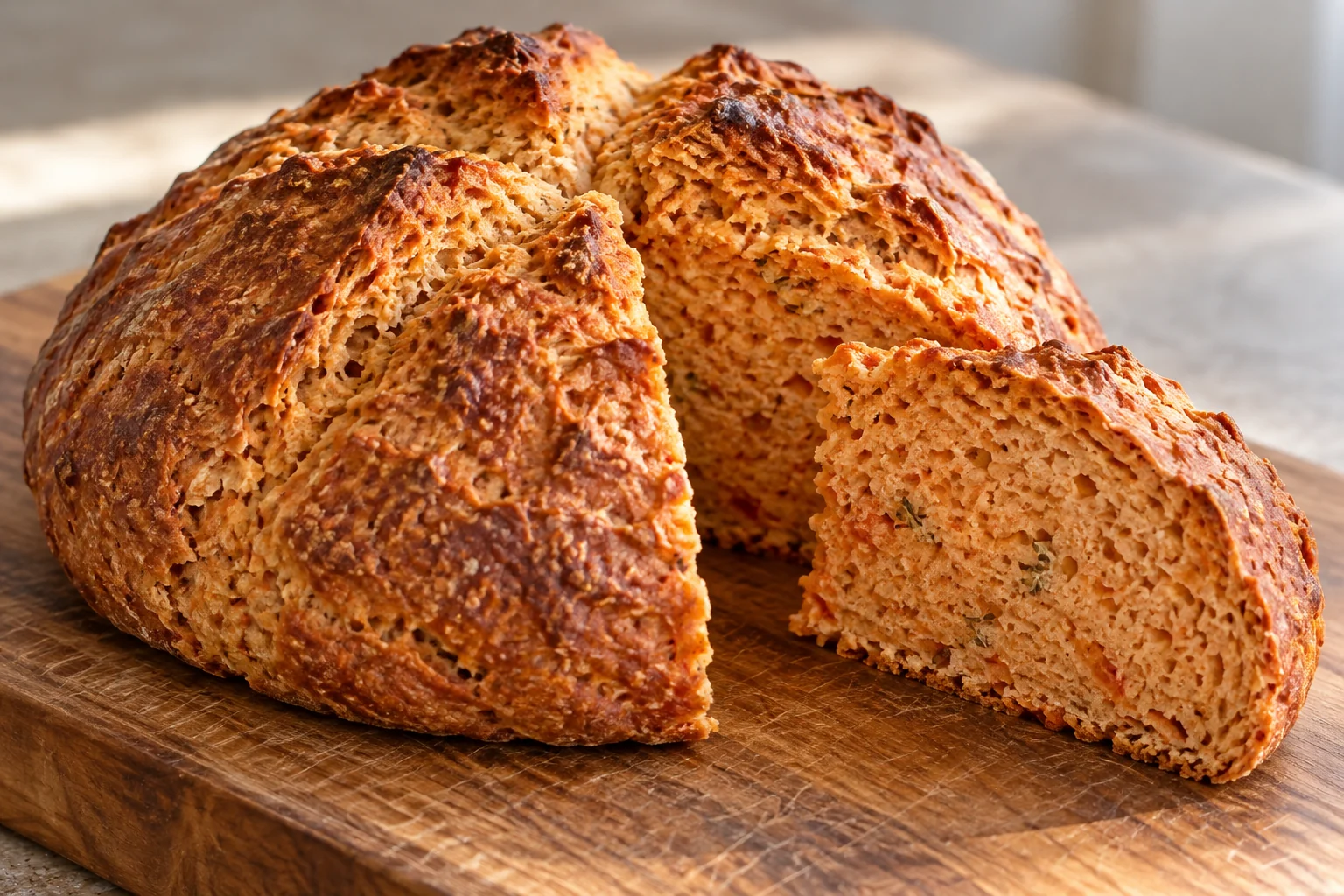
This is a chemically raised bread with yogurt and tomato paste, not a dough that waits for yeast to rise. Its compact rustic crumb and browned cross-cut crust depend on quick handling after the wet and dry mixtures meet. The recipe card above includes the complete formula. Keep those weights intact while using the checks below to recognize a workable dough and a baked center.
Tomato & oregano soda bread makes 10 servings, with 1 hr 45 min estimated total time. View the standalone recipe page.
Prepare the oven before the bowl
Heat the oven and line the baking sheet before mixing. Baking soda begins reacting after it meets acidic ingredients, so this dough should not sit through a long oven preheat. Use plain unstrained whole-milk yogurt as listed. Thick Greek yogurt changes the available liquid, and a flavored yogurt adds sugar and other ingredients. Stir the tomato paste into the yogurt and oil until the color is uniform; streaks of concentrated paste are harder to distribute once flour is present.
Distribute the small dry ingredients
Whisk the baking soda, salt and dried oregano through all the flour. A small lump of soda can leave an unpleasant concentrated spot, while uneven mixing can produce irregular rise. Use the exact measured amount rather than a heaped spoon. The recipe uses all-purpose flour, with no dusting flour added outside the stated quantity. A bowl scraper and slightly damp hands help manage the dough without gradually changing the flour-to-liquid ratio during shaping.
Stop folding when the flour disappears
Add the wet mixture and fold from the edges toward the center until no loose flour remains. The dough should be cohesive and somewhat sticky, with a rough surface. It does not need the smooth elastic finish of kneaded yeast bread. Repeated kneading develops more structure than this loaf needs and also delays baking. If small dry pockets remain underneath, turn the mass once with the scraper and fold them in rather than working the entire bowl for several extra minutes.
Keep the round low and score it
Shape the specified broad, low round on the prepared sheet. A tall compact ball can brown outside before its center cooks. The cross is a functional cut, not merely a decorative scratch: make it deep enough to open as the bread expands. Place the loaf promptly in the hot oven. If the crust becomes dark before the middle is baked, use a loose foil tent and continue checking the center instead of reducing the bake to preserve a pale exterior.
Let the center finish setting
Check the loaf near the end of the baking range with a skewer through its thickest part. It should not carry sticky raw dough. A browned crust alone is insufficient. Transfer to a rack so steam can escape underneath, and wait at least thirty minutes before cutting. Slicing immediately compresses the warm crumb and can make the center appear gummy. Cut ten equal wedges for the stated yield; a thicker or thinner personal slice changes the per-serving comparison.
Common questions
Why does soda bread taste soapy?
Too much baking soda or an uneven pocket can be responsible. Verify the measured five grams and whisk it thoroughly through the flour. Do not add more soda to seek a taller loaf; this formula depends on its specified acidic ingredients.
Can I make the dough the night before?
Prepare the dry and wet mixtures separately and keep the yogurt mixture refrigerated. Combine them shortly before baking. A fully mixed dough held overnight will not behave like the freshly mixed dough described here.
Technique & food-safety references
These primary references support the technique, safety and storage guidance. The recipe and cooking explanations are original Recipe Pinboard content.


