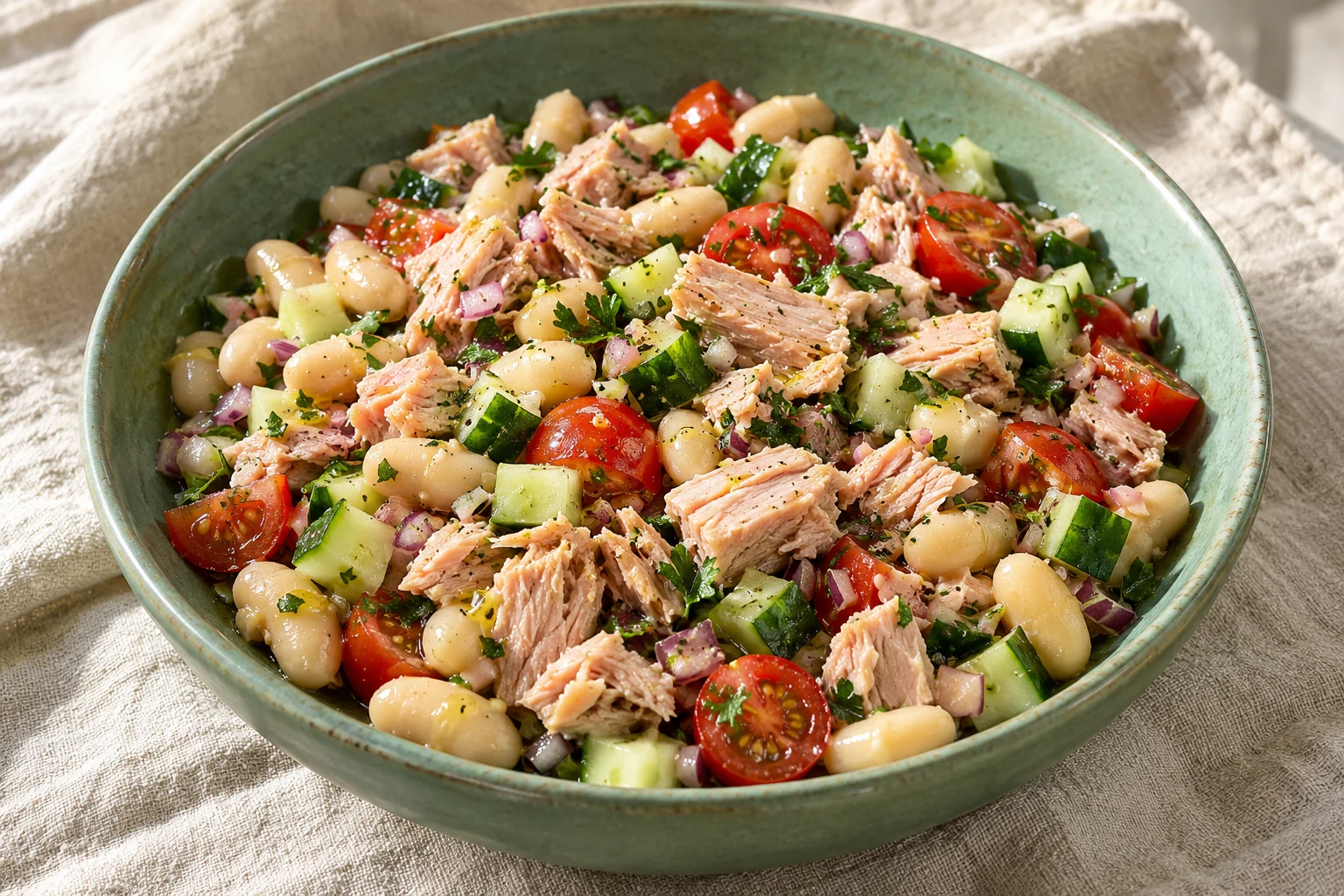
This salad gets its contrast from creamy cannellini beans, crisp cucumber and recognizable flakes of tuna. Its dressing is olive oil and lemon juice, with no mayonnaise or lettuce base. Because nothing cooks away excess water, draining and drying matter more than they would in a simmered dish.
Crisp tuna & white bean salad makes 4 servings, with 15 min estimated total time. View the standalone recipe page.
Start with genuinely drained pantry ingredients
Drain both five-ounce cans of tuna in water, keeping the flesh in usable flakes rather than crushing it into a paste. The recipe’s dressing already has a measured liquid balance; liquid carried over from the cans would dilute it. Rinse and drain the cannellini beans separately so their rinse water does not join the salad.
Inspect the drained beans while handling them gently. Some split skins are normal, but vigorous squeezing or stirring can turn a bowl of whole beans into a starchy mash. Set the tuna aside while assembling the vegetables; adding it early would expose it to every subsequent toss.
Cut the vegetables for a balanced forkful
Dice the cucumber into pieces that can sit comfortably beside a bean on a fork. Halve the cherry tomatoes and dice the quarter red onion finely. The onion’s small cut matters because it is served raw: a few large pieces would dominate individual bites rather than seasoning the bowl evenly.
Wash produce under running water before cutting, and dry it with a clean towel. Keep the parsley dry enough to chop cleanly. Wet herbs and cucumber surfaces add water without adding the flavor of the measured lemon juice, leaving the dressing thinner even before the vegetables begin releasing their own juices.
Whisk the dressing in the serving bowl
Combine the three tablespoons olive oil, two tablespoons lemon juice, salt and pepper in a bowl large enough to turn the whole salad. Whisk until the oil is dispersed through the lemon juice, then add the beans and vegetables. A wide bowl gives room to lift ingredients from the bottom without mashing them against the sides.
This simple dressing may separate if it waits before use. Whisk it again rather than treating separation as a failure. Once the beans, cucumber, tomatoes, onion and parsley are in the bowl, turn them through the dressing so the lower layers are coated as evenly as the top.
Fold tuna in at the end
Add the tuna after the other ingredients are dressed. Slide a broad spoon down the bowl’s side, lift from beneath and turn gently over the top. Repeat only enough to distribute the fish. Leaving some larger flakes makes the salad feel different from a finely mashed sandwich filling.
Check a forkful containing tuna, a bean and a little cucumber before judging the seasoning. Tasting only the lemony liquid at the bottom gives a sharper impression than eating the composed salad. The card includes quarter teaspoons of salt and pepper; do not assume an additional salty condiment is necessary.
Keep cold and expect texture to change with storage
Serve immediately for the clearest crunch, or cover and refrigerate until mealtime. If packing lunch, use a cold pack to keep the salad chilled in transit. A no-cook recipe still contains perishable fish and cut produce; it should not sit on a desk all morning.
Refrigerate at 40°F (4°C) or below and use within three to four days. Quality may decline sooner as cucumber and tomatoes release liquid. Fold gently before serving a stored portion, drawing dressing up from the bottom without repeatedly breaking the tuna. Do not leave it out beyond two hours, or one hour above 90°F.
Common questions
Why is the dressing watery?
Possible sources include tuna-can liquid, bean rinse water, wet produce and vegetable juices released during storage. Drain and dry the ingredients well and serve soon after assembly for the crispest result.
Can I mix everything vigorously at once?
The recipe deliberately adds tuna last. Vigorous mixing breaks the flakes and beans, changing the intended distinct textures into a more uniform, soft mixture.
Technique & food-safety references
These primary references support the technique, safety and storage guidance. The recipe and cooking explanations are original Recipe Pinboard content.