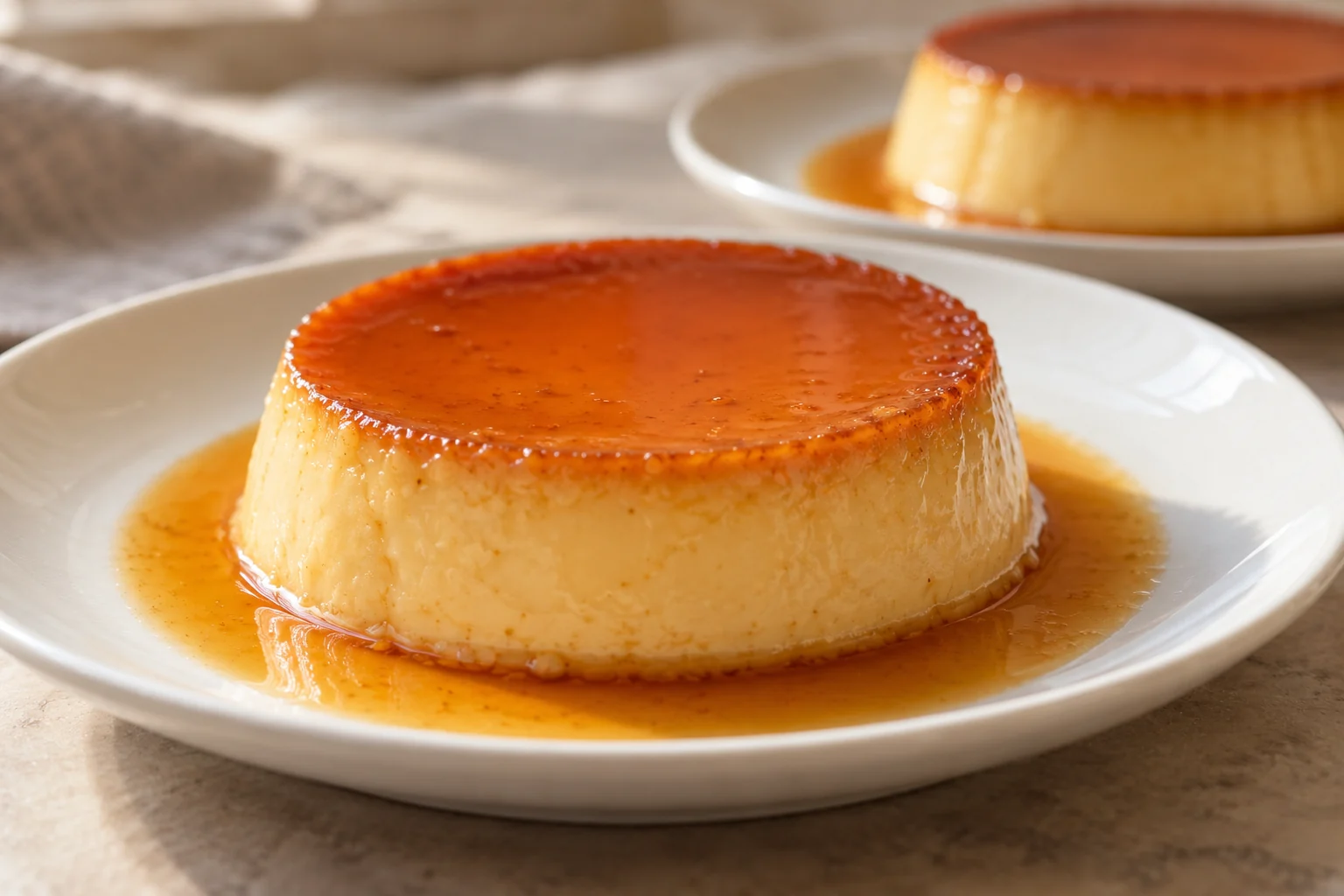
Plan this dessert around its cold rest. The six custards bake in individual ramekins, then spend at least eight hours in the refrigerator before unmolding. The ten-hour total includes preparation, baking, initial cooling and that full chill. This version uses whole milk and whole eggs, with no condensed milk or separated yolks. Set out six oven-safe 240-ml ramekins, a deep roasting pan and rimmed serving plates before making caramel, because hot sugar gives you little time to search for equipment.
Vanilla caramel flan makes 6 servings, with 10 hr estimated total time. View the standalone recipe page.
Prepare for the hot caramel
Measure the caramel's sugar and water separately from the custard sugar before heating anything. Use a light-colored saucepan so the changing color is visible. Once the sugar has dissolved, let the syrup boil without stirring; swirl the pan carefully if one area colors first. Remove it when amber and divide it promptly among the waiting ramekins. Wear dry oven mitts and keep fingers away from syrup and hot rims. Never touch or taste caramel to check it. If it burns and smells acrid, stop rather than hiding the bitterness beneath custard.
Combine the custard without excessive foam
Whisk the eggs, remaining sugar and salt only until combined. You are distributing ingredients, not trying to whip air into them. Heat the milk until steaming, then add it gradually while whisking so one area of egg does not receive all the heat at once. Stir in vanilla and divide the complete mixture evenly among the six ramekins. Their capacity gives headroom above the custard. Do not substitute a smaller vessel filled to the rim, where moving the tray or adding the water bath can spill dairy mixture into the pan.
Manage the water bath carefully
Pour hot water around the ramekins to approximately halfway up their sides, avoiding splashes into the custard. Move slowly and keep the roasting pan level. Bake until the edges hold and the middle trembles gently, using the card's 175°F center target rather than color alone. A liquid wave across the center means it needs more time. Oven behavior and ramekin thickness can shift the interval, so begin checking within the stated range. To remove the custards, lift the ramekins individually with secure heatproof protection and let the heavy water-filled pan cool in place.
Give cooling and chilling their full time
After twenty minutes on a rack, place the custards in the refrigerator, loosely covered until cold and then covered fully. Do not extend counter cooling simply because the containers still feel warm. Keep the refrigerator at 40°F or below and allow at least eight hours before serving. This schedule is part of the recipe, not an optional presentation detail. If you are planning an evening meal, making the flans the previous day is easier than trying to rush them late in the afternoon. Keep each custard upright and protected from strong refrigerator odors.
Unmold onto a plate that holds syrup
Run a thin knife around the chilled edge with the blade close to the ramekin. If necessary, briefly warm only the bottom in warm water, dry the outside and invert onto a rimmed plate. Hold plate and ramekin together securely before turning. Give the custard a moment to release instead of shaking it sharply. Spoon any liquid caramel remaining in the ramekin onto its plate. The estimate counts all the original sugar; it does not subtract an invented amount for residue. Serve cold and refrigerate any remaining portions promptly, using them within three days.
Common questions
Why is the custard full of small holes?
Excessive whisking can introduce bubbles, and overly strong heat can produce a coarse texture. Mix gently, use the water bath and stop baking at the specified center endpoint. A browned top is not a required sign of doneness for this flan.
Why will the flan not release immediately?
It may need the edge loosened or a brief warming of the ramekin bottom. Keep the custard chilled and avoid digging beneath it with a spoon. If it still sticks, serve it from the ramekin rather than repeatedly shaking a plate of syrup.
Technique & food-safety references
These primary references support the technique, safety and storage guidance. The recipe and cooking explanations are original Recipe Pinboard content.


