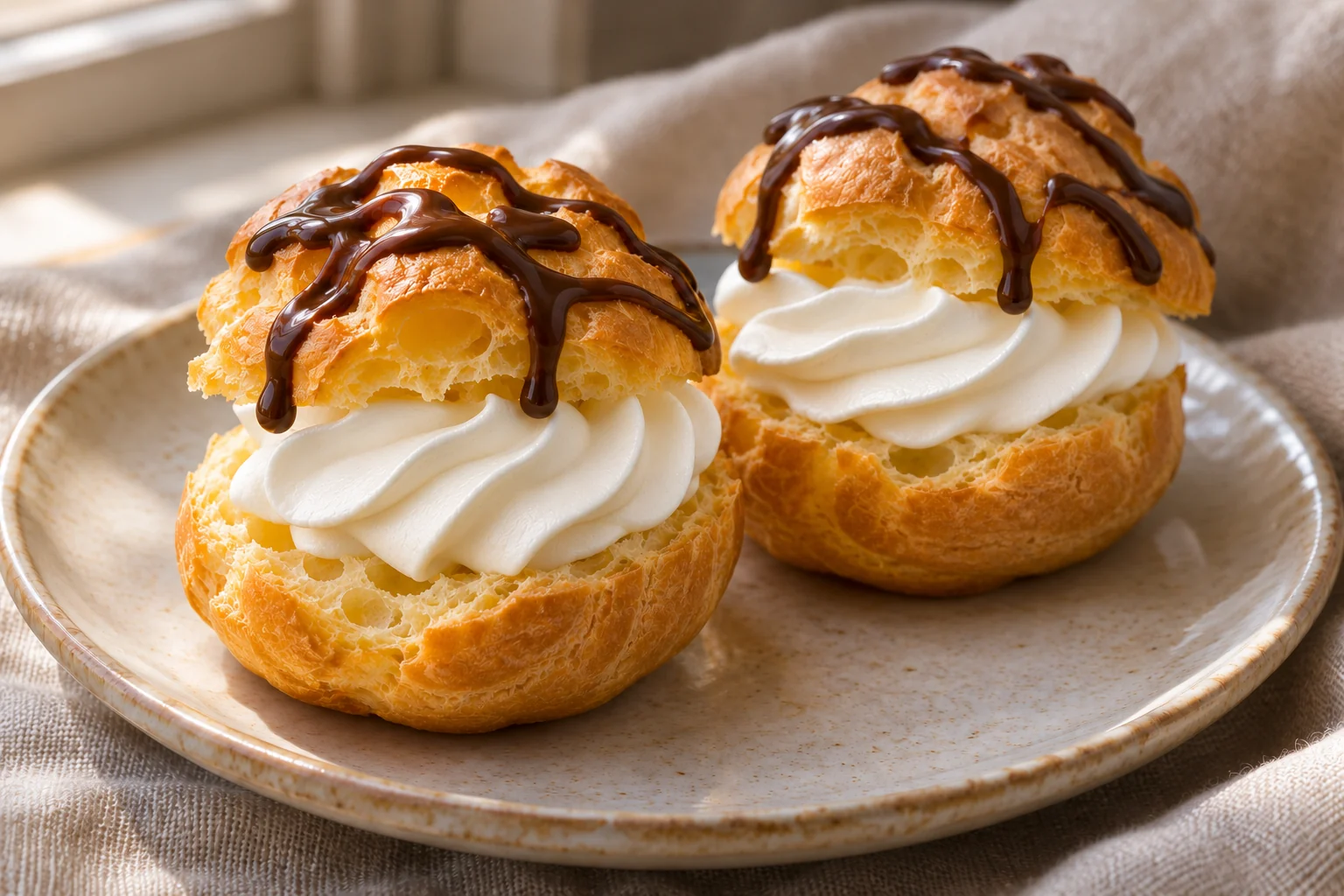
Choux pastry rises because its moisture turns to steam inside a setting shell. A cooked flour paste, gradually added egg and an uninterrupted early bake give that expansion a chance to work. These puffs are filled only after they cool, then finished with a modest dark chocolate sauce. Making the shells first keeps the cream away from heat and makes the final assembly much calmer.
Vanilla cream profiteroles with dark chocolate makes 6 servings, with 2 hr 20 min estimated total time. View the standalone recipe page.
Cook a smooth paste before adding egg
Bring the water, butter and salt to a full boil so the butter is melted before the flour enters. Add all the flour off the heat and stir firmly, then return the pan briefly to the burner. The mixture should gather into a smooth mass and leave a thin film on the pan. Keep stirring so it dries evenly rather than scorching in one spot. Transfer it to a bowl afterward. This cooked paste is quite different from a pourable cake batter and should not be diluted to resemble one.
Cool the paste and incorporate egg gradually
Allow the scheduled cooling interval and check that the paste is below 125°F before adding egg. Excess heat can set small egg particles before they blend in. Beat in the measured egg in several additions, mixing each thoroughly. The mixture may look separated partway through; keep beating until it becomes cohesive before adding the next portion. The finished paste should be glossy and hold a soft mound. Divide all of it into twelve equal puffs instead of relying on an exact mound weight after stovetop evaporation.
Leave room and protect the early rise
Space the mounds generously on the lined sheet because they expand both upward and outward. Smooth sharp peaks with a damp fingertip so those tips do not burn before the shells finish. Start at the higher oven temperature, then reduce it as directed without opening the door. Peeking early releases heat while the walls are still developing strength. Use the oven light to observe progress. The puffs should become deeply golden, not merely pale and inflated, before moving to the final venting stage.
Vent and cool the shells completely
Make a small opening in each puff and return the tray to the oven briefly. That gives trapped steam a way out and helps dry the interior. Move the shells to a rack afterward so air reaches their undersides. Once cool, split them horizontally with a small serrated knife. A warm shell melts whipped cream and creates a damp interior, so do not shorten the cooling interval to speed assembly. If a shell has a little soft membrane inside, expose it to air rather than filling it while still steamy.
Whip, sauce and fill close to serving
Keep the cream cold and whip the filling portion with sugar and vanilla until firm but still smooth. Stop before it turns grainy. Warm the separate sauce portion of cream, melt the chocolate into it and let the sauce become warm rather than hot. Divide the whipped filling among the twelve shells, replace their lids and distribute the sauce. Serve two puffs per portion. Refrigerate filled leftovers within two hours at 40°F or below and use within two days; the shells gradually soften once filled.
Common questions
Why did my puffs collapse after leaving the oven?
The shells may have been underbaked or still holding too much steam. Let them become deeply golden, follow the venting step and cool on a rack. Opening the oven early can also interrupt the structure as it forms.
Can I fill the shells while the chocolate sauce is hot?
Let both shells and sauce reach the specified temperatures first. Hot sauce or warm pastry can melt the whipped cream and soften the shell quickly. Assemble close to serving for the clearest contrast between crisp pastry and cool filling.
Technique & food-safety references
These primary references support the technique, safety and storage guidance. The recipe and cooking explanations are original Recipe Pinboard content.


