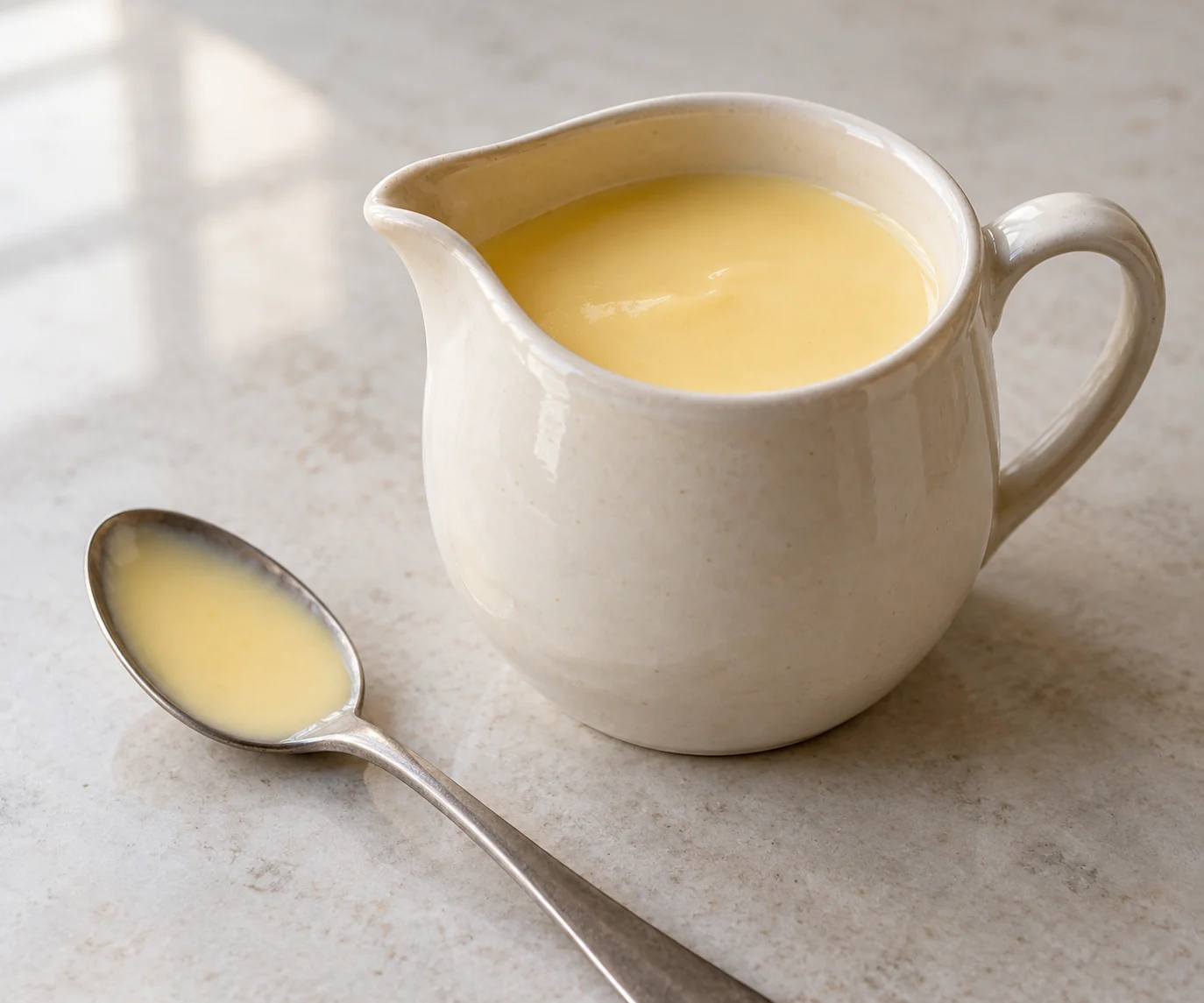
This vanilla sauce gets its body from egg yolks rather than flour or cornstarch. It should remain pourable when chilled, with enough body to coat a spoon, so it is a different preparation from a firm pudding or pastry cream. The small batch makes temperature control especially useful. Set up the cooling bowl before cooking and plan for the full refrigeration period rather than treating the stovetop stage as the entire recipe.
Vanilla custard sauce makes 6 servings, with 3 hr estimated total time. View the standalone recipe page.
Weigh yolks and prepare the cooling station
Egg size varies, so the recipe uses a yolk weight rather than assuming a fixed number of eggs produces an exact amount. Separate carefully and weigh only yolk, leaving shells and whites out. Save whites separately for another use if desired. Place the clean receiving bowl securely over ice water before heating the milk. The bowl must not float or tip. Keep the sieve, spatula and thermometer within reach so finished custard does not sit in a hot saucepan while equipment is located.
Temper without adding a new ingredient
Whisking some warm milk into the yolk mixture raises its temperature gradually before it returns to the saucepan. Pour slowly while whisking; adding the hot liquid all at once makes even mixing more difficult. This step uses milk already measured for the recipe, not an extra quantity. Stir the sugar into the yolks shortly before tempering rather than leaving a dry pile resting against them. Scrape the mixing bowl thoroughly so the yolk and sugar allocation stays with the sauce.
Control heat across the whole pan
A flexible spatula reaches the corners and base more effectively than occasional stirring through the center alone. Use low heat and keep the mixture moving while checking its temperature. The recipe's endpoint is a cooked, lightly thickened sauce, not a rolling boil. Move the thermometer through the liquid without resting its tip against the metal base. When the target is reached, remove the pan promptly; lingering heat can continue cooking the custard after the burner has been switched off.
Cool actively, then chill completely
Strain into the prepared bowl and stir as the ice bath removes heat. Keep outside water out of the food. The sieve can catch tiny cooked bits, but a large quantity of curdled egg is a sign that the sauce was overheated, not an intended by-product. The estimate conservatively counts all starting yolk. After the bath, cover and refrigerate until fully cold. A deep warm container may cool more slowly, so temperature is the deciding check if the scheduled chilling time is insufficient.
Serve as a measured accompaniment
Six portions are equal shares of the whole batch rather than a promised spoon or cup volume. Stir gently after chilling and use a clean spoon to portion it. If served with cake, fruit or another dessert, those ingredients are separate. Keep the remaining sauce refrigerated instead of leaving the entire container on the table. This is a perishable egg-and-milk preparation, even though it contains sugar. Follow the stated storage window and return it to refrigeration promptly after serving.
Common questions
Why is the chilled sauce thin?
It is intended to pour, but it should lightly coat a spoon. Check whether the cooking temperature was actually reached and whether the yolks were weighed correctly. Chilling can add a little body, but it cannot reliably fix a sauce that never thickened during cooking.
Can I add cornstarch to make it thicker?
That would create a different formulation and change both the texture and ingredient estimate. For this version, use the specified yolk weight and temperature control. Do not add an unmeasured thickener simply because the warm sauce looks thinner than the chilled result.
Technique & food-safety references
These primary references support the technique, safety and storage guidance. The recipe and cooking explanations are original Recipe Pinboard content.


