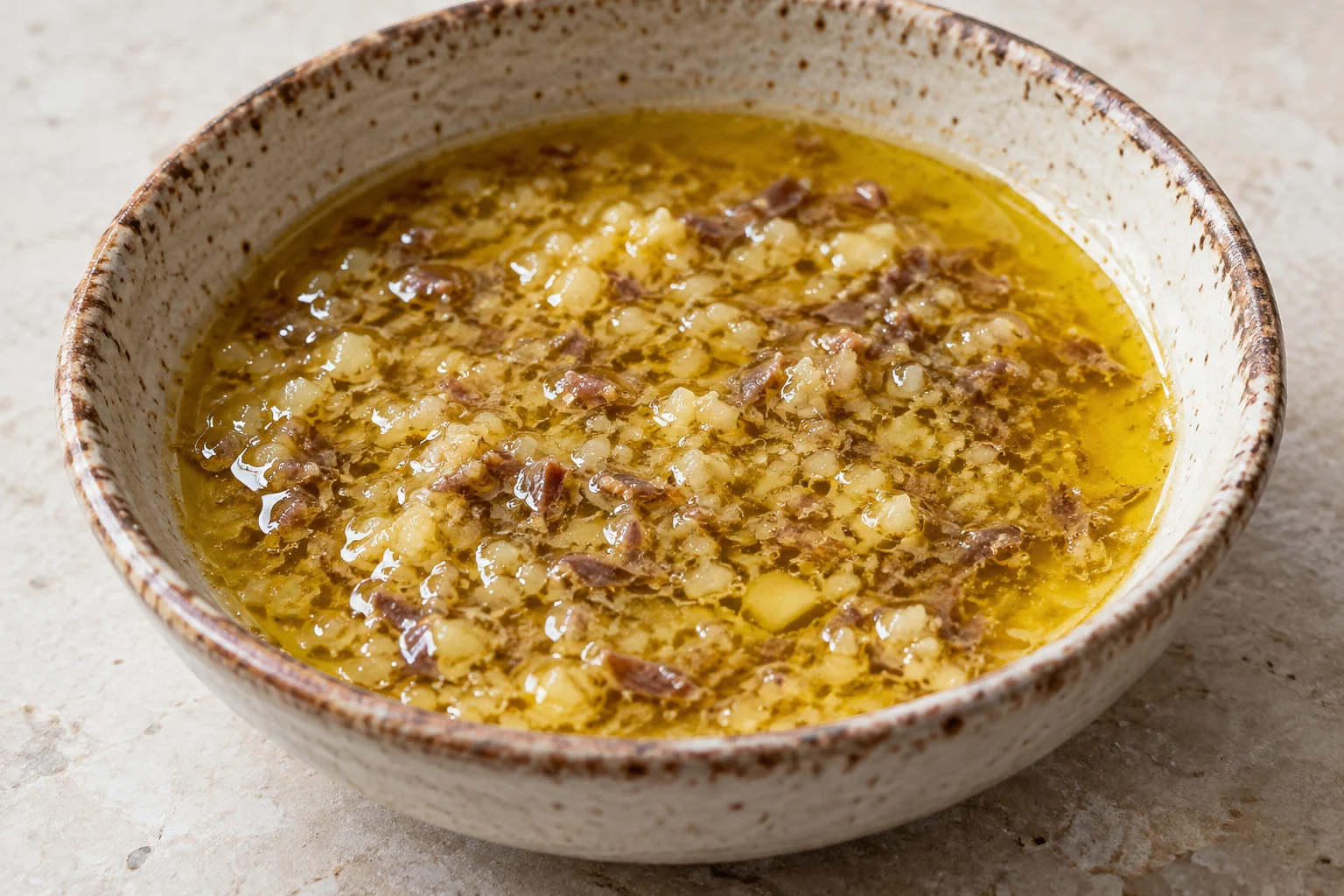
This warm sauce is an original small-batch variation on the garlic-and-anchovy combination, with butter softening the edge of olive oil. It is deliberately rich and salty, so the recipe makes six modest shares. The useful skill is controlling a small saucepan: tender garlic and dispersed fish give a rounded sauce, while aggressive frying can leave hard garlic chips and a harsh finish. Prepare the rest of your meal first so the sauce can go straight to the table.
Warm anchovy & garlic sauce makes 6 servings, with 30 min estimated total time. View the standalone recipe page.
Choose the correct anchovies
Weigh the anchovies after draining their packing oil. The specified forty grams means edible oil-packed fillets, not the combined weight of fish and loose liquid from the tin. Salt-packed anchovies need a different preparation and should not be swapped in without adjustment. The measured olive oil is added separately, and the retained nutrition profile already includes the residual oil clinging to drained fish. There is no added salt in this formula. Taste the finished sauce before serving it alongside anything heavily seasoned; anchovy brands vary noticeably in intensity.
Soften garlic before adding the fat
Cut the peeled garlic into similarly thin slices so the pieces soften together. A small pan and its lid matter because only sixty grams of water are available for this stage. Keep the simmer quiet and check before the end of the suggested time: a slice should squash under the back of a spoon without a firm middle. Keep the cooking liquid in the pan. If evaporation threatens to expose dry garlic, reduce the heat and cover more closely rather than letting the slices fry against the base.
Disperse the fish over low heat
Add the butter, measured oil and drained fish only after the garlic is tender. Stir across the bottom with a spoon, pressing the soft ingredients against the side of the pan. The anchovies should break into small flecks rather than stay as long strips. This is a warm, textured sauce, so a completely smooth puree is unnecessary. Remove the pan briefly from the burner if it begins sizzling strongly. Residual heat will continue melting the butter while you stir; raising the heat will not improve the final texture.
Read the sauce instead of chasing thickness
A little oil around the garlic is expected. This mixture has no starch or egg to hold it in a permanent thick emulsion, and it is not intended to behave like mayonnaise. Stir immediately before dividing it so each person receives both the flavorful solids and the fats. Scrape the whole batch from the pan rather than leaving most of the garlic behind. If the mixture looks unusually thick, first check whether the garlic has actually softened; more heat can reduce the water further without solving hard pieces.
Serve warm and cool leftovers promptly
Allow roughly thirty minutes including preparation and gentle cooking. Set out six small dishes or divide the well-stirred sauce by weight for even portions. Accompaniments are separate from the recipe and its estimate. Avoid leaving the saucepan on an unattended low burner for an extended meal, where continued evaporation changes both texture and concentration. Refrigerate remaining sauce within two hours in a shallow covered container. Use it within three to four days and reheat with stirring to 165°F / 74°C, checking the warmed mixture rather than merely melting its butter.
Common questions
Why did my garlic taste bitter?
Dark or scorched garlic can dominate this small batch. Check the water stage and lower the burner before adding fats. Once garlic is badly burnt, adding more butter does not remove that flavor; start again with gently softened slices.
Can I make it without dairy?
This measured version includes butter and is not dairy-free. Replacing it changes flavor and the nutrition estimate. Choose a separately formulated dairy-free sauce if that boundary matters, and remember that anchovies are fish regardless of the fat used.
Technique & food-safety references
These primary references support the technique, safety and storage guidance. The recipe and cooking explanations are original Recipe Pinboard content.


