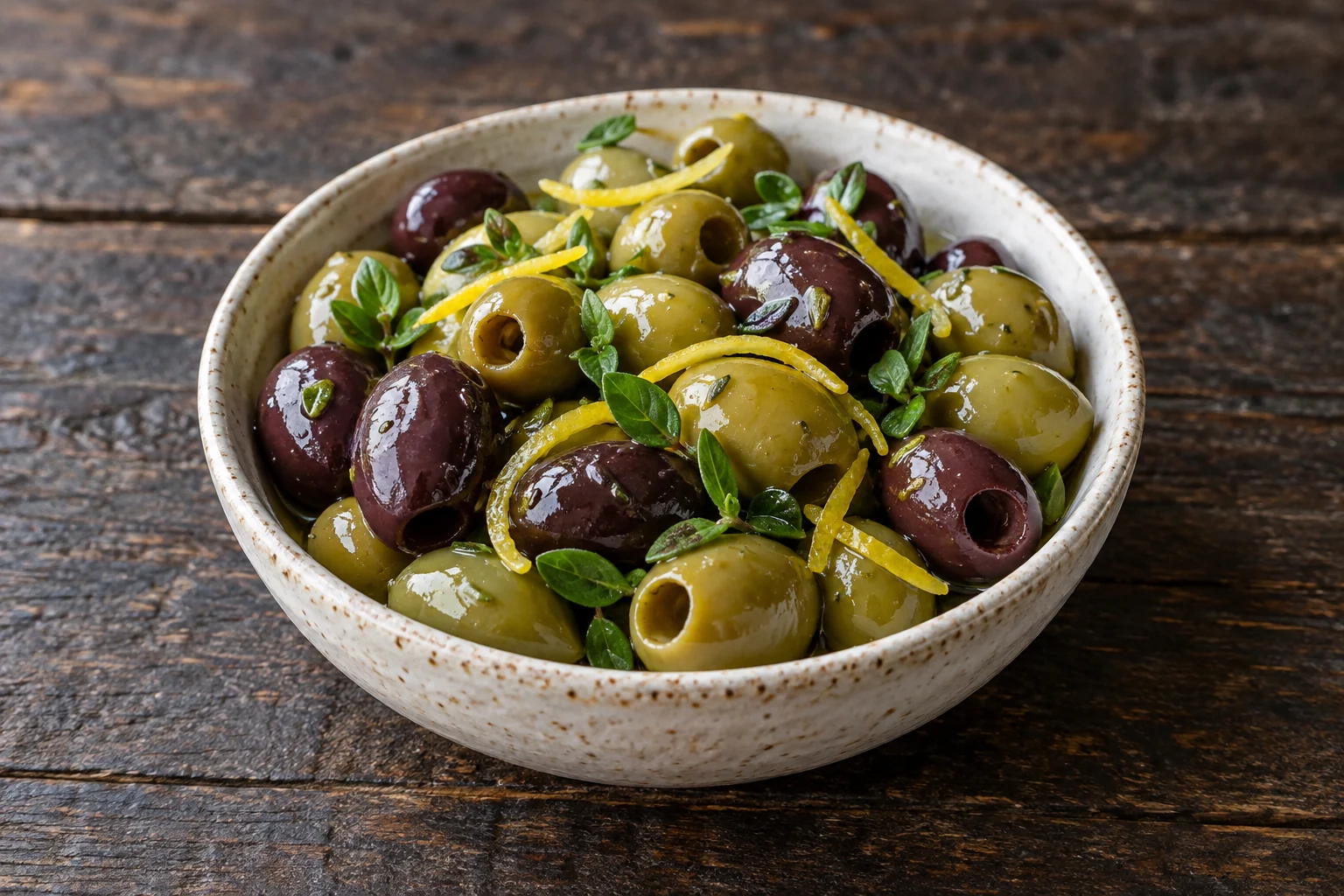
Warming olives is a small kitchen task with a noticeable effect: the oil carries lemon, garlic and oregano aroma around olives that are already cured and ready to eat. The goal is gentle warming, with no browned garlic or crisp coating. This twenty-minute appetizer makes six portions, so a small saucepan and measured ingredients are enough; it does not need a long marinade.
Warm lemon & oregano olives makes 6 servings, with 20 min estimated total time. View the standalone recipe page.
Choose olives that leave room for the fresh flavors
Use plain pitted green and purple olives with the ingredient boundary in the card: olives packed in water, salt and lactic or citric acid only. Stuffed olives and ready-marinated deli mixtures can introduce cheese, peppers, vinegar, herbs or other ingredients. Their flavor and salt balance are different before the saucepan is even heated.
Measure the 300 g after draining. The packing liquid is not part of the recipe, and pouring it into the pan would dilute the measured oil and change how the aromatics warm. Even a package labeled pitted deserves a check for remaining pits before the olives reach the serving bowl.
Use the yellow peel and keep the garlic recognizable
Wash the lemon before removing thin strips of peel. Trim away the white pith so the measured 6 g is the aromatic outer peel rather than thick, bitter pieces. Thin strips can bend around the olives and share their aroma during the brief warming period. A large chunk of rind is harder to distribute through six small portions.
Lightly crush the garlic so it opens but remains large enough to retrieve. Finely mincing it would scatter pieces throughout the pan and make the instructed removal difficult. Keep the oregano leaves separate until the pan comes off the heat. Lemon juice is not an ingredient here: peel contributes a citrus scent without turning the oil into a sharp dressing.
Watch the pan rather than seeking a sizzle
The saucepan should hold the olives comfortably while keeping the modest amount of oil near them. Warm over low heat for the card's 6–8 minutes, stirring so the garlic and peel do not sit in one hot spot. Aim for fragrance and warmth. A vigorous sizzle, browning garlic or rapidly bubbling liquid signals more heat than this method needs.
If the pan becomes too hot, move it off the burner briefly and reduce the heat before continuing. Do not try to build a roasted or fried flavor by extending the cooking until the peel darkens. A harsh taste can come from scorched garlic or excess pith, and adding more oil does not remove either problem.
Let the oregano finish off the heat
Stir the fresh leaves into the warm mixture only after removing it from the burner. The five-minute rest gives the ingredients time together without requiring further cooking. Retrieve the crushed garlic before serving. That removal controls the eating experience; it is not a preservation step and does not extend the storage period.
Divide the olives and flavored oil among six appetizer portions, about 50 g olives per person. If you use one communal bowl, offer a serving spoon so the oil is distributed along with the olives. Bread, crackers, cheese and other accompaniments are separate foods, with their own ingredients and portions. None is needed to complete this recipe.
Treat the finished dish as fresh refrigerated food
The original olive container's storage instructions do not make this newly prepared mixture shelf-stable. Fresh garlic and herbs have been added to oil, and lemon peel is not a validated acidification process. Do not bottle the mixture for pantry storage or adapt it to home canning. The remaining flavored oil follows the same short storage limit as the olives.
Refrigerate promptly in a shallow covered container at 40°F or colder, within two hours, or within one hour above 90°F. Use within three to four days. Label the preparation date, especially if the olives are part of several party leftovers. Oil may cloud or thicken when chilled; that change alone neither indicates spoilage nor proves the dish is safe.
Common questions
Can I use dried oregano in the same amount?
This recipe specifies 4 g fresh leaves. Dried oregano has a different intensity and texture, so the same weight is not an equivalent substitution. Use fresh oregano to keep the written balance.
Why do the olives taste bitter?
Olives have their own characteristic bitterness, but thick white lemon pith or scorched garlic can add harshness. Check those preparation and heat-control points rather than increasing salt or adding an unmeasured sweetener.
Technique & food-safety references
These primary references support the technique, safety and storage guidance. The recipe and cooking explanations are original Recipe Pinboard content.