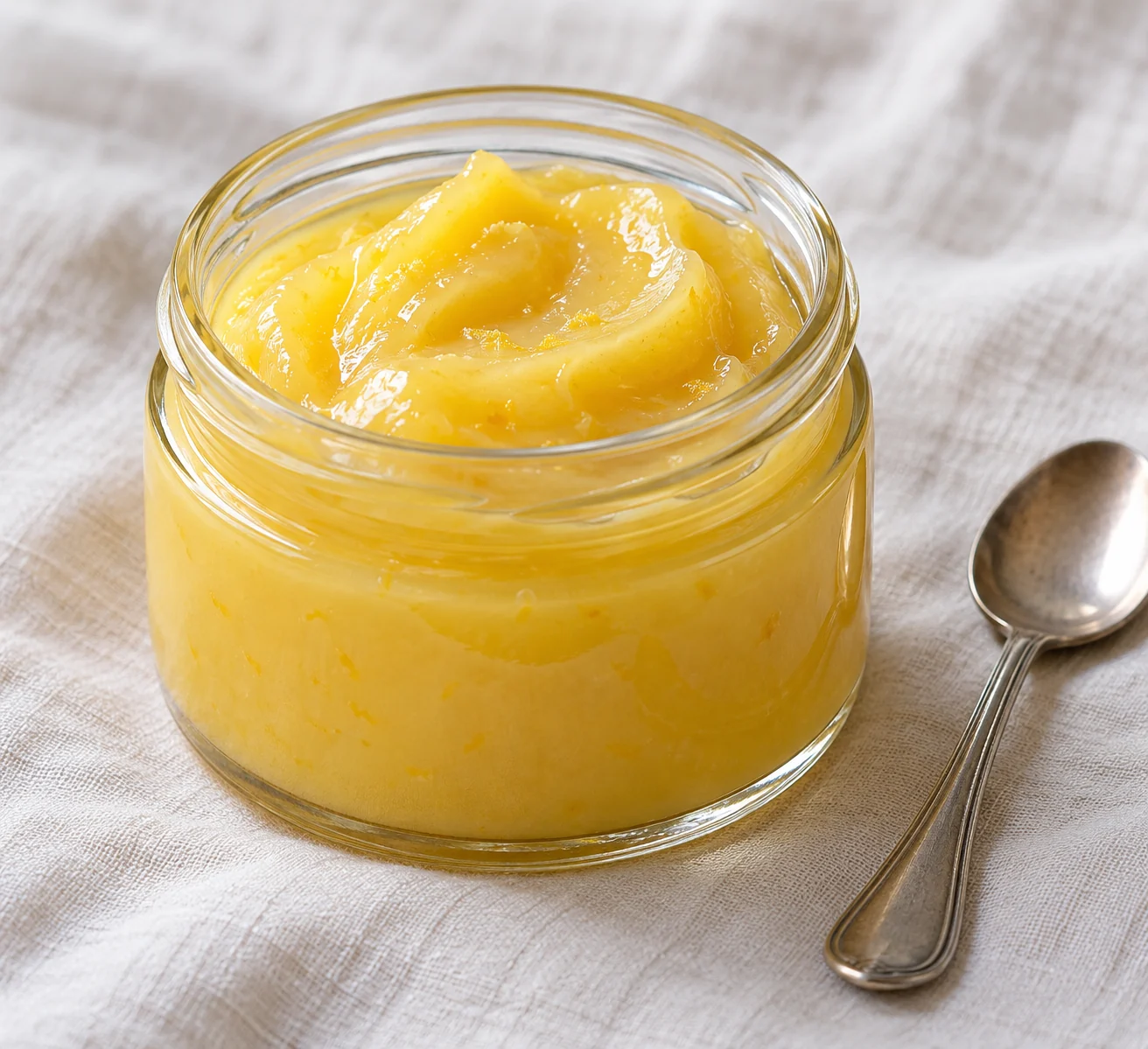
Lemon curd gets its body from carefully cooked eggs and the butter added afterward. This version uses whole eggs, not an unspecified mixture of yolks and whites, and keeps its finely grated zest in the finished spread. It is spoonable after a proper chill, with a tart lemon flavor and small natural zest flecks. The preparation is short compared with the cooling time, so plan to make it several hours before serving.
Whole-egg lemon curd makes 12 servings, with 4 hr 40 min estimated total time. View the standalone recipe page.
Prepare the lemons and eggs before heating
Wash and dry the lemons, then grate only the yellow surface with a fine grater. White pith adds bitterness and coarse strips do not disappear during cooking. Remove seeds from the juice before weighing it. Beat the eggs until whites and yolks are fully combined, then weigh the edible mixture without shells. Cold mixing in the pan distributes the sugar and juice before any egg begins to set. Keep the butter cold and cubed nearby so you can finish the cooked mixture without stopping to measure.
Stir the whole base of the saucepan
A heavy small saucepan gives better control than a thin pan over a strong burner. Move the flexible spatula through the corners as well as across the center, where thickening can be easier to notice. Watch the layer at the base: if it becomes noticeably thicker than the mixture above it, lift the pan briefly and stir before continuing. The purpose is even heating, not maximum speed. Steam alone is not a reliable endpoint, and waiting for a rolling boil risks producing visible pieces of cooked egg.
Use temperature and coating texture together
The target range in the card provides both a cooking endpoint and a useful texture cue. Check with a thermometer while continuing to move the mixture so the reading represents the curd rather than a hot patch against the metal. It should leave a coating on the spatula instead of running off like lemon juice. Take it off the heat at that stage. Whole eggs can produce a lighter texture than a yolk-heavy curd, so this formulation should not be judged against a different recipe made mostly from yolks.
Incorporate the butter without discarding the zest
Add the cold butter gradually off the heat and stir until every cube has disappeared. This cools the mixture while distributing the butter throughout it. Scrape the saucepan thoroughly into the clean bowl. The recipe deliberately retains the finely grated zest and does not use a sieve, keeping the stated ingredients in the final batch. If the eggs accidentally scramble into lumps, straining may change the texture but also removes an unknown quantity of food. It is not the same retained-ingredient calculation and should not be described as one.
Chill fully before deciding how firm it is
Stir the bowl over its ice bath without letting water splash into the food. This removes excess heat before the shallow container goes into the refrigerator. The four-hour chill allows the butter and cooked egg mixture to firm; warm curd is naturally looser. Keep the container covered and use a clean spoon when portioning. Twelve servings means twelve equal shares of this batch, not a guaranteed number of jars. Store it as a perishable egg-and-dairy spread, with no room-temperature or canning claim.
Common questions
Why does my curd taste unusually bitter?
Large amounts of white lemon pith are a common avoidable cause. Grate lightly and move to a new patch of peel as soon as the yellow layer is removed. Different lemons also vary naturally. Extra sugar added afterward changes the recipe and estimate, so prevention through careful zesting is more reliable than trying to hide bitterness.
Can I replace the whole eggs with only yolks?
No equal-weight substitution is specified here. Yolks and whole eggs contain different proportions of water, protein and fat and thicken differently. Use the measured whole-egg mixture for this formulation. The source profile and twelve-portion estimate both depend on that choice, including the whites rather than discarding them.
Technique & food-safety references
These primary references support the technique, safety and storage guidance. The recipe and cooking explanations are original Recipe Pinboard content.


