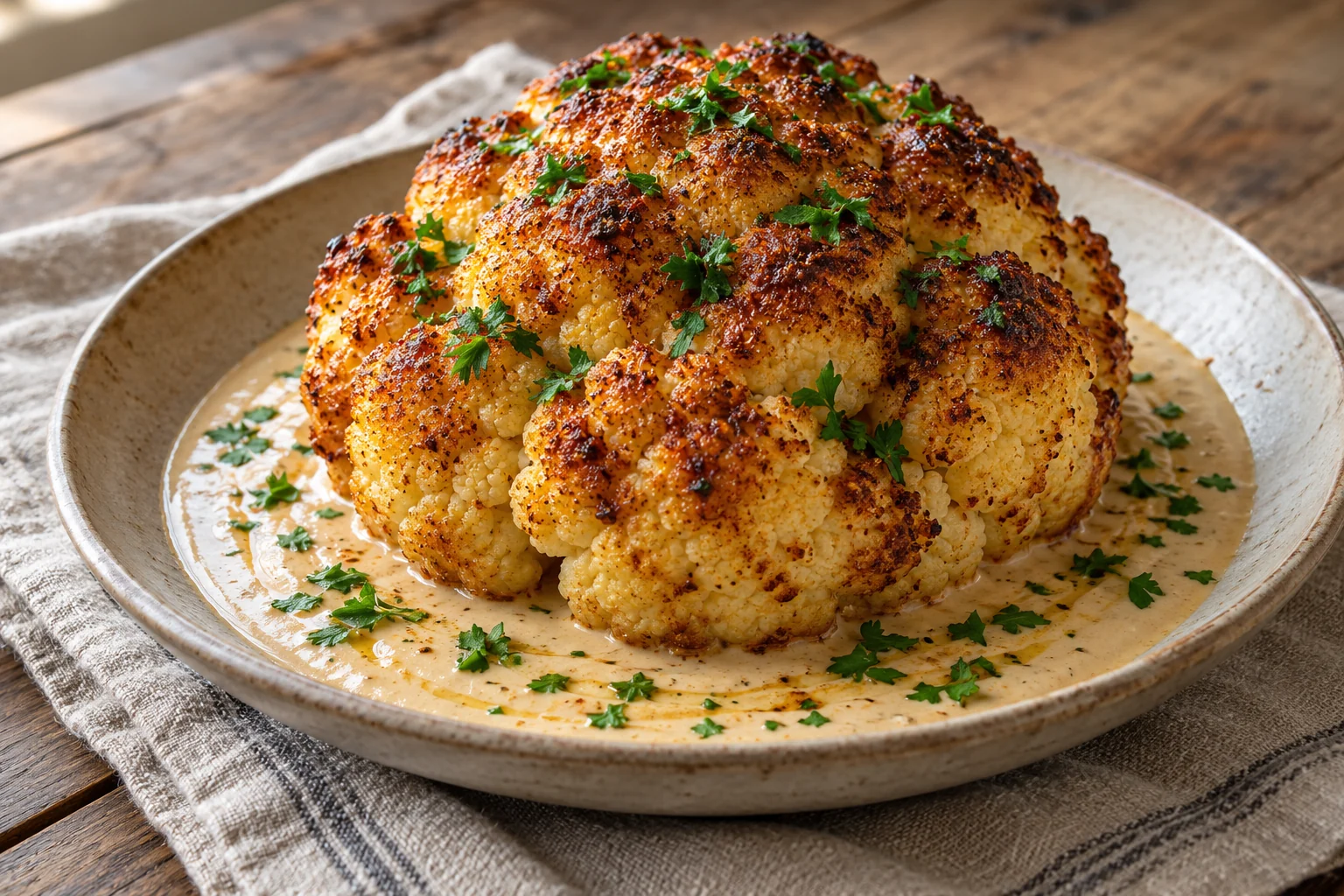
A whole cauliflower can brown beautifully while its center remains stubbornly firm. This method separates those jobs: steam first to heat the core, then roast the dry surface for color. A smooth chickpea, tahini and lemon gravy makes the finished head easy to divide into four substantial portions. The sauce is blended from measured ingredients, and every portion receives a quarter of it.
Whole roasted cauliflower with chickpea gravy makes 4 servings, with 2 hr 5 min estimated total time. View the standalone recipe page.
Trim for stability and an accurate yield
Remove the leaves and any tough, damaged stem, then weigh the edible head. The recipe uses 900 grams after that preparation. Keep enough of the core to hold the florets together and make a flat base so the head sits securely. A much larger cauliflower will not follow the same timing simply because it fits in the pot. Four portions mean cutting through the core into quarters and sharing all edible material, rather than removing the soft center after cooking. Rinse the head and check the spaces between florets.
Steam until the core is nearly tender
Set the cauliflower above the water on a stable rack and cover the pot. The water should simmer below the vegetable, not flood it. Check the level during cooking and replenish below the rack if necessary. A thin knife inserted toward the core should meet only slight resistance before the head leaves the steamer. Surface florets alone are a poor guide to the center. Lift the hot head carefully with sturdy utensils and allow the scheduled drying time; trapped surface water delays browning in the oven.
Coat the crevices without adding more oil
Mix the spices with the measured roasting oil before brushing the head. This spreads the seasoning more evenly than sprinkling dry spices over an oily dome. Work some coating into the spaces between florets, but avoid pulling the head apart. Roast upright in a dish with enough room for air to move around it. If the top darkens before the core becomes fully tender, cover only the dark area loosely with foil. The final texture should let a knife travel through the center easily, while the outer florets have distinct browned tips.
Blend a sauce that stays creamy
The chickpeas are weighed after draining and rinsing, matching the ingredient state used for the estimate. Warm them with garlic and the measured sauce water before blending. Tahini contributes sesame solids and fat; stir its jar thoroughly before weighing if it has separated. Add the lemon off the heat, then blend carefully with an immersion blender until no large chickpea pieces remain. Keep the blade submerged to limit splashes. Rewarm gently and stir along the pan bottom so the thick sauce does not catch while the cauliflower finishes.
Divide the complete dish
Let the head stand for five minutes before cutting through its core into quarters. Spoon the sauce onto plates or around the head, then distribute the measured parsley. The ingredient estimate includes all gravy and oil, while unmeasured losses into steaming water are not deducted. Plain tahini and seasonings need label checks for the stated dietary tags; sesame remains an ingredient regardless of those tags. Refrigerate leftovers within two hours, use within three to four days and reheat thoroughly to 165°F.
Common questions
Why is the outside brown but the middle hard?
The head likely needed more steaming, or it was larger than the specified edible weight. Check the core with a knife before roasting. Protect a dark top with foil while the center finishes.
Can I use raw dried chickpeas?
Not directly. This recipe uses cooked canned chickpeas weighed after draining. Dried chickpeas require a separate cooking process and a different weight basis; substituting the same dry weight would change the dish substantially.
Technique & food-safety references
These primary references support the technique, safety and storage guidance. The recipe and cooking explanations are original Recipe Pinboard content.


