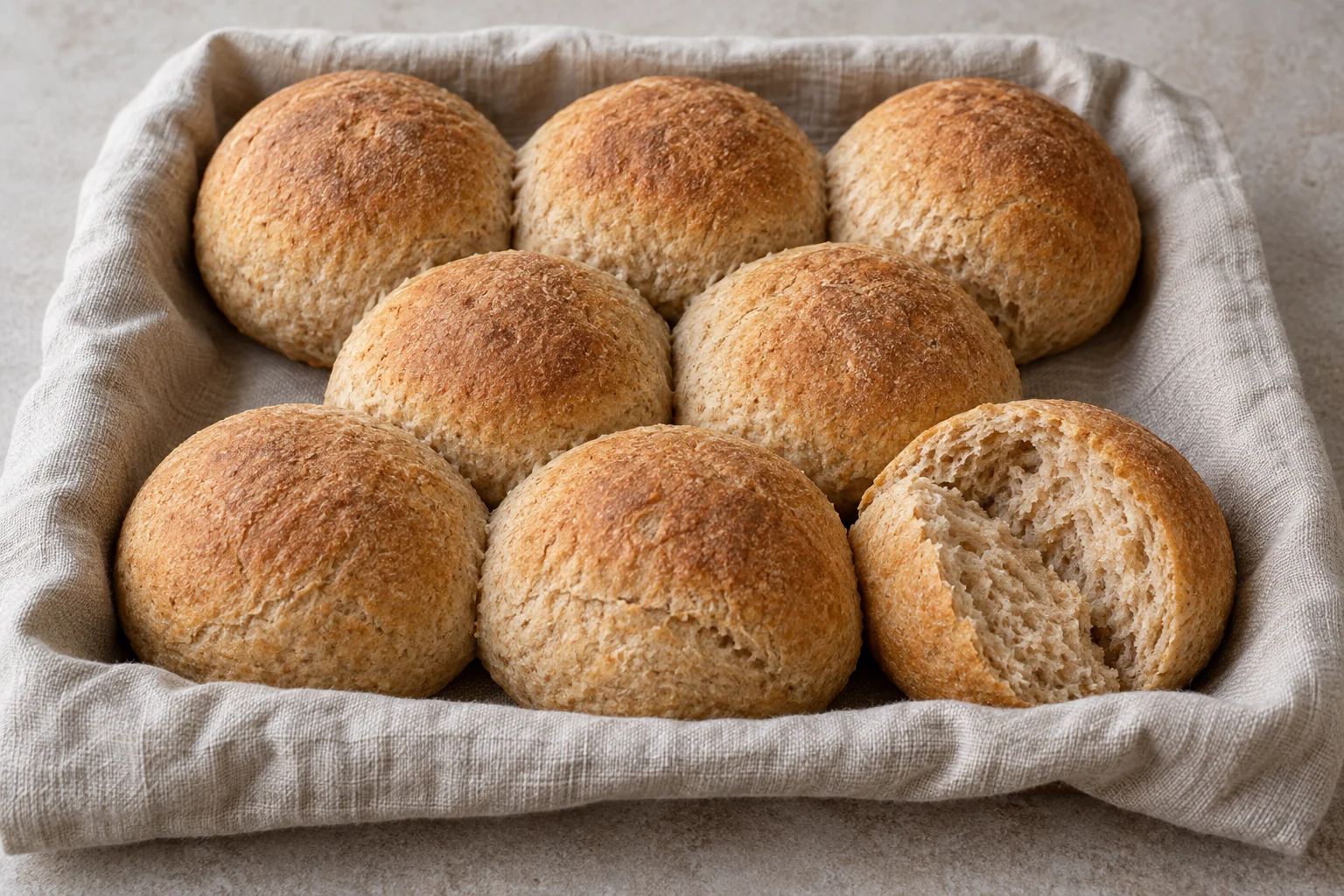
These rolls combine whole-wheat flavor with bread flour for a softer structure. The recipe is intentionally a weighed dough: the amount of flour relative to water matters more than whether a cup looks full. Two rises and a short cooling period account for most of the elapsed time. Watch the dough itself as well as the clock, particularly in a cool kitchen.
Soft whole-wheat dinner rolls makes 8 servings, with 3 hr 40 min estimated total time. View the standalone recipe page.
Keep the flour and water relationship steady
Use 200 g whole-wheat flour and 120 g bread flour. Swapping all of the bread flour for whole wheat changes water absorption and can produce a denser crumb. The dough may feel tackier than a white-flour dough at first; that does not automatically mean it needs more flour. Knead on the lightly oiled surface specified in the card. Adding handfuls of flour during kneading changes the ratio a little at a time until the final dough becomes much drier than the original formula.
Check the yeast before committing the flour
The active dry yeast is hydrated in lukewarm water with the measured sugar. Use a thermometer if uncertain about temperature: pleasantly warm to a hand is not a precise measurement. After five to ten minutes, visible foam gives a useful sign of activity. If the mixture remains entirely inactive, check the yeast date and water temperature before mixing the full dough. The recipe’s timing assumes usable yeast. A failed activation is easier to address in a small cup than after flour, oil and salt have been added.
Let the first rise finish before shaping
A covered bowl protects the surface from drying into a skin. Choose a room-temperature location away from a cold draft or direct intense heat. Look for roughly doubled volume and a lighter, aerated feel rather than following sixty minutes as an absolute deadline. A cooler room may push the rise beyond the stated range. Marking the starting height on a straight-sided container makes growth easier to judge. Do not place dough directly on a hot radiator or in an oven whose temperature you cannot control.
Divide evenly and build gentle surface tension
Weigh the full dough and divide by eight for rolls that bake at similar rates. Bring the edges of each piece toward the underside, then round it gently against the work surface. You want a smooth top without tearing the dough or squeezing out every trace of air. Arrange the balls with space to expand. During the second rise they should become visibly puffy. If a lightly pressed indentation springs back immediately, allow more time; if the dough collapses dramatically, it may have risen too far.
Bake through and resist tearing immediately
Golden crust is useful, but the center of a roll in the middle of the tray provides a better check than an outer roll that receives more heat. Use the card’s 190–200°F (88–93°C) center range alongside a set crumb and browned exterior. Transfer to a rack so trapped steam does not soften the bottoms excessively. Wait at least fifteen minutes before opening a roll. Very hot crumb can seem gummy because it has not finished settling. Freeze fully cooled extras rather than leaving the entire batch uncovered overnight.
Common questions
Why are my whole-wheat rolls dense?
Common causes are extra flour added during kneading, an incomplete rise, inactive yeast or cutting the rolls while very hot. Review the weighed ingredients and rise observations first. More yeast is not a universal solution to a dry dough or a rushed proof.
Can I skip the second rise?
No. Shaping redistributes the dough and releases some gas. The second rise lets the shaped pieces expand before the oven sets their structure. Skipping it is likely to give small, tight rolls even if the first rise looked successful.
Technique & food-safety references
These primary references support the technique, safety and storage guidance. The recipe and cooking explanations are original Recipe Pinboard content.