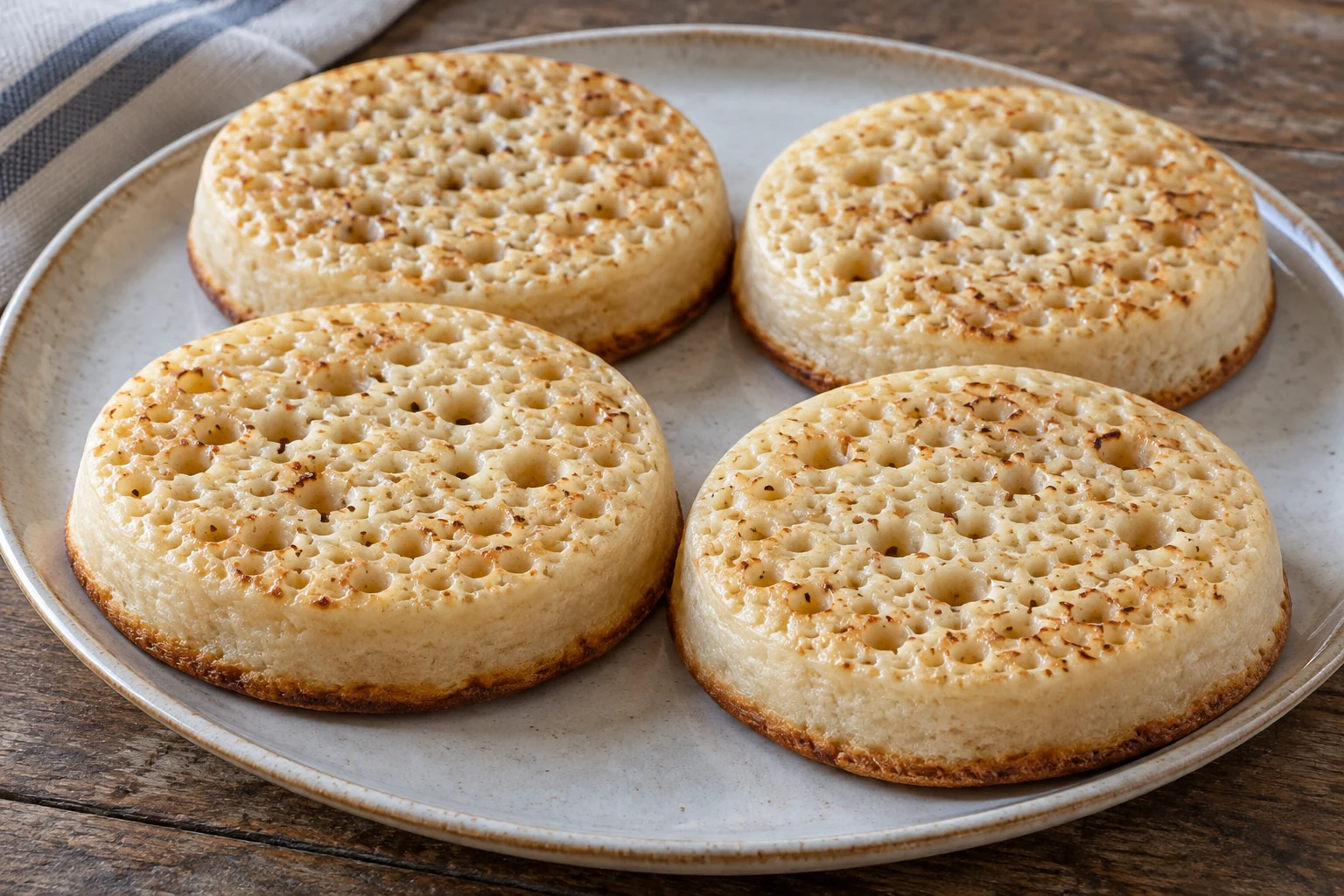
Crumpets are cooked from a yeasted batter, so their preparation feels different from shaping a loaf or kneading an English muffin dough. The rings support the batter while bubbles open at the surface. This version makes ten individual crumpets in three batches, with a short turn to finish their centers. The total allows for a slow rise, careful griddle work and cooling; it is not a ten-minute breakfast unless the crumpets have already been made.
Yeast-raised griddle crumpets makes 10 servings, with 3 hr 10 min estimated total time. View the standalone recipe page.
Weigh a batter rather than improvising a dough
The formula uses two hundred and fifty grams of flour and three hundred and fifty grams of milk plus water. That liquid-to-flour relationship is intentionally much looser than bread dough. Whole milk contributes solids as well as water, so those numbers are not a pure water-hydration calculation. Reserve fifty grams of the water for the later baking-powder addition. There is no bench flour or kneading stage. Adding handfuls of flour until the mixture can be shaped would change the product and make the holes more difficult to develop.
Give the yeast a visible start
Warm the milk and first water portion within the specified temperature range, then add sugar and active dry yeast. Wait for foam before beating in flour and salt. Very hot liquid can damage yeast; cold liquid slows its activity. After mixing, mark the batter level on the bowl or note it carefully. During the covered rise, look for expansion and bubbles rather than relying only on a timer. A cool kitchen may need longer than the listed window. Keep the bowl away from direct heat that could warm one side excessively.
Prepare rings and divide the batter
Stir the baking powder into the reserved water, incorporate it evenly and allow the ten-minute rest. Grease the inside walls of heatproof rings as well as the cooking surface. The recipe counts all fifteen grams of oil, even if some remains on the brush or pan. Each of the ten batter portions is approximately sixty-two grams before cooking. Keeping the portions similar helps the centers finish at the same time. Overfilling one ring produces a thicker crumpet that may remain wet while its neighbors are already browned.
Control the first batch carefully
Use medium-low heat and watch the bottom color as the upper surface develops holes. A fast dark crust with glossy wet batter above it means the pan is too hot. Lower the heat before the next batch and allow the surface to settle. Remove the rings with tongs only when the sides can support themselves, loosening carefully if necessary. Turn the crumpets for the brief finishing stage and check that the centers are no longer wet. Light top coloring is normal for this method, while deep scorching is not the goal.
Budget for all three batches and cooling
Four rings produce batches of four, four and two. Allow about fifty minutes for cooking and handling them all, rather than multiplying only the shortest first-side time. Keep finished crumpets on a rack so their bottoms do not steam against a solid plate. The ten-minute initial cooling period helps the interior settle. For storage, cool them completely and freeze for longer keeping. Toast after thawing to restore warmth and surface texture. They do not need to be split; the holes on top are already exposed. Butter, jam and other toppings are separate.
Common questions
Why are there only a few open holes?
Check that the yeast foamed and the batter expanded before cooking. A very thick batter or excessively hot surface can limit visible openings. Homemade crumpets need not have perfectly uniform holes; assess the cooked interior as well as appearance.
What if the center is still wet?
Continue gentle cooking rather than serving a browned outside around raw batter. Lower the heat and turn again if needed. For the next batch, verify portion size and ring diameter so the batter is not too deep.
Technique & food-safety references
These primary references support the technique, safety and storage guidance. The recipe and cooking explanations are original Recipe Pinboard content.


