Beef · ALWAYS FREE
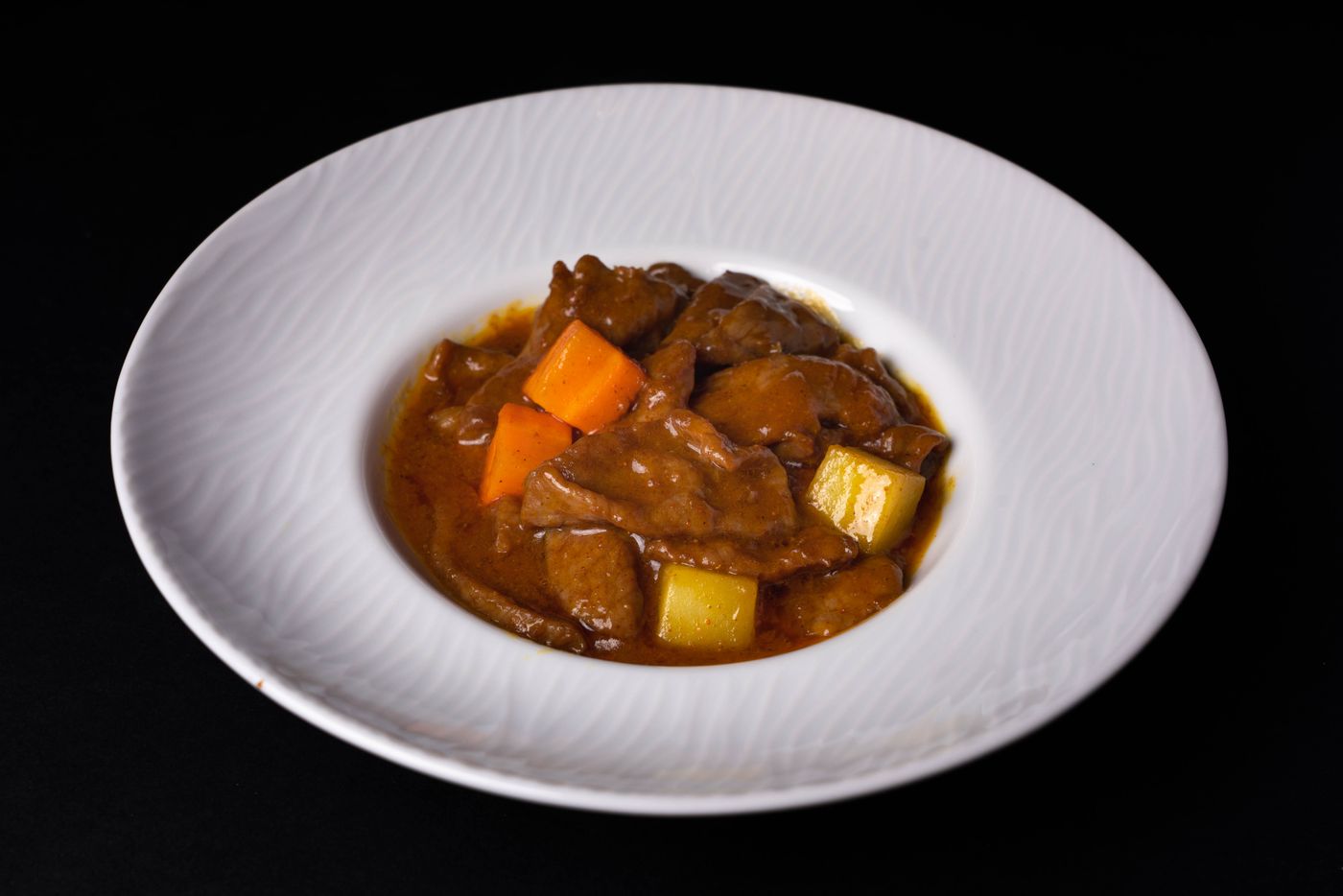
Slow-Simmered Beef, Potato and Carrot Stew
Large chunks of beef, potato and carrot settle into a glossy brown gravy after a patient stovetop simmer.
Ingredients
Volumes are approximate. For baking, use a scale; Metric keeps the specified gram weights.
Let’s make it
- Pat the beef dry, season with 3 g salt and the pepper, and toss with the flour. Heat the oil in a heavy pot over medium-high heat. Brown the beef in two batches for about 12 minutes total and transfer to a bowl.
- Lower the heat to medium, add the onion and cook for 5 minutes. Stir in the garlic and tomato paste for 1 minute, then slowly add the stock, scraping the browned bits off the base.
- Return the beef and its juices to the pot with the bay leaf and thyme. Bring to a gentle simmer, cover and cook on low for 90 minutes, stirring every 25–30 minutes.
- Add the potatoes, carrots and remaining 3 g salt. Cover and simmer for 35–45 minutes, until the vegetables are tender and the beef yields easily to a fork. The beef must have reached at least 145°F / 63°C; the long braise continues well beyond that point.
- If the beef is still firm, continue simmering and checking every 15 minutes; tougher cuts can require extra time. Remove the lid for the final 10 minutes to thicken the gravy, adding small splashes of water only if it becomes too dry.
- Remove the bay leaf. Rest the stew off the heat for 5 minutes, then spoon the large beef and vegetable pieces into bowls with the brown gravy.
Estimated nutrition
Per serving · 1 of 4- Calories
- 638 kcal
- Protein
- 46.4 g
- Total carbohydrate
- 48.2 g
- Total fat
- 29.9 g
- Total sugars
- 8.7 g
Calculated from the listed ingredients and yield. Brands, draining, cooking and portioning can change the result. Not a laboratory analysis.
Calculation notes & sources
Estimated from listed ingredient amounts and identified food-composition profiles, divided by the stated number of servings. Not laboratory analysis or kitchen testing. The ingredient-sum method uses raw or cooked food profiles matching the ingredient state. Moisture gain/loss does not change the stated serving count. No general cooking/fermentation nutrient-retention factors are applied. Unless a discard/absorption blocker is listed, all measured pan fats and sauces are assumed consumed. Actual amounts left in pans, on utensils or during cooking can reduce intake. Optional additions are excluded when noted. Calories are kcal. Protein, total carbohydrate, total fat and total sugar are grams. Total carbohydrate includes fiber; these are not net carbs. No %DV or FDA-compliance claim. Null means unavailable, never zero. Sodium and fiber are omitted because retention, brands, rinsing and missing source rows make them less reliable here.
View the ingredient calculations · Source 1Times are estimates. Images illustrate the dish; check ingredients and portions for your needs.
Use a food thermometer for meat, fish, and egg dishes. Refrigerate perishable food within 2 hours, or 1 hour above 90°F (32°C). Reheat leftovers to 165°F (74°C). Safe cooking temperatures · USDA leftover guidance