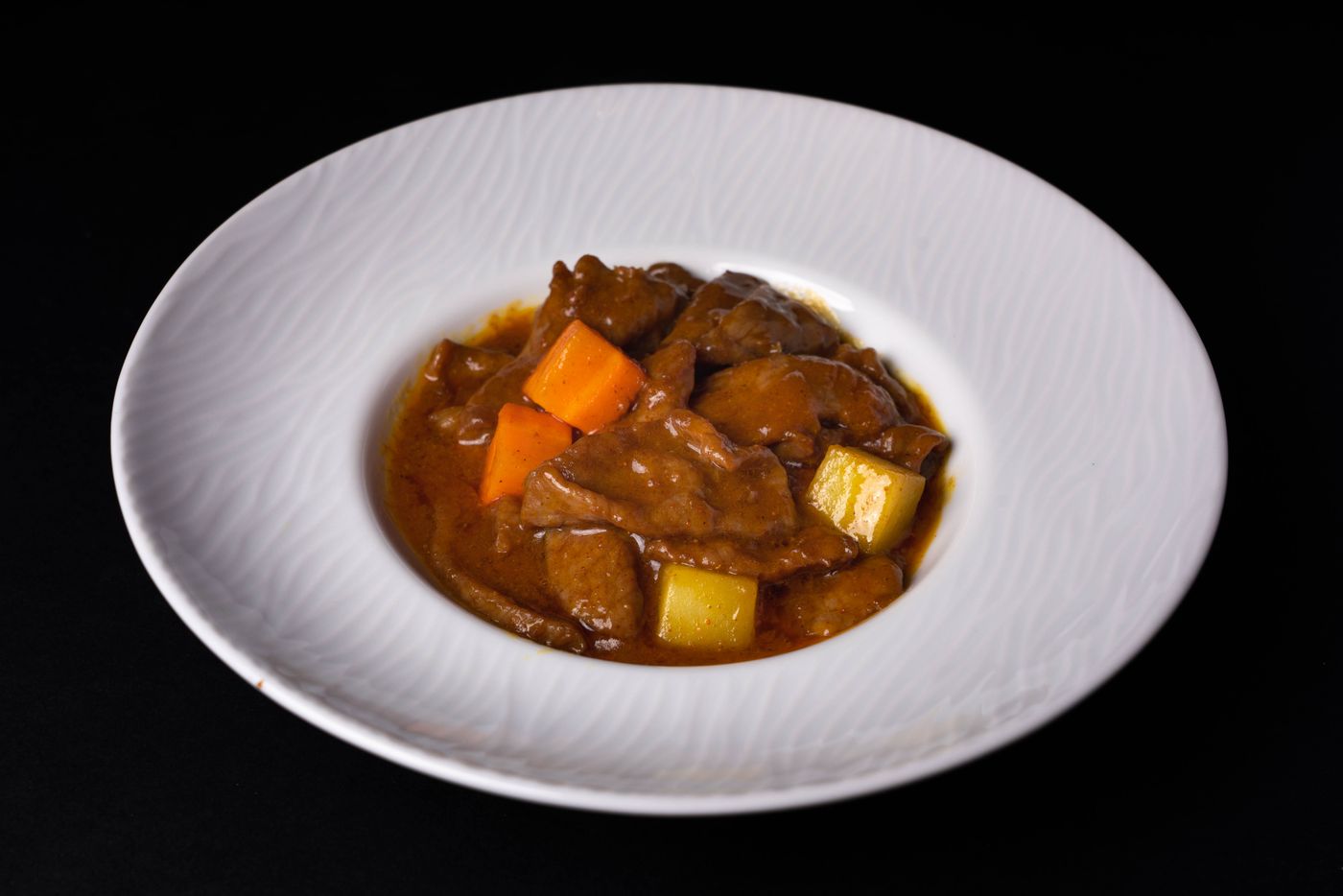
The important question in a beef stew is not simply whether the beef is cooked, but whether the chuck has become tender enough for a fork. This four-serving recipe is planned for 190 minutes and uses 800 g chuck with potatoes and carrots. Browning, a long covered simmer and a final uncovered reduction each have a different job. Keep those stages separate rather than trying to accelerate everything with a hard boil.
Slow-Simmered Beef, Potato and Carrot Stew makes 4 servings, with 3 hr 10 min estimated total time. View the standalone recipe page.
Dry and flour the beef just before browning
Cut the chuck into approximately 3 cm cubes, pat dry and season with 3 g salt and the pepper. Toss with the 30 g flour so the surfaces are coated without large dry clumps. The flour participates in thickening the gravy later, but at this stage it also needs careful heat control so it browns rather than burns.
Heat the 25 g oil in a heavy pot over medium-high heat. Brown the beef in two batches for about 12 minutes total, transferring each batch to a bowl. Give pieces contact with the base instead of stirring constantly. Crowding the entire quantity into the pot encourages moisture to collect and makes it harder to develop a browned surface.
Loosen the browned base with stock
Lower the heat to medium and cook the finely chopped onion for 5 minutes. Add garlic and tomato paste for 1 minute, stirring them through the onion and the residue in the pot. Have the stock measured before this step so the garlic and paste do not remain on a hot, nearly dry base while you search for a jug.
Add the 850 ml beef stock gradually, scraping up the browned bits as liquid reaches them. Small additions help you work any floury patches into the sauce. Brown residue contributes flavor; black, acrid patches will make the gravy bitter. Control the earlier browning heat instead of assuming all dark material should end up in the stew.
Keep the first simmer gentle and covered
Return the beef and its juices with the bay leaf and thyme. Bring to a gentle simmer, cover and cook on low for 90 minutes, stirring every 25–30 minutes. The lid limits evaporation while the meat cooks. Listen and look for occasional gentle bubbling rather than a vigorous rolling boil.
A heavy pot retains heat, so turning the burner down may take a little time to change what happens inside. Check the base during each stir, especially near the end of this stage when the gravy can begin to thicken. If it is catching, reduce the heat and loosen the base carefully rather than scraping hard enough to break every beef cube.
Add vegetables after the beef has a head start
Add the 600 g potatoes, 350 g carrots and remaining 3 g salt. Keep the vegetables in the specified substantial chunks so they can cook through without disappearing. Cover and simmer for another 35–45 minutes. A knife should enter the vegetables readily, and a fork should meet little resistance in the beef.
The beef must pass 145°F / 63°C during cooking, but this long braise goes well beyond that point; tenderness is the later quality check. If the meat is still firm, continue gently and check every 15 minutes as directed. Chuck varies, and reaching the planned serving time does not automatically make a resistant piece tender.
Adjust the gravy after checking tenderness
Uncover for the final 10 minutes to let some liquid evaporate. Stir gently around the larger pieces. If the stew becomes too dry, add small splashes of water rather than a large pour that would undo the reduction. A spoonable gravy should surround the meat and vegetables without turning into a stiff paste.
Remove the bay leaf and rest the pot off the heat for 5 minutes before serving. For leftovers, portion the stew into shallow containers and refrigerate promptly rather than leaving the whole pot on the stove to cool. A deep vessel holds heat longer and is poorly suited to cooling a substantial batch quickly.
Common questions
Why is my beef still tough after the stated time?
Chuck can need a longer gentle simmer. Continue checking every 15 minutes and use fork tenderness as the quality cue, keeping enough liquid in the pot to prevent drying.
Should I add more flour to a thin finished gravy?
First use the prescribed uncovered reduction. Dry flour stirred straight into the finished stew can clump; the recipe already includes flour from the initial beef coating.
Technique & food-safety references
These primary references support the technique, safety and storage guidance. The recipe and cooking explanations are original Recipe Pinboard content.