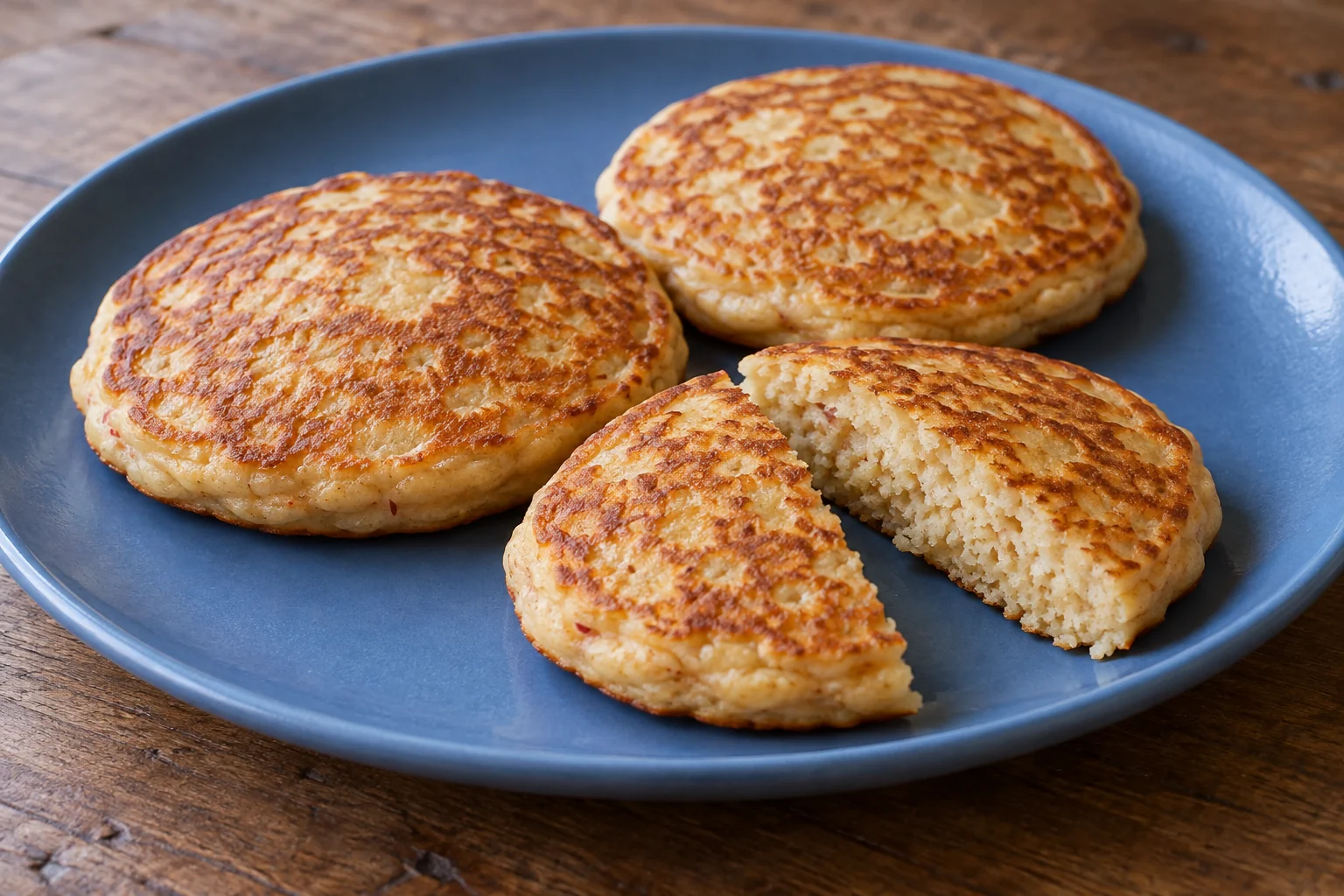
Finely ground oats and grated apple make a batter that behaves differently from a plain wheat pancake mixture. It thickens during a short rest, while small apple pieces contribute moisture inside each pancake. Keeping the rounds small helps the center cook before the outside becomes too dark. The total-time estimate includes multiple skillet batches rather than pretending all twelve cook at once.
Apple & oat skillet pancakes makes 4 servings, with 55 min estimated total time. View the standalone recipe page.
Grind and weigh the oats accurately
Begin with the stated weight of rolled oats and grind them in a clean blender. Fine meal distributes through the liquid more readily than several large untouched flakes. The recipe does not call for an equal cup measure of commercial oat flour, since cup density can differ. For the conditional Gluten-Free collection, use oats specifically labeled gluten-free and review the baking powder and other packaged ingredients. The ingredient screen does not certify the cooking equipment or promise allergy safety. Keep the published gram weights unchanged when switching display units.
Keep the apple juice in the batter
Grate the cored apple finely and retain the juice released during grating. The recipe counts both together as part of the weighed edible apple. Coarse chunks create thick wet pockets that take longer to cook, while squeezing the apple dry removes moisture the formula expects. Mix the egg and milk first, then combine with the apple and dry ingredients. Distribute the baking powder through the oat meal before this wet stage so individual pancakes do not contain concentrated little pockets of leavener.
Rest the batter before portioning
The ten-minute rest lets the ground oats absorb some of the liquid. A batter that seems loose immediately after mixing may become more spoonable without extra dry ingredients. Stir it gently before each batch because apple and oat particles can settle unevenly. Divide the full mixture into twelve similar portions, using a consistent scoop or weighing portions if useful. Very large pancakes are harder to turn and can brown outside while retaining wet batter in the middle. The card intentionally uses small three-inch rounds.
Use moderate heat and inspect the center
Start with medium-low heat and allow the skillet to warm evenly. Use the measured oil across all batches rather than making the first batch oily and the last completely dry. Wait until the lower side browns and the edges begin to set before turning with a broad spatula. Oat batter is tender, so forceful flipping can tear a pancake that is not yet ready. If the surface darkens too quickly, lower the heat. Check the thickest center for the stated temperature and absence of wet egg batter.
Hold briefly and count the full serving
A low oven can keep early batches warm while the remaining pancakes cook, but a long uncovered hold dries their edges. Serve three pancakes as one of the four portions. Syrup, butter and fruit toppings are not quietly included in that nutrition panel. Refrigerate leftovers promptly after cooling and keep them separated if stacking makes them stick. Reheat through the center rather than just crisping the outside. Because grated apple varies in moisture, note the fruit used if you decide to develop a separately adjusted batch later.
Common questions
Why do the pancakes break when I turn them?
They may be too large, insufficiently set underneath or handled roughly. Make the stated small rounds and wait for firm edges before sliding a broad spatula underneath.
Can I use steel-cut oats?
Not with this timing. Steel-cut oats need a different hydration treatment; this formula uses rolled oats ground into meal.
Technique & food-safety references
These primary references support the technique, safety and storage guidance. The recipe and cooking explanations are original Recipe Pinboard content.