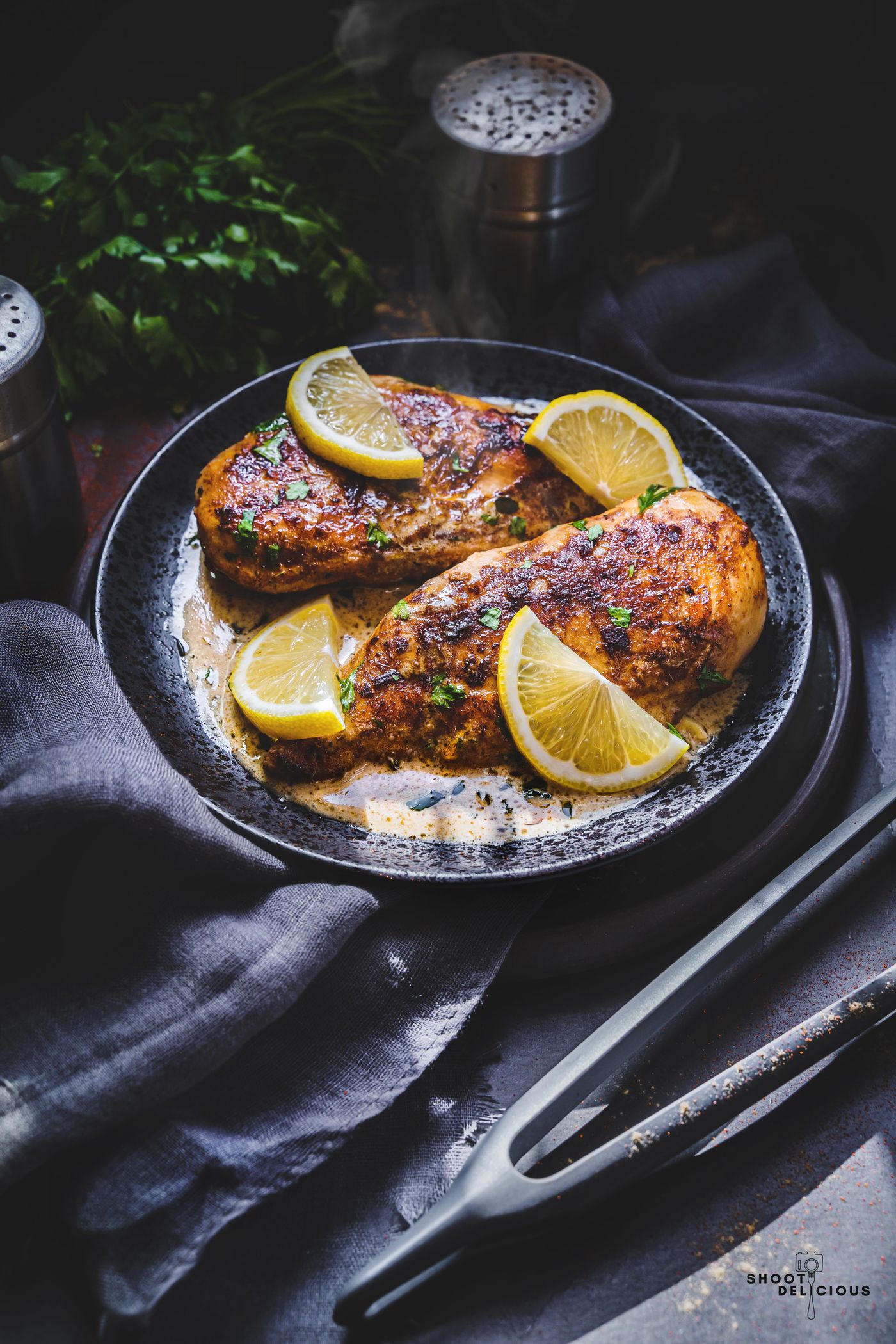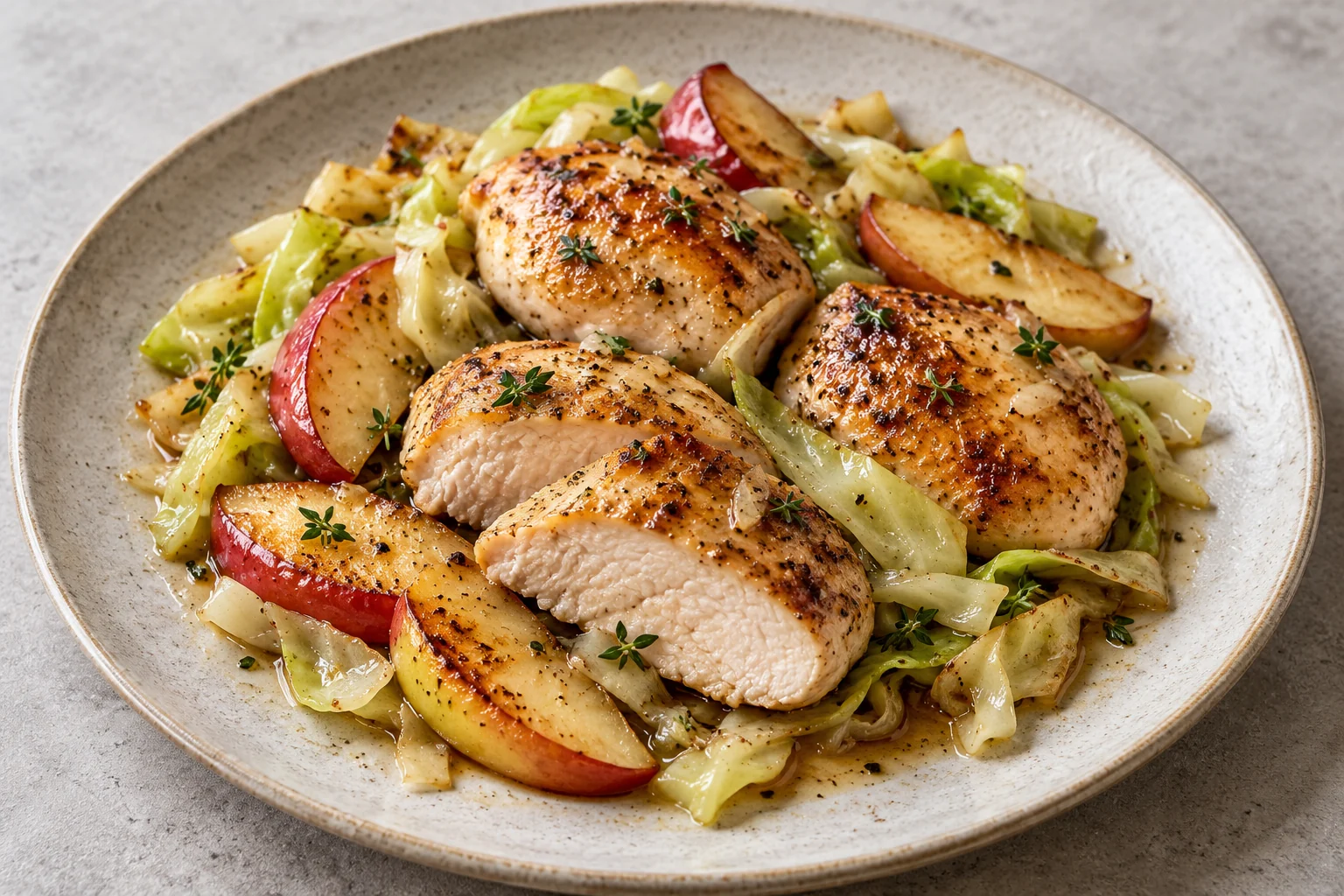
This skillet dinner is a sequence of short jobs in the same pan. The chicken is cooked through before it waits on a clean plate, the apples get their own brief sear, and the cabbage is added in stages as it wilts. Combining everything raw at once would miss the separate textures the method is designed to preserve.
Apple-thyme chicken with cabbage makes 4 servings, with 1 hr 10 min estimated total time. View the standalone recipe page.
Cut the apple and cabbage to their intended sizes
The cabbage amount is 800 g after trimming and removing its core, cut into 1 cm ribbons. The 300 g apple amount is also an edible weight after coring. Keep the red skin on and cut firm fruit into 2 cm wedges. Very soft apples are more likely to collapse during the covered stage instead of remaining distinct pieces.
Prepare those vegetables and fruit on a clean board separate from the raw chicken station. Pat the chicken dry and gently pound its thick ends to an even 1.5 cm. Season with half the salt and the pepper. Set out clean plates for cooked chicken and browned apples before heating the pan.
Cook the chicken completely in two batches
Heat 12 g oil in a wide, deep sauté pan over medium-high heat and cook two portions for roughly four to five minutes per side. Check the thickest point of each for 165°F (74°C) and continue if needed. Transfer only fully cooked chicken to the clean plate, then add 6 g oil for the second pair.
Tent the cooked portions loosely while completing the remaining pan work. The final one-to-two-minute warm-through is not intended to cook raw centers. Keeping the initial batches small gives the meat room to contact the pan and makes turning simpler, rather than squeezing four uneven pieces together and relying on browned edges.
Brown apples first, then make room for cabbage
Lower the heat to medium and add the remaining 6 g oil. Lay apple wedges on a cut face and sear for four to five minutes, turning once so both cut faces color lightly. Transfer to a bowl before adding onion to the oil remaining in the pan. The apples do not need to sit through every cabbage-stirring movement.
Cook onion for three minutes, then add half the cabbage. Stir until it wilts enough to admit the rest, then add the remaining salt. Cook for seven to nine minutes as the ribbons shrink and some edges become golden. A pan that looks full at the beginning will become easier to manage as the leaves soften.
Use the broth for a gentle covered finish
Return the apples with the measured broth and 2 g thyme. Scrape up browned residue gently, cover and simmer for eight to ten minutes, stirring once. The cabbage should be tender and the apple should yield to a fork while keeping its shape. A strong boil and constant stirring work against that intact-fruit finish.
If the pan remains very wet, uncover and simmer for another two to three minutes before the chicken returns. This is a light-juice preparation, not a flour-thickened gravy. Use the specified broth ingredients when relying on the recipe’s dietary criteria; a differently formulated stock can introduce ingredients that its clear appearance does not reveal.
Add vinegar late and slice the warmed chicken
Stir in the unsweetened cider vinegar, then return the cooked chicken and collected juices for a gentle one-to-two-minute warm-through. Slice each portion across the grain and divide all the cabbage, apple and juices among four plates. One chicken portion goes on each, with the remaining 1 g thyme as the final fresh note.
Refrigerate leftovers promptly in shallow containers, within two hours or one hour above 90°F (32°C). Use within three to four days and reheat to 165°F (74°C). The apples and cabbage will soften further during reheating. Do not keep the chicken cooking in a reducing pan merely to eliminate every drop of its deliberately light serving juices.
Common questions
Why did the apples turn into sauce?
They may have been too soft at the start, cut too small or stirred aggressively during the simmer. Use firm wedges, sear separately and return them only for the specified gentle covered stage.
Can I leave the chicken slightly underdone before cooking the cabbage?
No. The canonical method cooks every portion to 165°F (74°C) before it waits on the clean plate. The final brief return is only a warm-through, not a second raw-chicken cooking stage.
Technique & food-safety references
These primary references support the technique, safety and storage guidance. The recipe and cooking explanations are original Recipe Pinboard content.