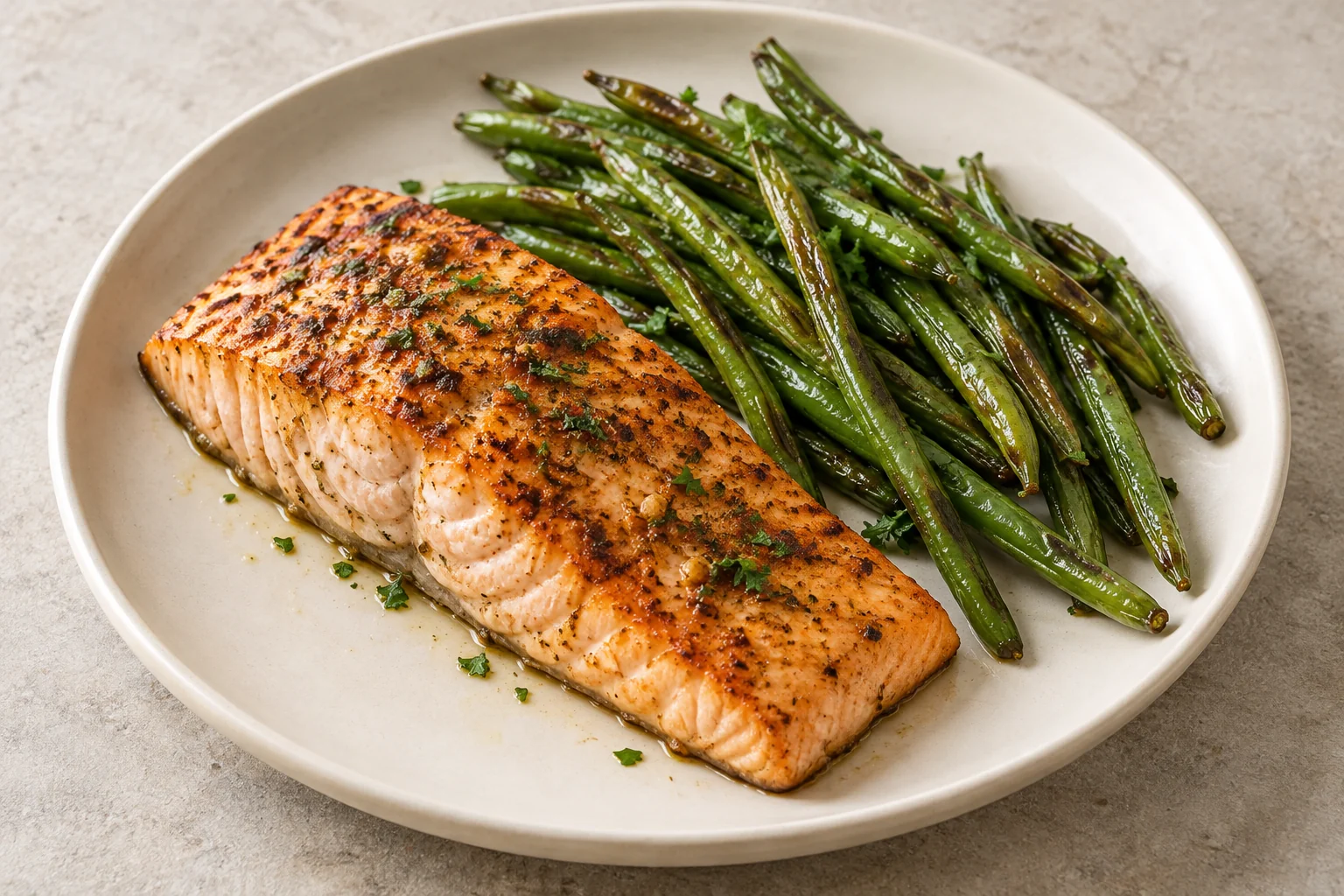
Salmon portions and green beans can share a roasting pan, but they do not necessarily need the same amount of time. This recipe gives the beans ten minutes alone before adding garlic-paprika salmon. Lemon juice and parsley finish everything after cooking. The useful decisions are practical ones: choose similar fish thicknesses, allow enough pan space, and take each portion out when its center reaches the safe temperature.
Paprika baked salmon & green beans makes 4 servings, with 45 min estimated total time. View the standalone recipe page.
Choose portions that can cook together
The card specifies four equal portions from 680 g skinless, boneless farmed Atlantic salmon, approximately 2.5 cm thick. Thickness matters as much as weight. A thin tail piece and a thick center piece may weigh the same but finish several minutes apart. Keep that difference in mind if your purchased fillet cannot be divided evenly.
Thaw frozen fish in the refrigerator before starting this method. Pat each portion dry so the oil-and-spice mixture stays against its surface. Prepare the parsley and lemon juice before handling the raw salmon, or use clean utensils and a freshly cleaned board afterward. Have a clean plate ready in case the fish finishes before the vegetables.
Start the beans on a roomy sheet
Trim the tough stem ends and dry the beans after washing. Their 600 g weight is the prepared amount. Toss with the allocated 15 g oil and seasoning, then spread them out on a large rimmed sheet. A narrow tray packed with overlapping beans will produce softer, more unevenly browned vegetables.
The first ten minutes at 425°F (220°C) begins softening the beans before the fish goes in. Turn them when you add the salmon, moving them outward rather than burying them beneath the portions. If the pan cannot accommodate everything loosely, use a second tray and allow for different browning on the two oven racks.
Keep the garlic coating on the fish
Mix the minced garlic with paprika, the remaining oil and seasoning before spreading it over the salmon. A thin, even coating is easier to manage than a pile of minced garlic on each piece. Keep loose bits off bare areas of the hot tray, where they can scorch before the fish is ready.
The lemon juice belongs at the finish. Reserving it avoids creating a wet cooking bath around the beans, and gives you a clear final step while plating. This is a light oil-based coating rather than a sticky glaze. Do not wait for a dark lacquered surface to decide the salmon has finished cooking.
Check temperature before chasing more color
Begin checking after twelve minutes of the second roasting stage. Insert a food thermometer sideways into the thickest center of each portion, avoiding contact with the sheet. Fish should reach 145°F (63°C). The twelve-to-sixteen-minute range is a planning estimate; thickness and the starting temperature of the fish can change it.
Transfer finished portions to the clean plates even if another portion needs longer. Test the beans separately for your preferred tenderness. They can return to the oven after the salmon comes out, so there is no reason to keep already-cooked fish roasting solely to soften a particularly thick bean. Spoon the pan juices onto the plates.
Finish four plates and handle leftovers promptly
Share the beans evenly among the plates and distribute the lemon juice and parsley over both fish and vegetables. Because the recipe contains no starch accompaniment, any separately cooked potatoes, rice or bread should be planned alongside it and counted separately. Keep the fish in generous pieces rather than breaking it up while serving.
Refrigerate leftovers in shallow covered containers at 40°F (4°C) or below within two hours, or one hour above 90°F (32°C). Use within three to four days. If reheating, bring the center to 165°F (74°C). Reheat covered to help retain moisture, checking the temperature instead of extending the heating time unnecessarily.
Common questions
Can I use frozen green beans?
This timing is written for fresh beans. Frozen beans release different amounts of water and may need package-directed cooking first. For the most predictable result, follow the fresh-bean card rather than making an unmeasured swap directly onto the crowded sheet.
What if one piece of salmon is thinner?
Start checking that portion earlier and remove it separately when it reaches 145°F (63°C). Equal portions are convenient, but independently checking each center is more reliable than assuming every piece finishes at the same moment.
Technique & food-safety references
These primary references support the technique, safety and storage guidance. The recipe and cooking explanations are original Recipe Pinboard content.