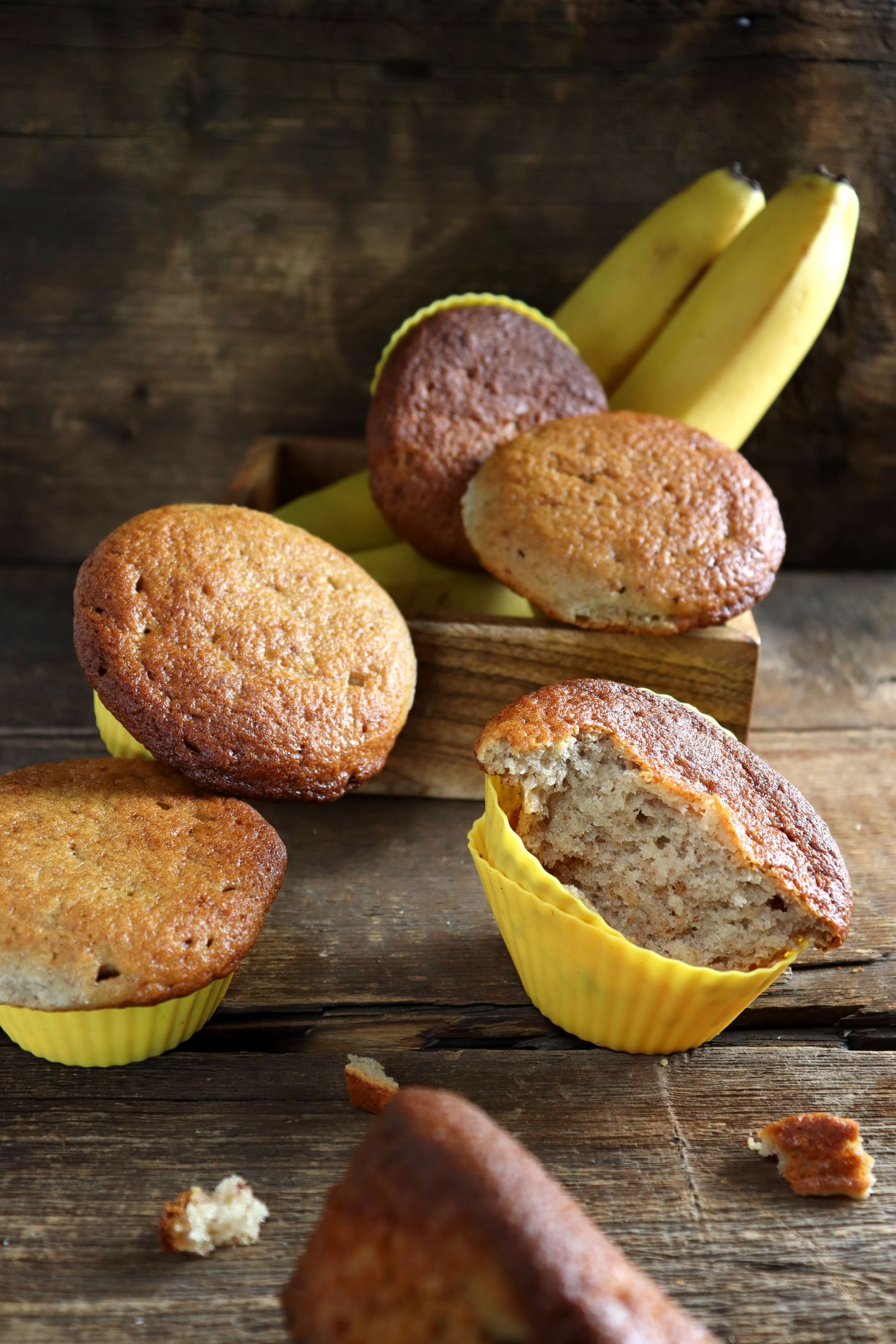
These muffins combine mashed banana with rolled oats, so their batter naturally looks more textured than a plain cake batter. Trying to beat that texture away is counterproductive. The recipe makes twelve muffins using two bananas, one cup each of flour and oats, and a measured amount of oil and milk. Even portioning and a clear doneness check are more useful than chasing a perfectly smooth bowl.
Banana oat breakfast muffins makes 12 servings, with 45 min estimated total time. View the standalone recipe page.
Start with mashable bananas and measured dry ingredients
Use ripe bananas that mash readily with a fork. Break down large pieces before adding the eggs, oil, milk and brown sugar; an occasional small banana piece is fine, but a large lump can leave a dense wet pocket. Banana sizes vary, so keep to the stated two rather than adding another to intensify the flavor.
Measure the flour without compressing it into the cup, and level the top. Keep the rolled oats intact. They are a distinct ingredient here, not flour to be blended into powder. Mix the baking powder, cinnamon and salt through the dry bowl so no muffin gets a concentrated pocket.
Combine thoroughly before the flour meets the liquid
The wet mixture is where vigorous whisking belongs. Break up the eggs and brown-sugar lumps and distribute the neutral oil through the banana and milk. Scrape around the bowl's lower edge, where mashed banana can hide beneath the looser ingredients.
After adding the dry bowl, switch to folding. Bring the spatula up from the bottom and turn the batter over until dry flour disappears. Oat flakes and banana flecks will remain visible. Stop when everything is incorporated; continuing to stir for a glossy, cake-like appearance can make the finished muffins less tender.
Make all twelve cups work together
Preheat the oven to 375°F before finishing the batter, and line the twelve-cup tin as directed. Divide the mixture among all twelve wells rather than making a few oversized muffins first. Start with modest portions, then distribute what remains so the levels are similar.
Equal portions help the muffins finish together. If one cup is much fuller than another, its center may still be wet while the smaller muffin is drying out. A scoop or two spoons makes portioning tidier, but no exact scoop size is required by this recipe.
Use the baking window as a checking window
Begin checking around the early end of the 18–23-minute range. The tops should spring back when lightly touched, and a tester inserted into the central crumb should emerge without wet batter. Check more than one muffin if the pan has unevenly sized portions or the oven browns one side faster.
A banana smear and raw floury batter are not the same, so choose a second test spot if the first hits a visible fruit piece. A brown top alone does not establish that the center is ready. Do not taste raw batter; both uncooked flour and eggs require proper cooking.
Cool before wrapping
The five-minute rest in the pan makes the muffins easier to lift without tearing. Transfer them to a rack afterward so steam can escape underneath. Leaving them in the warm tin for the whole cooling period can make the liners damp and the bottoms less pleasant.
Once completely cool, keep the muffins covered to limit drying, or freeze individually for a later breakfast. Separate portions make it easier to thaw only what you want. Wrapping warm muffins traps moisture; waiting until they are cool protects the crumb and avoids a wet surface inside the package.
Common questions
Why are my banana oat muffins dense?
Large banana lumps, compressed flour measurements or unnecessary mixing can contribute. This batter should remain textured; fold only until the flour is incorporated and divide it evenly.
Are the visible oat flakes a problem?
No. The recipe uses rolled oats deliberately, so flakes remain visible in the batter and baked crumb. Do not keep beating or add extra milk merely to make them disappear.
Technique & food-safety references
These primary references support the technique, safety and storage guidance. The recipe and cooking explanations are original Recipe Pinboard content.