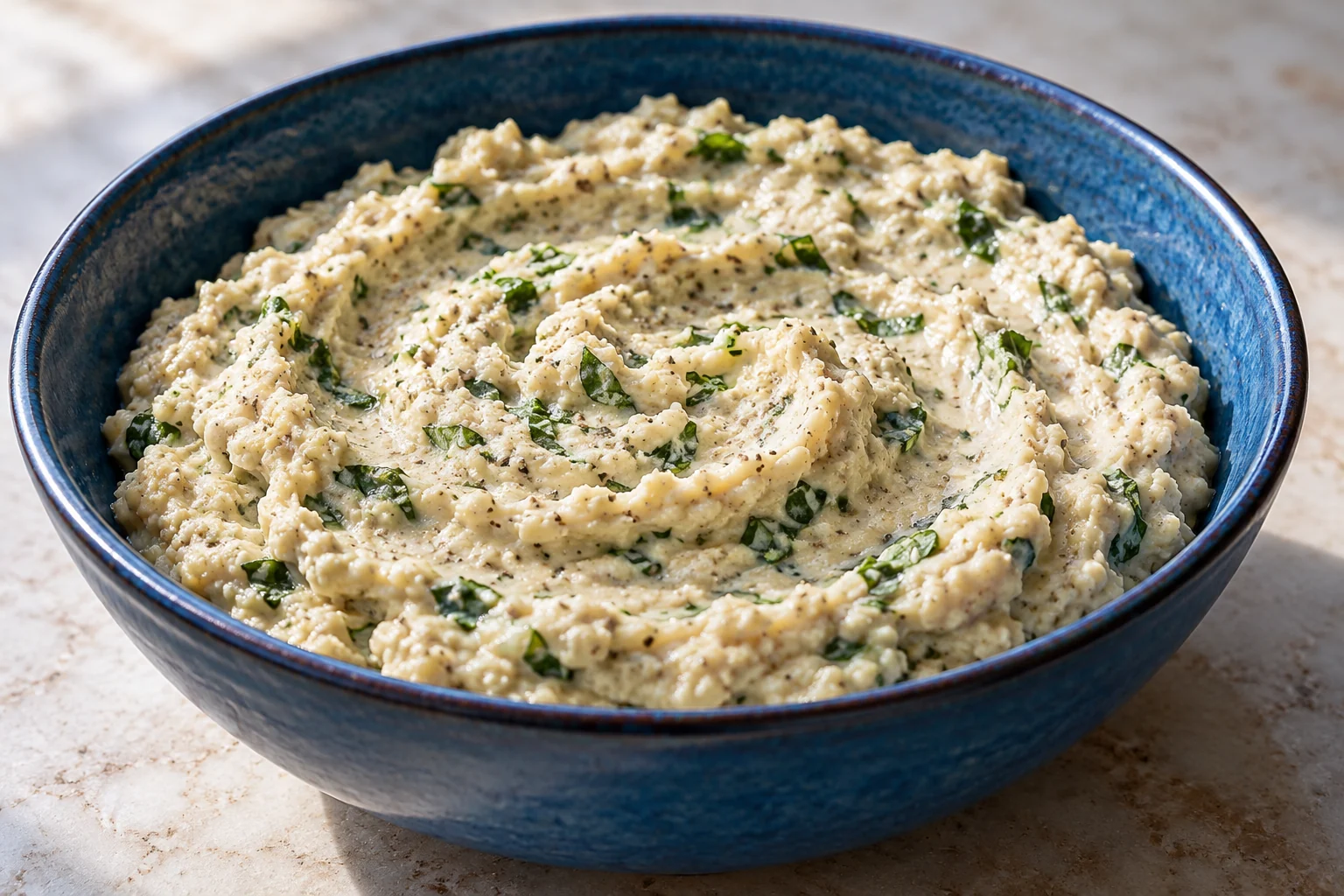
This spread combines a soft bean base with finely ground sunflower kernels and fresh basil. It is intended to hold on a spoon rather than pour like a dressing. Start with the full recipe card above, then use these texture checkpoints to avoid a gritty seed mixture, a watery bean puree or basil that becomes dark through prolonged warm blending.
Basil, sunflower & white bean spread makes 8 servings, with 20 min estimated total time. View the standalone recipe page.
Drain before measuring the beans
The listed bean quantity is the weight after draining and rinsing. Leave the beans in a sieve briefly and pat away surface water before weighing them. A can’s total printed weight includes packing liquid, which is not interchangeable with drained beans. Extra rinse water changes how the mixture behaves in the processor. Keep the measured thirty grams of water separate so you can account for the actual liquid deliberately added to this spread.
Grind the kernels first
Use raw hulled sunflower kernels, not seeds in their shells or a salted snack mix. Pulse them alone until they resemble fine crumbs. This first pass gives the blades access to the small hard pieces before the soft beans surround them. Stop the motor before scraping under the blade assembly. A few fine flecks are expected; a gritty crunch from large seed fragments means this stage needed more work. Do not keep grinding until the seeds become a separate oily butter.
Make the bean base evenly
Add the beans, basil, garlic, lemon, salt and measured water together. Short pulses break the beans while distributing the herbs. Scrape the sides with the machine stopped, especially if the bowl is wide and a small amount of mixture escapes the blades. The garlic should disappear into fine pieces rather than remain as a sharp bite in one portion. Tear very large basil leaves before adding them, but do not chop them far in advance and leave the cut surfaces exposed.
Use oil as a finishing ingredient
The final oil addition helps the mixture become cohesive. Process briefly after adding it, then stop and inspect the texture with a spoon. Continuous blending warms the bowl and can dull the basil’s fresh appearance. The five-minute rest lets the ground seeds take up some moisture. A thick spread can be perfectly usable even if it is not mirror-smooth. Do not automatically pour in more oil to imitate a commercial dip; that changes the ingredient balance and calorie estimate.
Keep the bright mixture refrigerated
Scrape all the spread into a container, stir once and divide into eight equal portions. Keep the lid on between servings to limit exposed surface area. This is a perishable mixture containing cooked beans and raw garlic; the lemon is a flavoring and does not establish a shelf-stable acidity. Refrigerate within two hours and use within three to four days. The generated image illustrates the intended texture, not a measured serving or proof of a cooked kitchen trial.
Common questions
Can I substitute roasted sunflower seeds?
They change the flavor and may contain added oil or salt. The recorded calculation uses raw unsalted kernels. A substitution needs a matching ingredient profile and a new label review rather than simply keeping the same estimate.
Why is my spread runny?
First check whether the beans were weighed before draining or whether extra water entered with them. Chilling may firm the mixture somewhat, but it cannot remove excess liquid. Use it as a dip if necessary and keep the original portion count based on the complete batch.
Technique & food-safety references
These primary references support the technique, safety and storage guidance. The recipe and cooking explanations are original Recipe Pinboard content.


