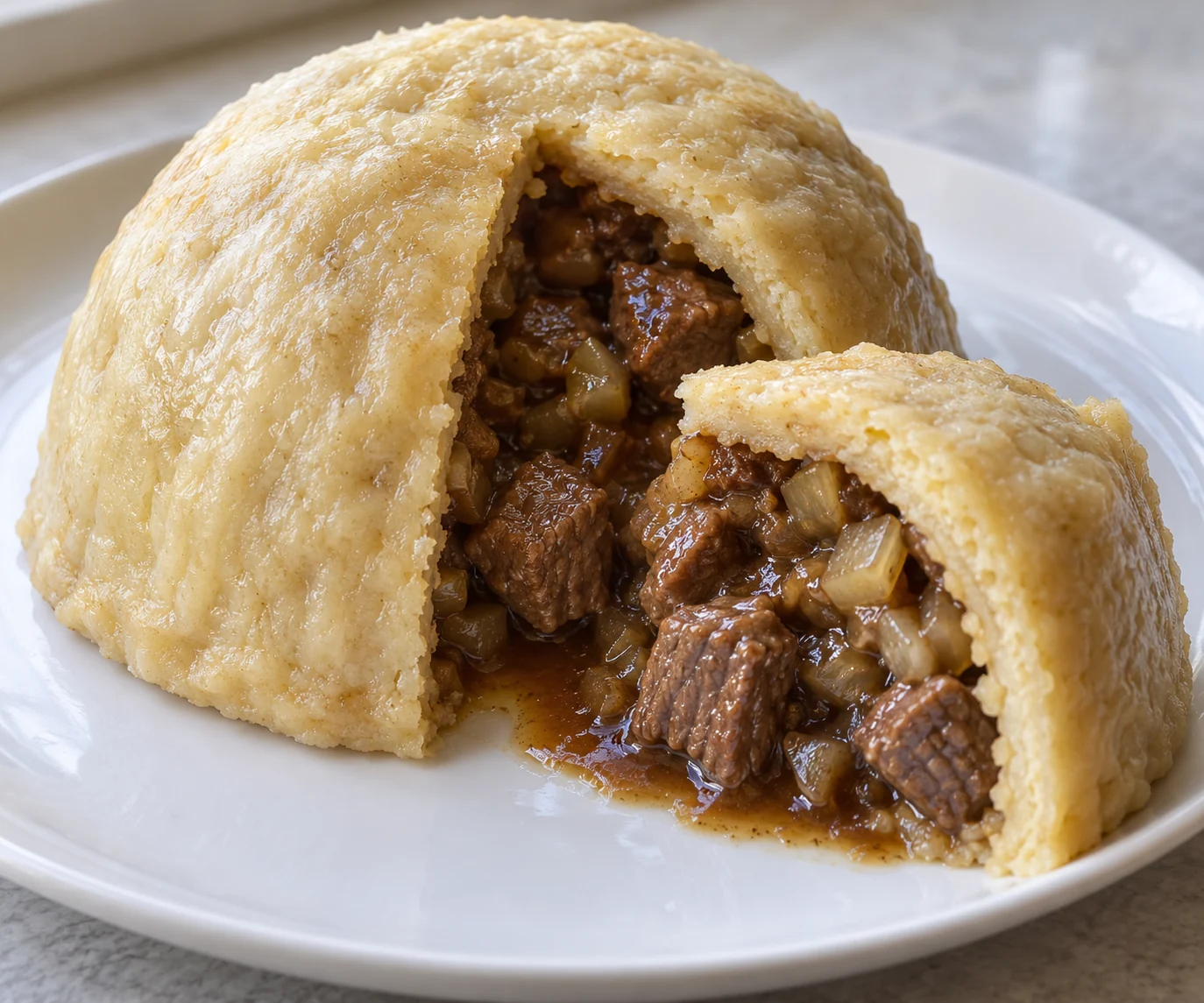
A steamed savory pudding has a soft pastry enclosure rather than the browned crust of an oven pie. This version uses butter pastry and a beef filling that is braised until tender before assembly. It is an original adaptation, not a claim to reproduce a traditional suet crust. The long schedule includes cooling the filling safely, chilling and shaping the pastry, and steaming the covered basin until the center is hot.
Beef & onion steamed pudding makes 4 servings, with 10 hr estimated total time. View the standalone recipe page.
Braise the meat before enclosing it
Use the specified chuck-eye cut and trim only the external fat before weighing; internal fat remains part of the reference and the finished filling. Brown in batches so the pot does not immediately fill with released liquid. After adding onion and the other ingredients, keep the covered braise gentle and check that it is not catching. The beef should be tender before pastry assembly. Steaming later heats the enclosed filling and cooks its shell; it is not a reliable shortcut for turning still-tough meat into tender cubes.
Thicken, then cool in a shallow container
The filling should mound rather than behave like a thin soup, or it can soak the pastry and escape during unmolding. Stir the cold-water cornstarch mixture again before adding it to the simmering filling. Retain the juices and fat instead of straining them away. Use a shallow container and an ice-water bath to begin cooling, then refrigerate promptly to the stated temperature. Keep bath water out of the food. Leaving a deep pot on the counter for hours is not the cooling method described here.
Line the basin with cold butter pastry
Rub cold butter into the flour mixture and add the measured water with minimal handling. This produces a soft steamed short pastry, not puff pastry or a suet crust. Chill before rolling and keep the handling flour within its allocation. Reserve dough for the lid before lining the basin. Ease the larger sheet into place without pulling it thin at the lower corners, and patch any gaps with clean trimmings. The pastry should form a continuous enclosure; all dough is retained rather than cut away and discarded.
Seal the lid and maintain the water level
Leave the stated headroom, seal the dough lid firmly and cover the basin with pleated parchment and foil. The pleat gives the cover room to expand. A stable trivet prevents direct contact with the pot base, and the water stays below the cover so it cannot wash into the pudding. Keep the pot covered at a steady simmer and check it regularly. Top up carefully with boiling water. A dry pot or a vigorously splashing boil is not an acceptable unattended steaming condition.
Verify the center before turning out
Lift the basin securely and open the cover away from your face, because trapped steam can burn. Check both the fully set pastry and the filling's reheating temperature. If either is incomplete, reseal and continue steaming rather than relying on the scheduled finish time. The brief rest helps the shell settle before inversion onto a rimmed plate. Cut four portions that each include pastry, meat and gravy. Leftovers need shallow storage and thorough reheating; a dense whole pudding should not be left out to cool slowly.
Common questions
Why is the pastry pale instead of golden?
It cooks in moist heat inside a covered basin, so it does not develop an oven-baked crust. Pale, fully set pastry is expected. Browning it afterward would create another preparation and is unnecessary here. Check texture and the center temperature rather than using golden color as the doneness standard.
Can I assemble it with hot filling to save time?
That can soften the butter pastry before it is sealed and makes handling less predictable. Follow the cooling stage and use the specified cold filling. If you split the work across two days, keep the filling refrigerated; do not remove the safe cooling or final reheating steps from the schedule.
Technique & food-safety references
These primary references support the technique, safety and storage guidance. The recipe and cooking explanations are original Recipe Pinboard content.


