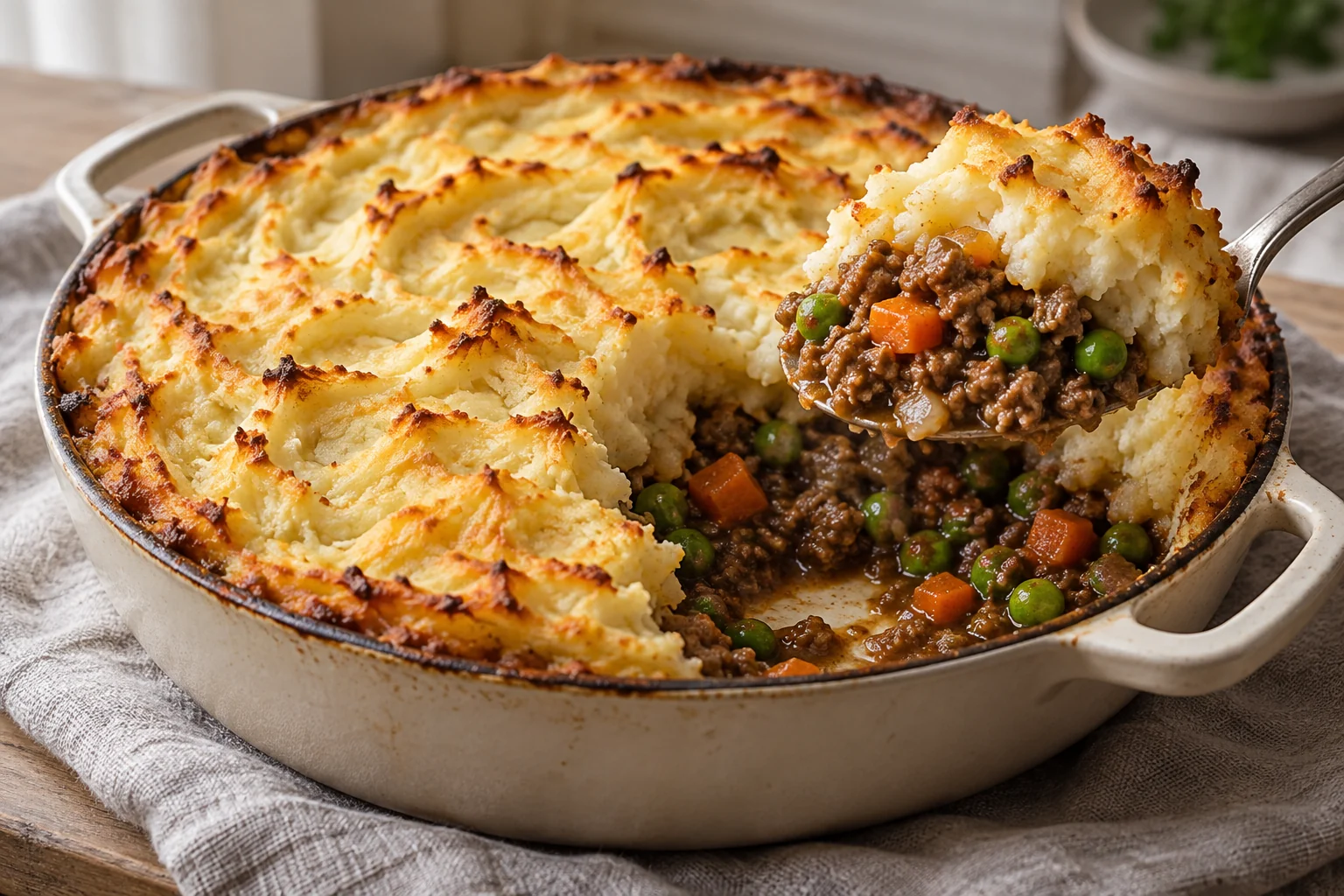
A cottage-style skillet needs a filling thick enough to support its potato lid. It also needs potatoes dry enough to mash without becoming gluey. Cook those components alongside each other, then combine them while hot so the final bake heats the center efficiently rather than merely coloring the top.
Beef & pea cottage skillet makes 6 servings, with 1 hr 25 min estimated total time. View the standalone recipe page.
Start the potatoes in cold water
Cut peeled potatoes into similar chunks and cover them with cold water before heating. Small pieces can overcook while large ones stay firm if the sizes differ greatly. Simmer until a knife passes through easily, then drain thoroughly. Returning them briefly to the warm pan lets surface moisture evaporate. Mash by hand with the measured milk, oil and salt. A food processor can overwork the starch into a sticky paste that extra milk will not undo.
Build the filling in stages
Soften diced carrot and onion before adding ground beef; their small size helps them fit beneath the potato topping. Break the meat apart so no dense raw clumps remain. Check that the ground beef reaches 160°F (71°C), because brown color by itself is not enough. This version retains rendered juices and uses 93%-lean beef. Draining them or choosing a fattier grind changes the calculation, even if the finished pan looks similar.
Thicken before adding the potato lid
Cook tomato paste and flour briefly with the filling before adding water gradually. Stir well so dry flour does not hide in lumps. The simmer should produce a light coating around the meat and vegetables rather than a soup. Add peas near the end and bring the mixture back to a simmer. If it remains very loose, give evaporation time before topping; a heavy mash lid makes it harder for surplus water to escape in the oven.
Spread the mash without burying it
Spoon mash around the perimeter and across the center, then gently connect the mounds. Pressing a single large mound hard into the filling can push the layers together. Fork ridges create small exposed edges that brown. Put the skillet on a rimmed baking tray to catch bubbling drips, and remember that its handle will remain dangerously hot after removal. A lightly golden top is desirable, but verify that the middle of the assembled dish reaches 165°F (74°C).
Rest before dividing six portions
A ten-minute rest helps the filling settle so serving is less likely to leave a puddle. It is not a substitute for checking temperature during cooking. Divide the whole skillet into six equal portions, distributing both topping and filling. Leftovers should go into shallow containers and into the refrigerator within two hours, rather than cooling for hours in the deep skillet. Use within three to four days and reheat each portion throughout to 165°F (74°C).
Common questions
Can I assemble it cold and use the same bake time?
No. A refrigerated filling and potato lid take longer to heat through. The published timing assumes hot components; check the center temperature rather than following the same timer for a cold casserole.
Why is no High Protein tag automatically applied?
The site requires its documented criteria, not a meat-based title. This six-portion recipe has no new High Protein audit assigned. Its complete estimated protein amount remains visible in the nutrition panel.
Technique & food-safety references
These primary references support the technique, safety and storage guidance. The recipe and cooking explanations are original Recipe Pinboard content.