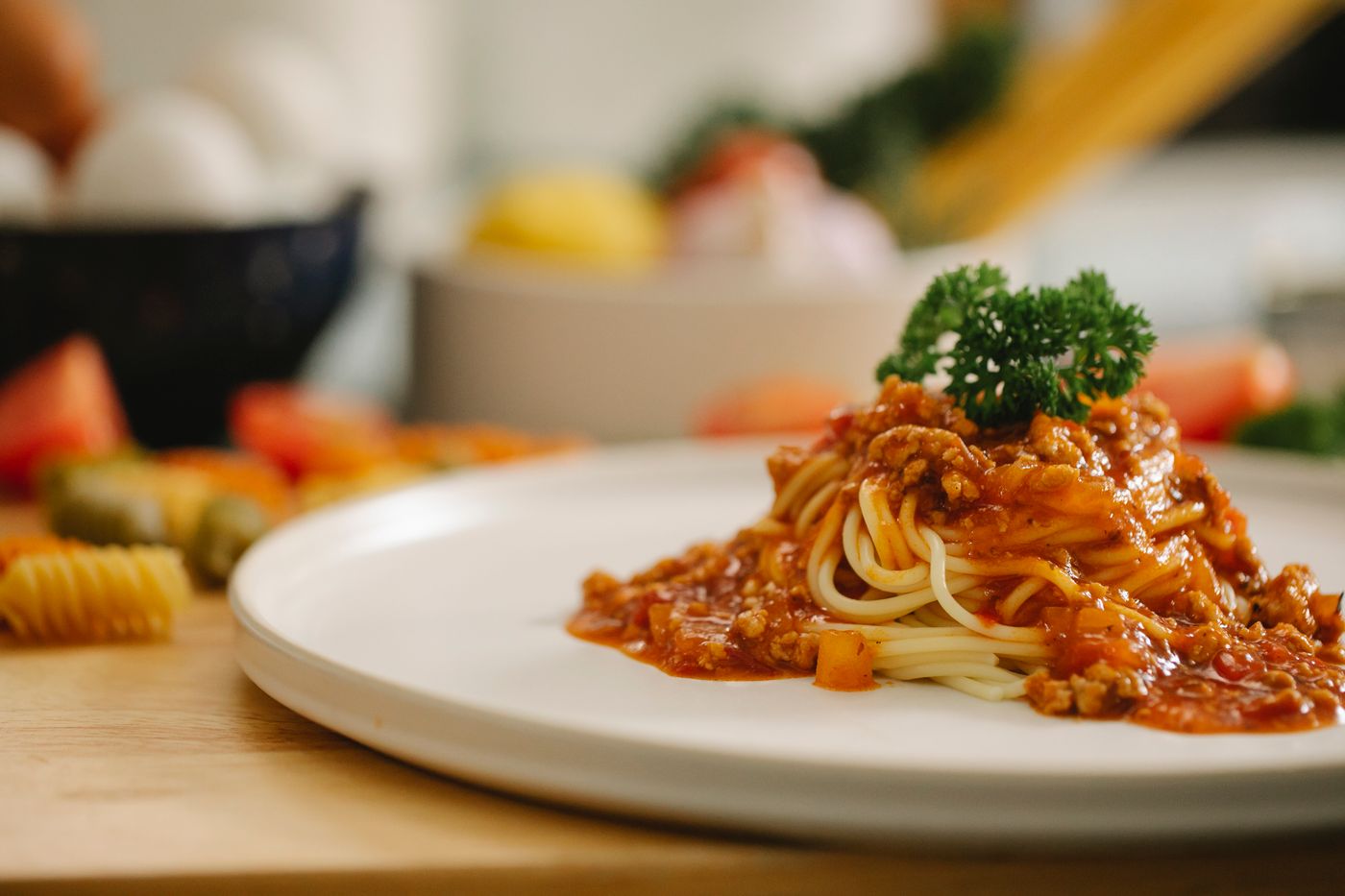
This sauce spends forty minutes at a partly covered simmer after its vegetables and beef are cooked. That time is useful only if the heat is controlled: a hard boil can reduce the tomatoes too quickly and leave the bottom catching. The recipe combines 500 g 90%-lean ground beef with finely diced onion, carrot and celery, then serves the sauce over 340 g spaghetti.
Slow-simmered beef spaghetti makes 4 servings, with 1 hr 10 min estimated total time. View the standalone recipe page.
Use a fine dice for the vegetable base
The onion, carrot and celery are measured separately at 150 g, 100 g and 50 g. Cut them finely enough that pieces soften together and distribute through the finished meat sauce. Large carrot chunks need more time than a finely diced onion, making the initial eight-minute stage less even.
Warm the two tablespoons of olive oil in a deep saucepan and cook the vegetables over medium heat, stirring through the bottom. The depth of the pan helps contain later tomato splashes, but it is not a reason to leave the vegetables in an unstirred mound. Aim for an evenly softened base rather than blackened edges.
Break up and temperature-check the beef
Add the ground beef and work it into small pieces as it cooks. Break apart dense clumps so the meat can cook more evenly and later mix throughout the sauce. Keep raw-meat utensils and packaging away from the parsley and other ready-to-eat components.
The card requires the beef to reach 160°F before the next stage. Use a food thermometer to check meat rather than the hot pan surface, sampling more than one area. Loss of pink color alone is not a reliable safety test. Carefully drain excess fat if needed without pouring hot fat toward yourself.
Cook the paste briefly before adding liquid
Stir in the minced garlic and two tablespoons of tomato paste for one minute. Spread the paste through the meat and vegetables so it does not remain as a single dense lump. Keep stirring during this short stage; concentrated paste can catch against the saucepan.
Add the 800 g crushed tomatoes, 150 ml water, salt and pepper. Scrape up browned residue that loosens with the liquid, while recognizing that black, burned material is not a desirable sauce base. Mix thoroughly so the added water reaches the whole pot rather than resting on top of a thick meat layer.
Adjust heat and water during the long simmer
Set the lid partly over the pan and simmer for forty minutes. Look for gentle bubbling rather than vigorous splattering. The partial cover limits some evaporation while still allowing the sauce to thicken. Burner strength, pan width and lid position all influence how fast liquid leaves.
Stir occasionally, reaching the bottom and corners. If the sauce becomes too thick before the time is complete, add water as the recipe permits and lower overly aggressive heat. You want a sauce that can be spooned over spaghetti, not a dry mound of beef or a watery tomato broth.
Cook pasta near serving and store efficiently
Start the spaghetti near the end of the simmer, using its package timing. Drain, divide among four bowls and spoon the meat sauce over it, finishing with the 15 g chopped parsley. The sauce can wait briefly more comfortably than drained spaghetti sitting in a sticky pile.
Refrigerate leftovers promptly in shallow containers, separating pasta and sauce if convenient. Follow the two-hour limit, or one hour above 90°F, and use within three to four days. Reheat leftovers to 165°F; bring reheated sauce to a rolling boil as USDA advises, stirring and adding water if necessary to prevent scorching.
Common questions
Why does my sauce become dry before forty minutes?
The heat may be too high or the lid too open for your pan. Keep a gentle simmer, stir the bottom and add water when needed rather than shortening the process solely because liquid has evaporated.
Can I tell the beef is safe because it is brown?
No. Check that the ground beef reaches 160°F with a food thermometer. Meat color is not a dependable replacement for the temperature requirement.
Technique & food-safety references
These primary references support the technique, safety and storage guidance. The recipe and cooking explanations are original Recipe Pinboard content.