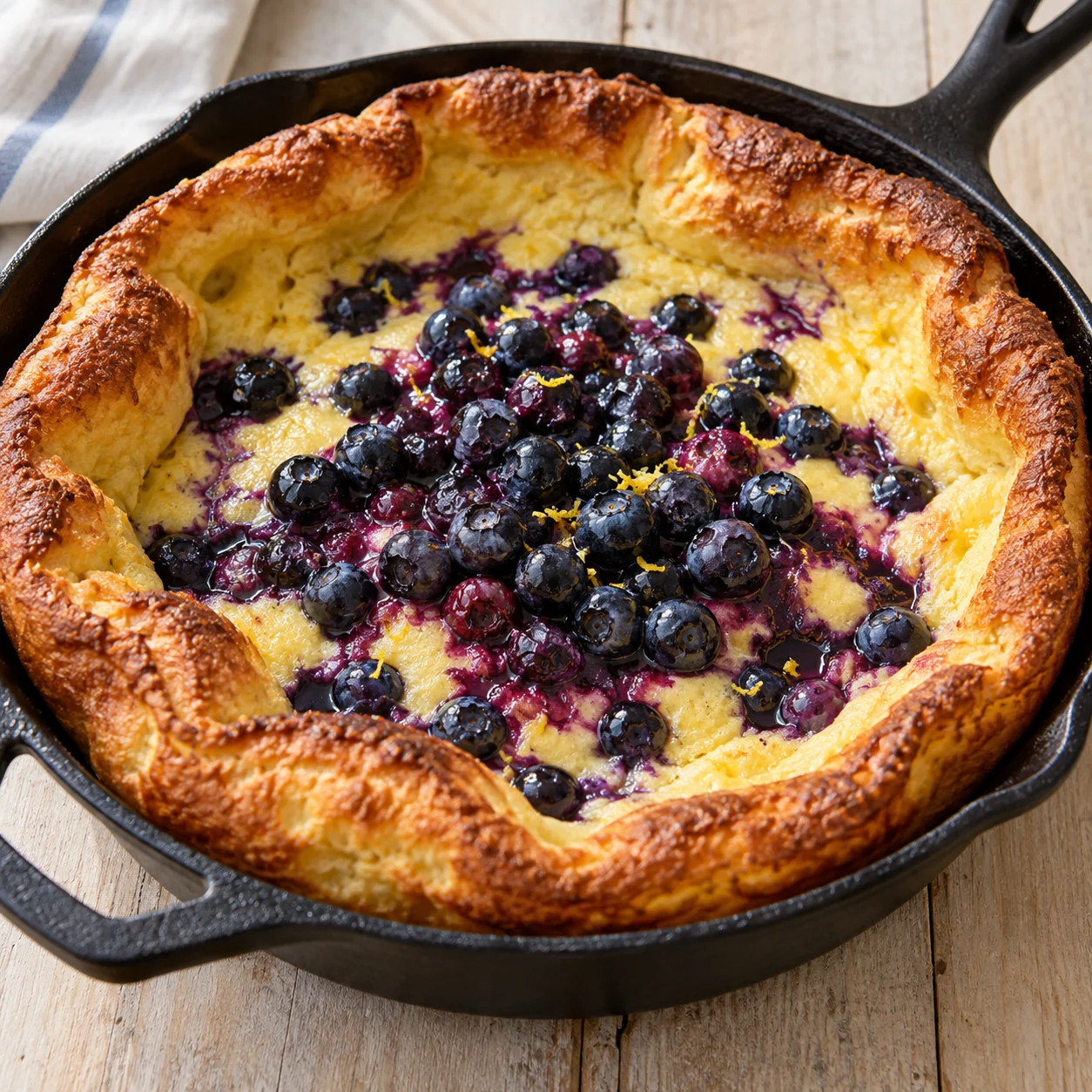
A Dutch baby rises around the edges as its thin batter meets a hot pan and oven. Its shape is temporary: the tall rim settles after removal, leaving a soft center and crisp golden folds. Blueberries cook separately here so their juice does not weigh down the batter during its initial rise. The full recipe makes one ten-inch skillet pancake for four portions. Have plates ready before it leaves the oven because the freshest contrast between edge and center is brief.
Blueberry & lemon Dutch baby makes 4 servings, with 55 min estimated total time. View the standalone recipe page.
Heat the empty skillet with the oven
Use an ovenproof cast-iron skillet of the specified diameter and place it in the oven during preheating. The hot metal supplies heat directly beneath the batter instead of spending the first minutes warming up. Clear a heatproof landing space nearby before you handle the skillet. Keep mitts dry and plan where the hot handle will point. Do not substitute a vessel with a plastic or uncertain handle. Pan material and diameter affect the rise, so a broad ceramic dish is not an identical replacement.
Blend a thin batter and give it its pause
Measure the flour, milk and eggs carefully; this is a fluid batter rather than a thick American pancake mixture. Blend until no dry flour remains, then leave it for the ten-minute pause while the skillet heats. Add two grams of the measured lemon zest to the batter and reserve one gram for serving. No baking powder is needed in this formula. Do not taste the raw mixture. If flour clings above the blender mixture, scrape it down before the pause so it does not become a dry pocket in the finished pancake.
Move efficiently from butter to oven
Remove the hot skillet carefully and add the butter, swirling so the base is coated. It should melt promptly without turning black or smoking heavily. Pour the batter into the center and return the pan to the oven immediately. Avoid prolonged tilting or spreading with a utensil, which loses heat and delays the bake. Leave the oven door closed during the early rise. Looking through the window is less disruptive than repeatedly opening it to watch the rim climb. A lopsided rise can still produce a pleasant pancake.
Simmer the fruit while the pancake bakes
Combine the washed blueberries with the remaining sugar, lemon juice and measured water in a small saucepan. Stir gently as some berries burst and release purple juice. Stop when the liquid lightly thickens; a stiff jam is not the intended topping. Keep all the fruit and juice because the quantities and nutrition include them. The remaining whole berries provide contrast against the softer ones. Hold the topping warm until the pancake is ready, then share it equally rather than pouring most of the syrup onto one serving.
Check the center before celebrating the puff
Golden edges are only one cue. The middle should have no liquid batter and reach the stated temperature. Remove the pan with mitts and cut into four portions promptly, adding the blueberry mixture and reserved zest. The rim will settle as the pancake cools; that is expected and does not require returning it to the oven. Keep the skillet handle protected on the table or counter. Refrigerated leftovers lose much of the airy edge, but can be reheated thoroughly and served with their allocated fruit.
Common questions
Why did my pancake barely rise?
Check that the skillet and oven were fully heated, the batter quantities were measured accurately and the door stayed closed early in baking. A cold pan or heavy fruit added before baking changes the conditions for this formula.
Is a soft center the same as raw batter?
No. The center can remain tender while fully cooked, but it should not flow as wet batter. Use both the visible set and the thermometer checkpoint instead of judging only the height of the rim.
Technique & food-safety references
These primary references support the technique, safety and storage guidance. The recipe and cooking explanations are original Recipe Pinboard content.


